- Phone
-
Address
No. 178 Linsheng Road, Industrial South Zone, Tinglin Town, Jinshan District, Shanghai
Product Categories
Shanghai Gaotian Pump Co., Ltd
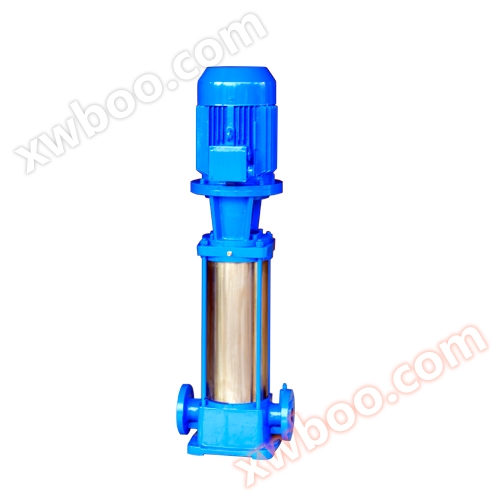
GDL vertical multi-stage pipeline pump
NegotiableUpdate on 02/24
- Model
- Nature of the Manufacturer
- Producers
- Product Category
- Place of Origin
Overview
Product Name: GDL Vertical Multi stage Pipeline Pump Model: 50GDL18-15 * 4 Power 5.5KW Product Category: Pipeline Pump Series → GDL Vertical Multi stage Pipeline Pump Caliber Range: DN25-150 Flow Range: 2-160m3/h Head Range: 24-200m Our Advantages: In stock, special materials can be customized, product performance is stable, service life is more than 5 years Selection Quotation: You only need to provide the flow rate, head, and motor power of the water pump. If not available, we will calculate for you
Product Details
GDL vertical multi-stage pipeline pump

If you have any questions, you can call: 021-57239999 orClick to consult experts for selection and quotation


If you have any questions, you can call: 021-57239999 orClick to consult experts for selection and quotation
1、 Introduction:
The GDL vertical multi-stage pipeline pump is a new pump type that has the characteristics of energy saving, small footprint, easy installation, and stable performance. The jacket is made of high-quality 1Cr18Ni9Ti stainless steel, and the shaft seal is made of wear-resistant mechanical seal, with no leakage and long service life. By using hydraulic balance to solve axial force, the pump operates smoothly, with low noise and better installation conditions than DL type pumps. It can be easily installed in the middle of any horizontal pipeline. It can fully meet the needs of water supply, drainage, and fire-fighting facilities for high-rise buildings, deep mines, etc., and is the preferred pump type for transporting cold and hot water or general media with physical and chemical properties similar to water in various industries. Operating temperature: ≤ 100 ℃, pressure ≤ 0.6MPa (16kg/cm2).
2、 Application location:
Pumps are used for the circulation and pressurization of cold, hot, and clean water in high-pressure operating systems, parallel supply of water by multiple pumps in high-rise buildings, fire protection, boiler feedwater and cooling water systems, and transportation of various station washing liquids.
3、 Structure diagram:
Structural diagram of GDL vertical multi-stage pipeline pump
The structure of the water pump is vertical and multi-stage, with inlet and outlet flanges on the same straight line, and the outer cylinder is made of stainless steel.
The shaft seal adopts a mechanical seal configuration.
The pump is driven by an electric motor, and when viewed from the motor end, the pump rotates clockwise.
There is an exhaust valve at the pump outlet to ensure that the gas inside the pump is completely drained.
4、 Installation
During installation, the weight of the pipeline should be independently supported and should not be borne by the pump, otherwise it is easy to damage the water pump.
2. The pump and motor are integrated structures that have been calibrated by the manufacturer before leaving the factory, and do not require adjustment during installation, making installation very convenient.
3. The installation must tighten the anchor bolts, and the pump should be inspected at regular intervals to prevent loosening and avoid vibration during pump start-up, which may affect the performance of the pump.4. Before installing the water pump, carefully check whether there are any hard objects (such as stones, iron sand, etc.) in the pump flow channel that may cause damage to the overcurrent components during pump operation.
5. For the convenience of maintenance and safe use, a regulating valve should be installed on the inlet and outlet pipelines of the pump, and a pressure gauge should be installed near the pump inlet. For high lift pumps, to prevent water hammer, a check valve should also be installed before the pump outlet gate valve to cope with sudden power outages and other power loss accidents, ensuring that the pump operates under optimal conditions and extending its service life.
6. When the pump is used in suction applications, it should be equipped with a bottom valve and the inlet pipe should not have too many bends. At the same time, there should be no water or air leakage to avoid affecting the suction performance of the pump.
To prevent impurities from entering the pump and blocking the flow channel, a filter should be installed before the pump inlet.
Before installing the pipeline, rotate the rotor components of the water pump. There should be no friction sound or jamming phenomenon, otherwise they should be disassembled to check the cause.
If you have any questions about the structure and installation, you can call 021-57239999 or click to consult experts for selection and quotation
5、 Start and Stop
Preparation before starting
1. When manually turning the motor, the impeller should have no jamming or grinding phenomenon and rotate flexibly.
2. Open the inlet valve, open the exhaust valve to fill the entire pump chamber with liquid, and then close the exhaust valve.
3. When transporting hot liquids, preheating should be carried out before starting, with a heating rate of 50 ℃/h. The preheating of the pump is achieved by continuously circulating the transported liquid to ensure uniform heating of all parts.
4. You should first turn it a few times by hand to allow lubricating water to enter the mechanical seal end face.
5. Tap the motor to confirm if the steering is correct.
Start up and operation
1. Fully open the inlet valve and close the valve of the blade outlet pipeline.
2. Connect the power supply, gradually open the valve on the discharge pipeline when the pump reaches normal speed, and adjust it to the desired working condition.
3. Pay attention to the instrument readings and check the leakage of the shaft seal. Normally, the mechanical seal leakage is 3 drops per minute. Check the temperature rise at the motor and bearing, which is 70 ≤ ℃. If any abnormal situation is found, it should be dealt with in a timely manner.
parking
1. Gradually close the valve of the discharge pipeline and cut off the power supply.
2. Close the inlet valve.
3. If the ambient temperature is below 0 ℃, the liquid inside the pump should be drained to prevent the water pump from freezing and cracking.
4. If the pump is not used for a long time, it should be disassembled, cleaned, packaged and stored.

7、 Fault causes and troubleshooting methods
|
Fault phenomenon
|
Possible causes
|
exclusion method
|
|
The water pump is not producing water |
1 The import and export valves are not open, the inlet and outlet pipelines are blocked, and the impeller flow channel is blocked 2 The motor is running in the wrong direction and has a slow speed due to phase loss 3 Leakage of suction pipe 4 The pump is not filled with liquid and there is air inside the pump chamber 5 Insufficient imported water supply, high suction, and bottom valve leakage 6 Excessive pipeline resistance and improper pump selection
|
1 Check and remove blockages 2 Adjust the motor direction and tighten the motor wiring 3 Tighten all sealing surfaces and eliminate air 4 Open the exhaust valve to remove air 5 Shutdown inspection, adjustment, and use of water pipes and suction ports are prone to this phenomenon 6 Reduce pipeline bends and reselect pumps
|
|
Insufficient water pump flow |
1 First, use the method of the water pump not producing water to find the cause 2 Pipeline, pump flow channel or impeller blockage, scale deposition, insufficient valve opening 3 Low voltage 4 Impeller wear
|
1 First, use the method of the water pump not producing water to eliminate it 2 Remove the obstruction and readjust the valve opening 3 voltage stabilization 4 Replace the impeller
|
|
Excessive power |
1 Exceeding the rated flow usage 2 High suction distance 3 Pump bearing wear
|
1 Adjust the flow rate and turn down the outlet valve 2 Reduce suction height 3 replace the bearing
|
|
Noise vibration |
1 Unstable pipeline support 2 Liquid mixed with gas 3 Generate cavitation 4 Bearing damage 5 Motor overload operation
|
1 Stable pipeline 2 Increase suction pressure and exhaust 3 Reduce the vacuum degree 4 replace the bearing 5 adjust
|
|
Motor overheating |
1 Excessive traffic and overloaded operation 2 Local friction 3 Motor bearings damaged 4 under voltage
|
1 Close the outlet valve 2 Check and exclude 3 replace the bearing 4 voltage stabilization
|
|
Water pump leakage |
1 Mechanical seal wear 2 The pump body has sand holes or cracks 3 Uneven sealing surface 4 Loosening of installation bolts
|
1 replace 2 Welding repair or replacement 3 trim 4 fasten
|
Maintenance and upkeep of pipeline pumps
Maintenance and upkeep of mechanical seals
Maintenance and upkeep of mechanical seals
If you have any questions, you can call: 021-57239999 orClick to consult experts for selection and quotation
Similar Product Recommend