|
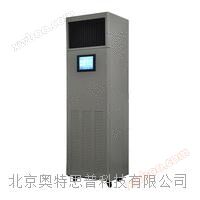
Overview of Fully Automatic Electronic descaling Instrument
In HVAC systems and industrial circulating water systems, the increase in water turbidity can be caused by factors such as rising circulating water temperature, fluctuations in water flow rate, evaporation and concentration of water, and the entry of dust and debris. In addition, the neutralization effect of various factors such as equipment structure and materials can lead to more serious sediment adhesion, equipment corrosion, and growth of bacteria, algae, and microorganisms than in DC systems. The scale, mud, and dirt formed as a result can block the system pipelines, leading to a decrease in heat transfer efficiency, shortened equipment lifespan, and in severe cases, equipment perforation or even forced shutdown. Therefore, water treatment equipment plays a crucial role in HVAC systems and industrial circulating water systems.
Principle of fully automatic electronic descaling water processor
The series of fully automatic electronic descaling and hardness reducing water processors mainly consist of three parts: * * part is the controller, * * part is the electrode, and the third part is the water processor body. In normal use, after the power is turned on, the energy release device can effectively excite the electrons of water molecules to a high energy state by receiving the energy supplied by the controller and the generated nuclear magnetic resonance field. The dipole distance increases and forms a chain like arrangement in positive and negative orientations, enhancing the activity of water molecules. It can effectively break the attachment conditions of calcium and magnesium scaling substances, and under external force, the calcium and magnesium scales gradually soften, crack and directly fall off. At the same time, under the action of nuclear magnetic resonance field, ions in water are positively and negatively polarized. When adsorbed by electric field, it can effectively reduce the hardness of calcium and magnesium in water. The water flowing through the water processor body undergoes changes in its physical properties such as conductivity, dissolved oxygen, viscosity, surface tension, etc. under the action of electrostatic or electronic field energy. The experiment confirmed the following functions:
Softening: The nuclear magnetic resonance field can play a role in ion polarity separation in electrodialysis, reducing the concentration of calcium and magnesium ions in water.
Scale prevention: Under the action of electrostatic field energy, anions and cations in water are more tightly surrounded by water molecules with increased dipole moment and arranged in a chain shape, unable to move freely or approach the inner wall of the pipeline, thus preventing the formation of scale. Under the action of electronic field energy, the electrons of water molecules are excited to a high energy state. The decrease in the potential of water molecules weakens the attraction between anions and cations in the water, preventing them from aggregating and tending to disperse, thus preventing the formation of scale.
Scale removal: Water molecules that increase their dipole moment under the action of electrostatic field energy and water molecules that are excited into high-energy states under the action of electron field energy will make the hard scale on the pipe wall soft, loose, dissolve, and fall off, until it becomes * * scale.
**Algae killing: Under the action of electrostatic and electron fields, water molecules can promote the rupture of microbial cell walls and the outflow of cell cytoplasm, achieving the effect of killing * * and algae.
Corrosion inhibition: Under the action of electrostatic and electronic field energy, water molecules can form a water film on the inner wall of the pipeline, which can also reduce the potential difference between water molecules and metals. This slows down the electrochemical corrosion between water and metals and to some extent eliminates the hazards of yellow water and rust.
Technical parameters and applicable conditions
Water quality: Total hardness (≤ 700mg/L, calculated as Caco3)
Water temperature: ≤ 90 ℃, special manufacturing can be ≤ 120 ℃
Water pressure: ≤ 1.0mpa, special manufacturing can ≤ 3.0mpa
Flow rate: 0-10m/s
Specification Table for Fully Automatic Electronic Scale Removal and Hardness Reduction Instrument
|
model
|
Inlet and outlet diameter
|
head loss coefficients
|
referral traffic
(cubic meters per hour)
|
Dimensions of the energy release device
(millimeters)
|
interface type
|
power
(W)
|
|
inch
|
mm
|
D
|
L
|
DO
|
d
|
h
|
|
NJ-0.6
|
0.6
|
15
|
0.1
|
>1
|
76
|
300
|
-
|
27
|
-
|
internal thread
|
15
|
|
NJ-1
|
1
|
25
|
0.7
|
1~3
|
76
|
350
|
-
|
32
|
-
|
internal thread
|
120
|
|
NJ-1.5
|
1.5
|
40
|
0.4
|
3~9
|
89
|
350
|
-
|
47
|
-
|
internal thread
|
150
|
|
NJ-2
|
2
|
50
|
0.2
|
9~15
|
89
|
350
|
-
|
57
|
-
|
internal thread
|
175
|
|
NJ-3
|
3
|
80
|
1.46
|
15~36
|
159
|
1000
|
285
|
89
|
90
|
flange
|
200
|
|
NJ-4
|
4
|
100
|
1.16
|
36~60
|
159
|
1000
|
285
|
108
|
90
|
flange
|
205
|
|
NJ-5
|
5
|
125
|
1.13
|
60~80
|
219
|
1000
|
340
|
132
|
90
|
flange
|
210
|
|
NJ-6
|
6
|
150
|
1.1
|
80~120
|
219
|
1000
|
340
|
169
|
90
|
flange
|
210
|
|
NJ-8
|
8
|
200
|
1.08
|
120~220
|
273
|
1000
|
395
|
219
|
90
|
flange
|
215
|
|
NJ-10
|
10
|
250
|
1.02
|
220~360
|
325
|
1000
|
445
|
173
|
90
|
flange
|
220
|
|
NJ-12
|
12
|
300
|
1.01
|
360~630
|
416
|
1000
|
565
|
325
|
110
|
flange
|
225
|
|
NJ-14
|
14
|
350
|
0.98
|
630~860
|
470
|
1000
|
615
|
377
|
110
|
flange
|
230
|
|
NJ-16
|
16
|
400
|
0.91
|
860~1100
|
520
|
1000
|
670
|
426
|
110
|
flange
|
235
|
|
NJ-18
|
18
|
450
|
0.86
|
1100~1400
|
570
|
1000
|
725
|
480
|
110
|
flange
|
240
|
|
NJ-20
|
20
|
500
|
0.76
|
1400~1800
|
620
|
1000
|
780
|
530
|
110
|
flange
|
245
|
|
NJ-24
|
24
|
600
|
0.66
|
1800~2600
|
720
|
1000
|
895
|
630
|
110
|
flange
|
250
|
|
NJ-28
|
28
|
700
|
0.57
|
2600~3600
|
820
|
1200
|
1015
|
730
|
110
|
flange
|
255
|
|
NJ-32
|
32
|
800
|
0.5
|
3600~5000
|
920
|
1200
|
1115
|
830
|
110
|
flange
|
260
|
|
NJ-36
|
36
|
900
|
0.41
|
5000~6400
|
1020
|
1200
|
1230
|
930
|
110
|
flange
|
265
|
|