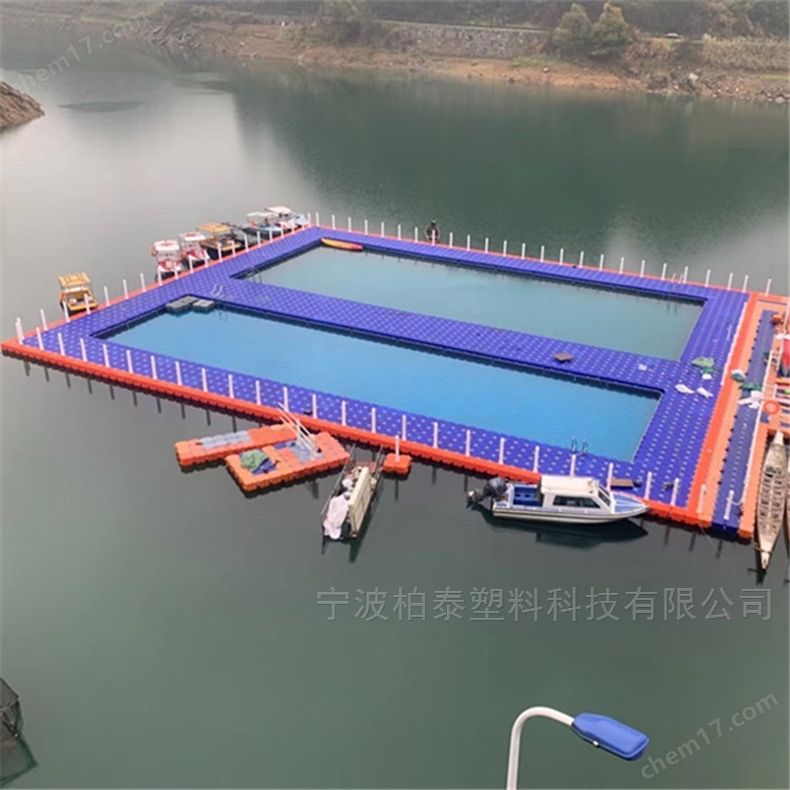
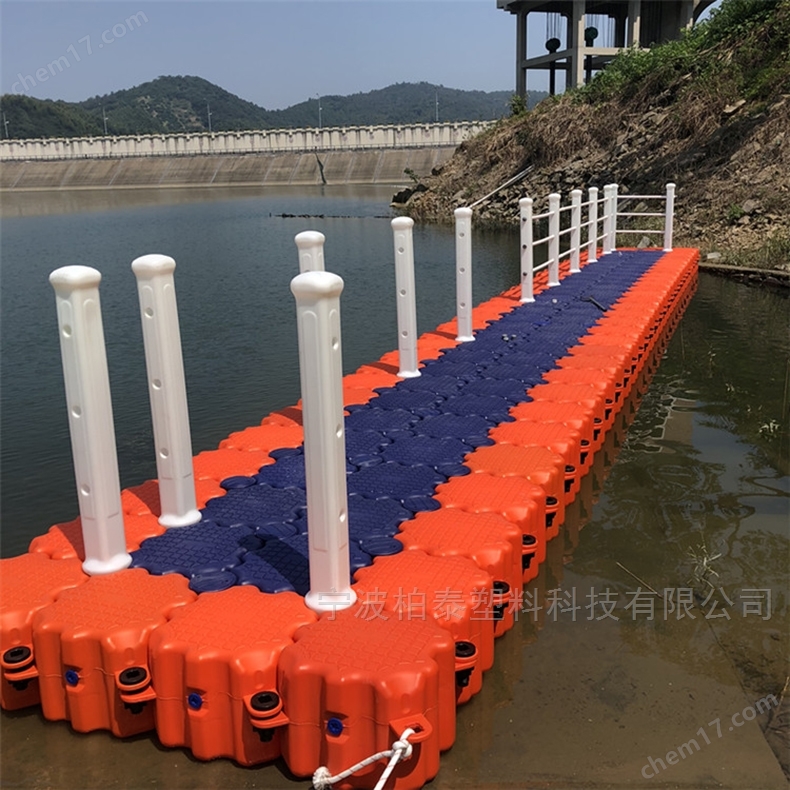
This product is made of high-density polyethylene integrated molding and modular splicing design, with sufficient buoyancy and stable structure. It can automatically rise and fall with water level and is suitable for various scenarios such as rivers, lakes, seas, reservoirs, and scenic spots. The material is resistant to ultraviolet radiation, seawater corrosion, impact and antifreeze, does not rust or leak, is environmentally friendly, non-toxic, and has a long service life. Easy to install, no need for complex maintenance, can build yacht docks, fishing platforms, water boardwalks, etc. as needed, safe and anti-skid, comfortable to pass, is an efficient and durable alternative to traditional docks.
Product Details
Floating pontoon dock aquaculture floating box
Polyethylene floating dock: an efficient solution for modern water engineering
The polyethylene floating dock isHigh density polyethylene (HDPE)The floating water facility, which is assembled with a steel structure frame, anti slip panels, and supporting facilities, and uses floats as the core buoyancy carrier, has become the mainstream choice for yacht docking, water sightseeing, fishery farming, emergency passage, and other scenarios due to its core advantages of modularity, corrosion resistance, easy installation, and strong adaptability. It comprehensively innovates the traditional dock construction and use mode.
1、 Core materials and structural system
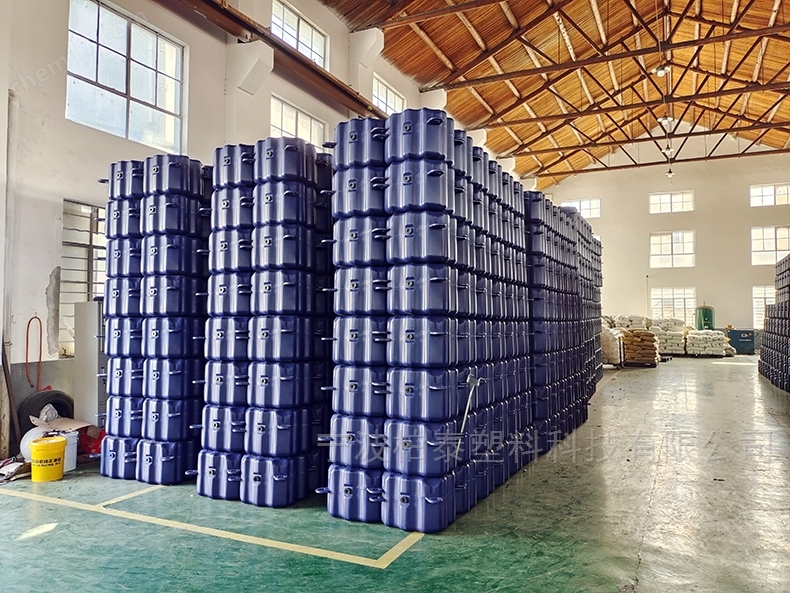
The main body of the dock adoptsFood grade high-density polyethylene (HDPE)The material is made of rotomolding technology, and the wall thickness of the pontoon is 5-6mm. The interior is filled with high-density polystyrene foam, which has both high strength and strong buoyancy. A single buoy can carry 2-3 tons, with a buoyancy of over 350kg per square meter, and can stably support yachts, crowds, and heavy equipment. The structure adopts a three-layer composite design of "floating body main beam bridge deck": the bottom layer is a standardized HDPE float array, which is rigidly connected by stainless steel pins and galvanized steel wire ropes to form a stable buoyancy base; The middle layer consists of hot-dip galvanized steel structure main beams and crossbeams, enhancing overall stiffness and resisting wind and wave impacts; The upper layer is covered with anti slip plastic wood panels or patterned steel plates, and the surface is treated with wear-resistant and anti slip measures to ensure the safety of pedestrians and vehicles. Equipped with 1.2-meter-high stainless steel/anti-corrosion wooden guardrails on both sides, complete with accessories such as boat tie bolts, anti-collision balls, and shore side bridges.
2、 Core performance advantages
Weather resistant and corrosion-resistant: The material has the characteristics of UV resistance, aging resistance, acid and alkali resistance, and salt fog resistance. It can operate stably in the environment of -50 ℃ to 80 ℃, and is not corroded by seawater, oil and chemicals. It can be used in coastal and highly polluted waters, with a service life of more than 20 years.
Flexible adaptation to changes in water levelThe floating structure can automatically rise and fall with the fluctuation of water level, with a maximum adjustment of ± 1.5 meters, suitable for scenarios with large water level fluctuations such as reservoirs, tidal rivers, lakes, etc., without the need to modify facilities due to water level changes.
Modular and rapid constructionAdopting standardized modular design, the float can be freely assembled like building blocks, and can be quickly assembled into any shape such as straight, L-shaped, U-shaped, etc. A single standard berth can be installed within 2 hours, shortening the overall construction period by 70% compared to traditional docks. It is easy to expand, dismantle, and relocate, and can be reused.
Safe, stable, and resistant to wind and wavesMultiple independent sealed compartments are installed inside the float, and local damage does not affect the overall buoyancy; Combined with the "flexible+rigid" composite connection technology, it can maintain stability even under 6 levels of wind and waves, and the fixed system can withstand 9-10 levels of strong winds and 7-8 levels of waves.
Low cost and low maintenanceNo need for routine maintenance such as anti-corrosion coating and rust removal, and the maintenance cost in the later stage is almost zero; The construction cost is reduced by 40% compared to concrete and steel structure docks, and the economic benefits throughout the entire lifecycle are significant.
3、 Multiple application scenarios
wide coverageCultural tourism and leisure, water transportation, fishing and aquaculture, engineering operationsFour major areas. Cultural and tourism scenic spots can build water sightseeing boardwalks, yacht docks, floating swimming pools, and create waterfront internet famous check-in points; Yacht clubs and private waters are used for docking small and medium-sized yachts and motorboats, with flexible and safe berths; Used as aquaculture platforms, fishing docks, and catch loading and unloading areas in the fishing industry, it is resistant to seawater corrosion and has stable load-bearing capacity; In emergency situations, temporary access channels can be quickly built within 48 hours to solve water transportation problems during flood and disaster periods. Simultaneously adapt to various types of water bodies such as lakes, rivers, nearshore areas, reservoirs, and temporary usage needs.
4、 Environmental Protection and Practical Value
The material is non-toxic, pollution-free, recyclable, and reusable. There is no construction waste or underwater pouring during construction, and it has zero damage to the aquatic ecology. Compared with traditional docks, it breaks through the limitations of water environment and construction conditions by being lightweight, highly adaptable, and long-lasting. It not only solves the core needs of water docking, passage, and operation, but also takes into account ecological protection and cost-effectiveness. It is a green and efficient solution for modern water engineering construction.