-
E-mail
sale@yixindrying.com
-
Phone
13775027818
-
Address
Sanhekou Development Zone, Changzhou City, Jiangsu Province
Product Categories
Changzhou Yixin Drying Equipment Co., Ltd

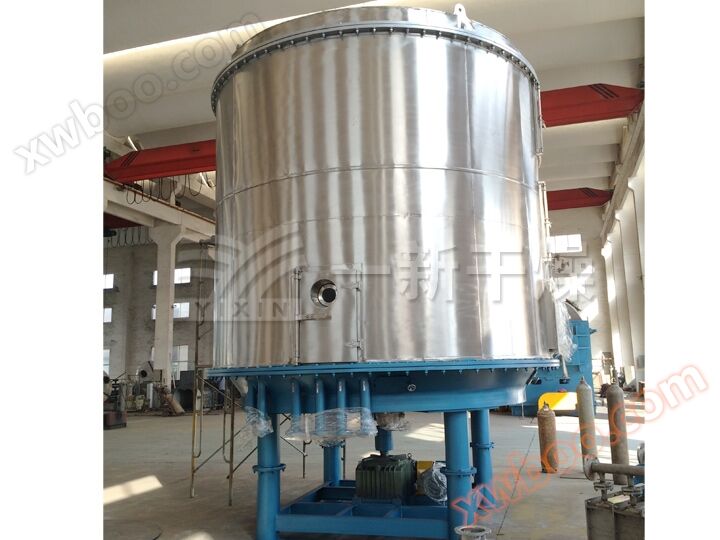
Flash evaporation dryer for battery materials
NegotiableUpdate on 05/18
- Model
- Nature of the Manufacturer
- Producers
- Product Category
- Place of Origin
Overview
Description: Working principle: Clean air heated by a heat exchanger is blown into the air inlet and spun into the annular gap at the bottom of the drying chamber at a suitable speed. It then enters the drying chamber in a tangential direction and rises in a spiral shape; At the same time, the material is quantitatively added into the tower by a continuously variable speed feeder. In the drying tower, the material undergoes sufficient and efficient mass heat conversion with hot air, and the dried powdered material is transported together with the hot air
Product Details
working principle:
The clean air heated by the heat exchanger is blown into the air inlet, spun into the annular gap at the bottom of the drying chamber at a suitable speed, and then enters the drying chamber in a tangential direction, rising in a spiral shape; At the same time, the material is quantitatively added into the tower by a continuously variable speed feeder. In the drying tower, the material undergoes sufficient mass heat transformation with hot air, and the dried powdered material is transported to the separator along with the hot air. The finished product is collected and packaged, while the exhaust gas is further processed by the dust removal device and discharged.
At the bottom of the drying tower, there is a snail shell type air distributor and agitator, and the speed of the agitator is infinitely regulated by adjusting the speed of the external motor. The agitator has two functions: it can drive the hot air entering the drying chamber from the distribution chamber to generate a high-speed rotating airflow, thereby forming a stable fluidized bed layer and avoiding unstable fluidization such as jetting and surging caused by local blockage; Secondly, due to the high-speed rotation of multiple sets of blades on the mixer, large pieces of material are continuously crushed, causing the particles that are dry on the outside and wet on the inside to be constantly wrapped, peeled off, and crushed. The surface is constantly updated, increasing the heat exchange area and strengthening the mass and heat exchange, thus improving the drying rate. In addition, the gap between the blades on the mixer and the wall of the drying tower is extremely small, and the materials adhered to the wall should be cleaned up in a timely manner to prevent the materials from staying for a long time and deforming. To ensure the invariant decomposition of materials, a cooling jacket is installed inside the tower wall to ensure the quality of thermosensitive materials. The volute shaped air distributor ensures that the tangential hot air uniformly passes through the bottom annular gap and rises in a spiral shape. The reasonable annular gap wind speed ensures good fluidization and drying of the material.
In the middle of the drying tower, a continuously variable speed quantitative feeder continuously adds materials. At the same time, the material is crushed by the bottom mixer and then blown up by high-speed rotating hot air, forming a relatively stable fluidized layer in the drying chamber. There is a rapid and sufficient exchange of heat and moisture between materials and hot air, with most of the water evaporating during this process. Material particles with high moisture content and smaller surface area settle in the drying chamber due to their gravity being greater than buoyancy. During the sinking process, they continuously dry and move to the bottom, where they are further crushed and dried by the blades and the impact of high-speed airflow. At this point, their gravity is less than buoyancy, and the particles begin to rise.
At the upper part of the drying chamber, there is a circular baffle, also known as a classifier. The material is carried up by the rotating airflow. Due to centrifugal force, large blocks of material that do not meet the moisture requirements (i.e. have a higher specific gravity) are subjected to centrifugal force, and their rotation radius increases. When their rotation radius is greater than the radius of the classifier, they are blocked in the drying chamber for further drying and crushing until they meet the requirements before overflowing. The finer crushed material is dried in the middle of the drying chamber and then carried up by the airflow. Due to its small particle size and meeting the moisture requirements (i.e. low specific gravity), the centrifugal force is relatively small, and its rotation radius is smaller than the classifier radius. It is then discharged with the airflow and sent to the collection device.
Characteristics of dryer:
1. An inner cone structure is installed at the bottom of the drying chamber to continuously increase the cross-sectional area of the dryer gas flow from bottom to top. The gas velocity at the bottom is relatively high, while the gas velocity at the top is relatively low, ensuring that the large particles at the bottom are in a fluidized state while the small particles at the top are also in a fluidized state. The inner cone structure also shortens the length of the cantilever part of the mixing shaft, thereby increasing the reliability of operation. In addition, this structure can effectively prevent the bearings from working in harsh conditions in high-temperature areas, thereby extending the service life of the bearings.
2. Install a scraper on the mixing teeth. While the material is being rotated and crushed by the stirring teeth, it is also thrown towards the wall and stuck to the surface. If the material stuck to the wall is not scraped off in time, serious "scarring" phenomenon will occur, leading to abnormal operation. Installing a scraper on the stirring teeth can ensure that the material is peeled off before it is firmly bonded to the wall
3. A grading ring is installed at the top of the drying room. Its main function is to separate and block materials with larger particles that have not yet dried, and continue drying to ensure that the product meets the requirements of narrow particle size distribution and uniform moisture content.
4. Install a cooling jacket at the hot air inlet of the cone bottom. At the point where the hot air comes into contact with the material, the temperature is very high, usually close to the temperature of hot air, far higher than the temperature in the bed. During operation, it is inevitable that a small amount of material will bond near the annular gap, stay for too long, and cause material deterioration or even melting. To avoid this phenomenon, a local jacket can be added to reduce the temperature of the wall at this location, allowing the operation to proceed smoothly.
The clean air heated by the heat exchanger is blown into the air inlet, spun into the annular gap at the bottom of the drying chamber at a suitable speed, and then enters the drying chamber in a tangential direction, rising in a spiral shape; At the same time, the material is quantitatively added into the tower by a continuously variable speed feeder. In the drying tower, the material undergoes sufficient mass heat transformation with hot air, and the dried powdered material is transported to the separator along with the hot air. The finished product is collected and packaged, while the exhaust gas is further processed by the dust removal device and discharged.
At the bottom of the drying tower, there is a snail shell type air distributor and agitator, and the speed of the agitator is infinitely regulated by adjusting the speed of the external motor. The agitator has two functions: it can drive the hot air entering the drying chamber from the distribution chamber to generate a high-speed rotating airflow, thereby forming a stable fluidized bed layer and avoiding unstable fluidization such as jetting and surging caused by local blockage; Secondly, due to the high-speed rotation of multiple sets of blades on the mixer, large pieces of material are continuously crushed, causing the particles that are dry on the outside and wet on the inside to be constantly wrapped, peeled off, and crushed. The surface is constantly updated, increasing the heat exchange area and strengthening the mass and heat exchange, thus improving the drying rate. In addition, the gap between the blades on the mixer and the wall of the drying tower is extremely small, and the materials adhered to the wall should be cleaned up in a timely manner to prevent the materials from staying for a long time and deforming. To ensure the invariant decomposition of materials, a cooling jacket is installed inside the tower wall to ensure the quality of thermosensitive materials. The volute shaped air distributor ensures that the tangential hot air uniformly passes through the bottom annular gap and rises in a spiral shape. The reasonable annular gap wind speed ensures good fluidization and drying of the material.
In the middle of the drying tower, a continuously variable speed quantitative feeder continuously adds materials. At the same time, the material is crushed by the bottom mixer and then blown up by high-speed rotating hot air, forming a relatively stable fluidized layer in the drying chamber. There is a rapid and sufficient exchange of heat and moisture between materials and hot air, with most of the water evaporating during this process. Material particles with high moisture content and smaller surface area settle in the drying chamber due to their gravity being greater than buoyancy. During the sinking process, they continuously dry and move to the bottom, where they are further crushed and dried by the blades and the impact of high-speed airflow. At this point, their gravity is less than buoyancy, and the particles begin to rise.
At the upper part of the drying chamber, there is a circular baffle, also known as a classifier. The material is carried up by the rotating airflow. Due to centrifugal force, large blocks of material that do not meet the moisture requirements (i.e. have a higher specific gravity) are subjected to centrifugal force, and their rotation radius increases. When their rotation radius is greater than the radius of the classifier, they are blocked in the drying chamber for further drying and crushing until they meet the requirements before overflowing. The finer crushed material is dried in the middle of the drying chamber and then carried up by the airflow. Due to its small particle size and meeting the moisture requirements (i.e. low specific gravity), the centrifugal force is relatively small, and its rotation radius is smaller than the classifier radius. It is then discharged with the airflow and sent to the collection device.
Characteristics of dryer:
1. An inner cone structure is installed at the bottom of the drying chamber to continuously increase the cross-sectional area of the dryer gas flow from bottom to top. The gas velocity at the bottom is relatively high, while the gas velocity at the top is relatively low, ensuring that the large particles at the bottom are in a fluidized state while the small particles at the top are also in a fluidized state. The inner cone structure also shortens the length of the cantilever part of the mixing shaft, thereby increasing the reliability of operation. In addition, this structure can effectively prevent the bearings from working in harsh conditions in high-temperature areas, thereby extending the service life of the bearings.
2. Install a scraper on the mixing teeth. While the material is being rotated and crushed by the stirring teeth, it is also thrown towards the wall and stuck to the surface. If the material stuck to the wall is not scraped off in time, serious "scarring" phenomenon will occur, leading to abnormal operation. Installing a scraper on the stirring teeth can ensure that the material is peeled off before it is firmly bonded to the wall
3. A grading ring is installed at the top of the drying room. Its main function is to separate and block materials with larger particles that have not yet dried, and continue drying to ensure that the product meets the requirements of narrow particle size distribution and uniform moisture content.
4. Install a cooling jacket at the hot air inlet of the cone bottom. At the point where the hot air comes into contact with the material, the temperature is very high, usually close to the temperature of hot air, far higher than the temperature in the bed. During operation, it is inevitable that a small amount of material will bond near the annular gap, stay for too long, and cause material deterioration or even melting. To avoid this phenomenon, a local jacket can be added to reduce the temperature of the wall at this location, allowing the operation to proceed smoothly.