- Phone
-
Address
Humin Road, Xuhui District
Product Categories
Shanghai Xinguo Electronic Technology Co., Ltd


Feisi FT ultra-low voltage DC electronic load NZ, N series
NegotiableUpdate on 05/20
- Model
- Nature of the Manufacturer
- Producers
- Product Category
- Place of Origin
Overview
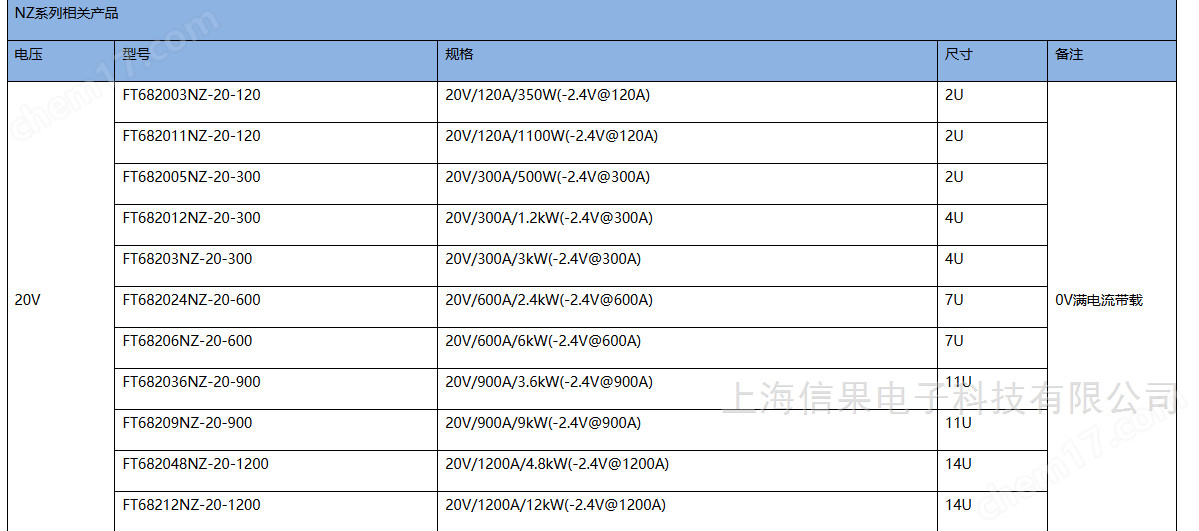
Feisi FT ultra-low voltage DC electronic load NZ, N series, for different current levels, this product includes two series: NZ, N. Its voltage ranges from 0 to 20V or 40V, with the NZ series capable of carrying a full current of -2.4V and the N series capable of carrying ultra-low voltage full current. The maximum carrying capacity can reach -2.4V@1200A The 0.2V@5000A This series of products has high precision and cost-effectiveness, making it an excellent choice for your testing.
Product Details
Feisi FT ultra-low voltage DC electronic load NZ, N series
|Briefly describe
Ultra low voltage and high current DC electronic load is a highly reliable and high-performance electronic load product developed based on FT conventional electronic load for low voltage and high current testing scenarios such as fuel cell testing and CPU power supply testing. This product includes two series for different current levels: NZ and N. Its voltage ranges from 0 to 20V or 40V, with the NZ series capable of carrying a full current of -2.4V and the N series capable of carrying ultra-low voltage full current. Capable of carrying capacity up to -2.4V@1200A The 0.2V@5000A This series of products has high precision and cost-effectiveness, making it an excellent choice for your testing.
|Characteristics
Low voltage carrying capacity can reach -2.4V@1200A The 0.2V@5000A ;
The NZ series supports a full current load of -2.4V and supports reverse polarity testing;
Support external analog programming control;
Battery capacity and internal resistance testing function;
Four testing modes: constant voltage, constant current, constant resistance, and constant power;
Simulate short-circuit function;
Support switching between near and far end measurements;
TFT color LCD screen, Chinese and English menu interface, high brightness, wide viewing angle, more comprehensive information display;
The transient testing function of 20kHz can be set with rising and falling slopes;
Provide multiple remote interfaces;
The sequence testing function supports testing of different temporal loading capabilities;
Intelligent protection functions such as overvoltage/overcurrent/overpower/overtemperature/polarity reversal;
Equipped with multiple communication interfaces: RS232, RS485, LAN, USB, CAN (optional);
Supports SCPI and ModBus communication protocols.
|Application Fields
Fuel cell testing;
Battery forced discharge test;
Power supply system testing for CPU and power devices;
Other low voltage and high current testing scenarios.
|-2.4V input full current carrying load
The NZ series can achieve full current carrying at -2.4V input. The low voltage and high current carrying characteristics make it advantageous in testing fuel cells, battery forced discharge, and CPU power supply systems.
|Ultra low voltage full current carrying capacity
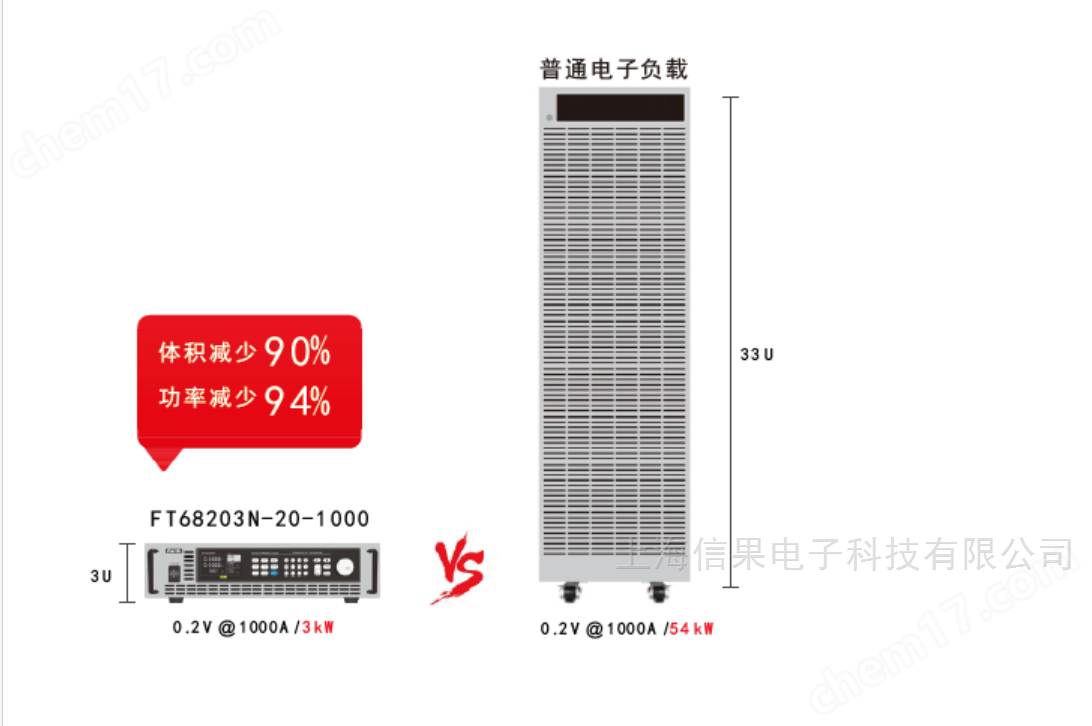
The ultra-low voltage and high current DC electronic load has ultra-low internal resistance characteristics, with a minimum internal resistance of less than 0.2m Ω. FT68203N-20-1000 can achieve 1000A current load at 0.2V input, with a power of only 3kW. Compared with ordinary electronic loads, its power is only one eighteenth under the same low-voltage load conditions. A smaller testing power can provide a larger testing current, which can greatly reduce testing costs in fuel cell membrane electrodes, monolithic cells, and short stack testing.
|Battery capacity test
For the convenience of battery testing, electronic loads provide battery capacity testing functionality. Battery testing includes: internal resistance testing and capacity testing. The battery capacity test uses a constant current method for discharging. During the discharge process, the load automatically records parameters such as voltage, current, time, AH, etc.
|Steady state function
Electronic loads have four testing modes: constant current, constant voltage, constant resistance, and constant power, which can meet a wide range of testing requirements. Constant current and constant resistance modes can be used to test whether the output voltage of a voltage source maintains stable output under different load conditions. For battery chargers and adapters, constant voltage mode can change the output voltage of the charger and adapter to verify whether the output current is correct.
Feisi FT ultra-low voltage DC electronic load NZ, N series
Similar Product Recommend