-
E-mail
41711365@qq.com
-
Phone
18518707030
-
Address
813, 8th Floor, No. 15 Information Road, Haidian District, Beijing
Product Categories
Beijing Duktech Technology Co., Ltd
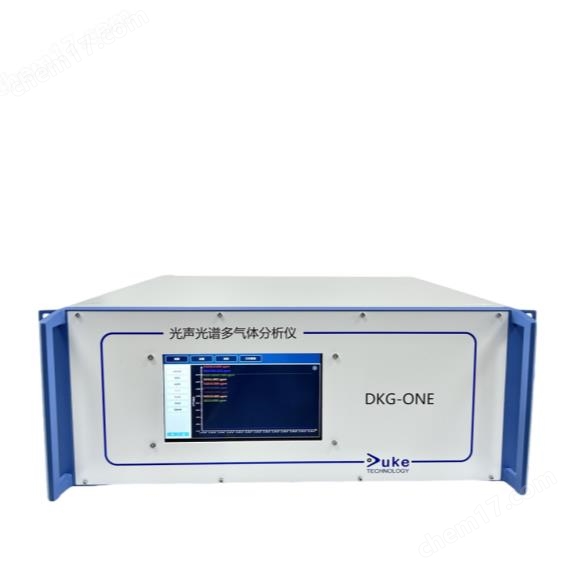
EtO photoacoustic spectroscopy gas analyzer
NegotiableUpdate on 01/04
- Model
- Nature of the Manufacturer
- Producers
- Product Category
- Place of Origin
Overview
The DKG ONE EtO analyzer is based on ultra sensitive cantilever beam enhanced photoacoustic spectroscopy detection technology, combined with quantum cascade laser (QCL) light source, and operates on the mid infrared basic spectral absorption peak of EtO. The combination of these two provides an ultra-high level of stability, with recalibration cycles lasting several months or even years, greatly reducing overall holding costs.
Product Details
EtO photoacoustic spectroscopy gas analyzer
Testing requirements:
Ethylene oxide, abbreviated as EtO, is used in multiple fields. It is irritating to the eyes, skin, and respiratory tract of humans, and has carcinogenic, mutagenic, reproductive, and nervous system hazards. It is also flammable and explosive, and its odor cannot be detected below 700 ppm. Therefore, it is necessary to monitor its concentration online for a long time to prevent harm to the human body.

EtO photoacoustic spectroscopy gas analyzer
Technical application:
The DKG ONE EtO analyzer is based on ultra sensitive cantilever beam enhanced photoacoustic spectroscopy detection technology, combined with quantum cascade laser (QCL) light source, and operates on the mid infrared basic spectral absorption peak of EtO. The combination of these two provides an ultra-high level of stability, with recalibration cycles lasting several months or even years, greatly reducing overall holding costs.


Ultra sensitive optical cantilever microphone
EtO photoacoustic spectroscopy gas analyzer
Technical advantages:
Adopting photoacoustic spectroscopy technology, high sensitivity and rapid response;
Direct absorption measurement without drift;
Low sample size, no consumables required;
Wide dynamic range, sub ppb level detection lower limit;
Independent operating system with built-in gas exchange pump;
Stable operation, long recalibration interval (several months).

EtO photoacoustic spectroscopy gas analyzer
Technical Principle
Working principle: Infrared photoacoustic spectroscopy
Ultra sensitive optical microphone, based on micro motor cantilever sensor, combined with laser interferometer to measure the micro motion of cantilever beam
Light source: distributed feedback quantum cascade laser
The temperature of the sample pool remains stable at 50 ℃
EtO photoacoustic spectroscopy gas analyzer
detection parameters
Response time: Depending on the channel integration time (C.I.T.) and gas replacement cycle, typically ranging from 3 seconds to 3 minutes
Detection limit: 0.1ppb
Dynamic Range: Typical Level 5 (100000 times detection limit)
Repeatability: Measurement values less than 1% at standard concentrations under working conditions
Accuracy: depends on the accuracy of the calibration concentration standard gas, typically 2-5%
Temperature stability: No impact within the working temperature range
Pressure stability: No impact within the pressure working range
EtO photoacoustic spectroscopy gas analyzer
General
19 "3 U industrial chassis, suitable for all desktop or rack mounted fixed installations
尺寸: 48.4cm W x 13.9cm H x 44cm D(19.1 In W x 5.5 in H x 17.3 in D)
Weight: Approximately 13kg
Embedded computer with built-in 7 "front display
The data storage capacity is sufficient for continuous monitoring for at least one year
Total gas production: 10-30ml
The rear panel has four gas interfaces, two of which are sampling interfaces, equipped with dust particle filters
Power supply:
Input voltage: 100-240VAC, 50-60 Hz
Input power: 100-200 W (depending on specific requirements)
Communication interfaces: Ethernet, USB
DKG ONE EtO can be remotely controlled through a smartphone, tablet, computer, or another DKG ONE (upcoming)
EtO photoacoustic spectroscopy gas analyzer
environment
Operating conditions
Temperature range: 0 ℃ to+49 ℃
Humidity: No condensation
Pressure: 750mbar~1050 mbar
Dust/water rating: IP20 (IEC 529)
Storage conditions
Temperature range: -20 ℃ to+60 ℃
Sample gas conditions
Temperature range: 0 ℃ to+49 ℃
Humidity: No condensation, maximum relative humidity of 80% at a temperature of 35 ° C,
Linear decrease to 35% when the temperature reaches 49 ° C
Pressure: 750 mbar to 1050 mbar
Airflow: approximately 1L/min
Particles<1 μ m
EtO photoacoustic spectroscopy gas analyzer
Standard:
Compliant with the Low Voltage Directive 2014/35/EU, EMC Directive 2004/108/EC, and ROHS 2 Directive 2011/65/EU


