-
E-mail
jaques.zhang@worldwide-china.com
-
Phone
18217289176
-
Address
Room 1707, Building A, Gonghe International Building, No. 3699 Gonghe New Road, Zhabei District, Shanghai
Product Categories
Shanghai Woeide Trading Co., Ltd
ECT electrical capacitance tomography imaging
NegotiableUpdate on 07/28
- Model
- Nature of the Manufacturer
- Producers
- Product Category
- Place of Origin
Overview
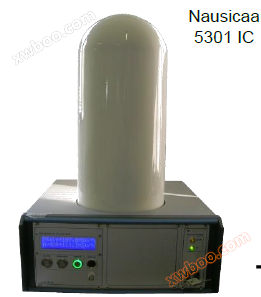
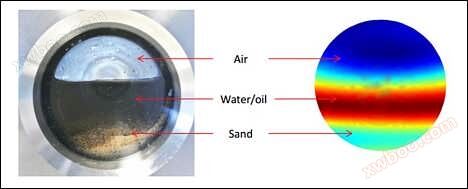
Specification: Model: Quantity: Brand: Packaging: Price: Similar to medical CT, electrical capacitance tomography technology uses different dielectric constants for each phase of the tested substance. When the distribution or concentration of each phase changes, it will cause a change in the equivalent dielectric constant of the mixed fluid, resulting in a change in the capacitance value between the measuring electrode pairs. Based on this, corresponding image reconstruction algorithms are used to reconstruct the dielectric distribution map of the tested substance field.
Product Details
| Specifications: | Model: | Quantity: |
| Brand: | Packaging: | Price: |
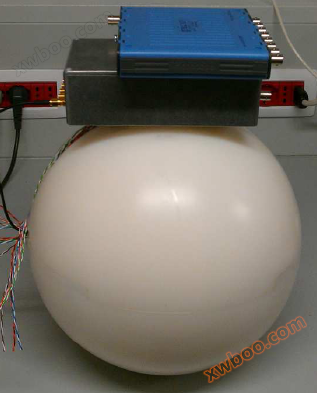
Similar to medical CT, electrical capacitance tomography (ECT) technology uses different dielectric constants for each phase of the measured substance. When the distribution or concentration of each phase changes, it will cause a change in the equivalent dielectric constant of the mixed fluid, resulting in a change in the capacitance value between the measuring electrode pairs. Based on this, corresponding image reconstruction algorithms are used to reconstruct the dielectric distribution map of the measured substance field.
Electrical capacitance tomography technology can display the properties of fluids in real time, regardless of whether the material is transparent or not, helping researchers understand complex flow processes. It is widely used in two-phase flow measurements such as fluidized beds, combustion, pneumatic conveying, and gas conveying research. It has the following measurement functions: multiphase flow imaging (liquid/liquid, solid/liquid fluid imaging); Multiphase flow velocity measurement, capable of measuring velocity at any point in any area of the flow field; Study the measurement of dispersed phase flow velocity in fluid structure, and measure the displacement structure volume as a function of time and space. Main benefits: Enhance understanding of processes and optimize computational models; Design flow systems with greater confidence and cost savings; Reduce energy consumption.
Electrical capacitance tomography (ECT) instruments are considered a process imaging technology with broad development prospects due to their advantages of speed, safety, and affordability. In recent years, electrical capacitance tomography technology has been applied in various fields such as gas-liquid two-phase flow porosity measurement and flow pattern recognition, visualization of gas-solid two-phase concentration distribution in fluidized beds, pneumatic conveying, flame visualization, and visualization of frozen soil moisture migration process. And with the urgent demand for new materials and technologies in various industries, their application fields are constantly expanding, becoming an essential routine analysis and testing method for research on new thermal utilization technologies, product design, and quality control.
Size: Custom
Experimental medium temperature: 0-70 ℃
High pressure: customized according to customer needs
Conductivity range: 0-50ms/cm
Number of electrodes: 8,16,32
Scanning frequency: 1 low/second, 30 high/second, and adjustable between 1 and 30 times/second.
Power consumption: Total 2W (two units, 1W)
per unit)
Excitation frequency: 40-400 kHz
Excitation voltage:<2V pp, adapt to the
target
Bus cable length: 10m
-811
Connection method with pipeline: flange connection/Sandvik Coupling L system