- Phone
-
Address
Linwubian Village, Xiegang Town, Dongguan City
Product Categories
Dongguan Tianmei Laboratory Equipment Co., Ltd

Dongguan laboratory furniture manufacturer
NegotiableUpdate on 05/06
- Model
- Nature of the Manufacturer
- Producers
- Product Category
- Place of Origin
Overview
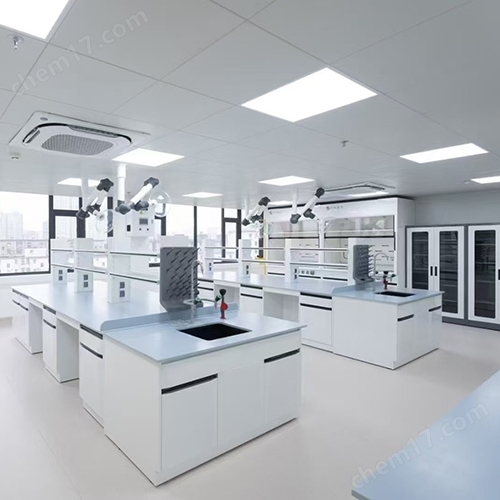
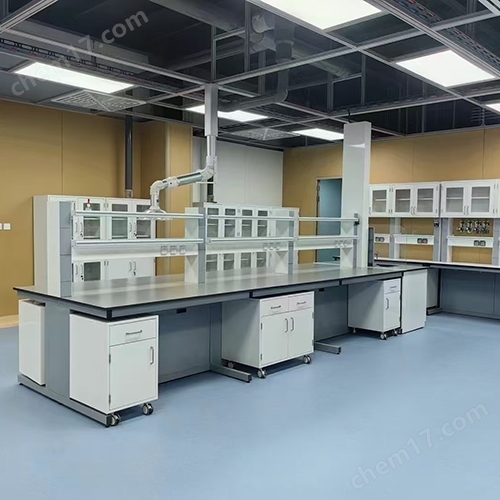
1、 Size and structural requirements $r $n Size standard: $r $n Standard width: Dongguan Tianmei experimental platform is usually 750 millimeters (mm) and 1500 millimeters (mm). $r $n standard length: Common lengths include 1800 millimeters (mm), 2500 millimeters (mm), and 3000 millimeters (mm). $r $n standard height: generally 750 millimeters (mm), 850 millimeters (mm), and 900 millimeters (mm), the specific height also needs to consider the height and usage habits of the experimenter. $r $n $r $n Structural types: $r $n Laboratory workbenches can be divided into island, peninsula, and wall types, depending on the laboratory
Product Details
The principles and regulatory requirements for laboratory layout design, as well as the overall layout of laboratory construction companies, should be based on short-term and long-term construction plans, with unified planning and design, centralized layout, land conservation, reserved development space, and meeting the requirements of sustainable development. The key points of laboratory design layout and specifications are as follows:

1、 Graphic Design System
1. The design conforms to ergonomics.
When designing the layout of the laboratory, safety should be given top priority.
The Heavenly Platform. The instrument platform should not be too close to the wall, and it is advisable to be 40cm away from the wall. In order to facilitate evacuation during work hazards, all experimental bench corridors lead to corridors. The clear width of the laboratory corridor is 2.5-3.5 meters, while the double door width of a regular laboratory is 1.1-1.5 meters, and the single door width is 0.8-0.9 meters.
2. Classification of laboratory functions.
According to people's different needs for laboratory functions, laboratory types are mainly divided into five categories: general chemistry laboratory, physics monitoring laboratory, instrument analysis laboratory, clean laboratory (sterile laboratory), and auxiliary laboratory.
The general chemistry laboratory mainly conducts experiments such as capacity analysis, ion measurement, and oxidation-reduction; The physics monitoring laboratory mainly conducts physics monitoring and analysis experiments; The auxiliary laboratory mainly includes a balance room, a high-temperature room, a pure water room, a gas cylinder room, a storage room, etc.
2、 Single structural functional design system
The laboratory specific basic supporting equipment is mainly divided into three parts: A. Experimental bench part; B. Instrument platform section; C. Functional cabinet section.
A. The experimental platform section.
According to the design functions of the monitoring center laboratory, it mainly involves three types of experimental platforms: physical experimental platform (physical monitoring experiment), chemical experimental platform, and biological experimental platform (mainly used for purifying sterile experiments).
B. Instrument platform section.
The instrument platform has high requirements for load-bearing capacity, stability, anti-interference ability, electrical control, strict gas distribution, safety, reliability, convenience, and ease of management. The carrying capacity of the instrument analysis laboratory is better than 500kg or more.
C. Functional cabinet department.
The main functions of a functional cabinet are service and storage, and important functional parts involve safety and environmental issues. According to the current mainstream design, functional cabinets are mainly made of wood and PP, which can be selected according to specific needs.
3、 Water supply and drainage design system.
The water supply and drainage design system mainly provides water supply services for the laboratory to ensure the use of water in the laboratory. Provide experimental platform plumbing points for architectural design institutes.
Among them, the laboratory water supply is equipped with rapid flow nozzles and slow flow nozzles. The single water nozzle is the rapid flow nozzle, the single PP water tank, and the double water nozzle is the slow flow nozzle; The specifications of daily water supply nozzles refer to the specifications of civil building domestic water pipeline fittings. The laboratory drainage is discharged into the negative first floor experimental wastewater treatment station through the laboratory wastewater discharge system, and after comprehensive treatment, it is discharged into the urban pipeline network; Daily water discharge is directly discharged into the urban sewage network.
real
4、 Electronic control system.
The electricity used in the environmental monitoring laboratory mainly includes lighting electricity and power electricity. Power electricity is mainly used for supplying power to various instruments and equipment, elevators, air conditioning, etc. The laboratory power supply system is also one of the basic conditions of the laboratory. The laboratory area requires AC and DC power sources, as well as single-phase and three-phase power sockets, and often has voltage stabilization requirements. The instrument analysis laboratory also needs to prevent electromagnetic interference, grounding, and electromagnetic shielding. The power sockets include: 10A.13A.16A.20A. Leakage protection switch, overload protection switch, etc.
5、 Gas exhaust system.
There are many chemical pollution sources in the laboratory that are harmful to human health, especially harmful gases, and exhaust is very important. But energy is often consumed in large quantities, so the ventilation control system in the laboratory should not only be safe, but also meet the needs of energy conservation. The typical exhaust equipment in laboratories mainly includes fume hoods, atomic absorption hoods, universal exhaust hoods, ceiling exhaust hoods, desktop exhaust hoods, etc
Similar Product Recommend


