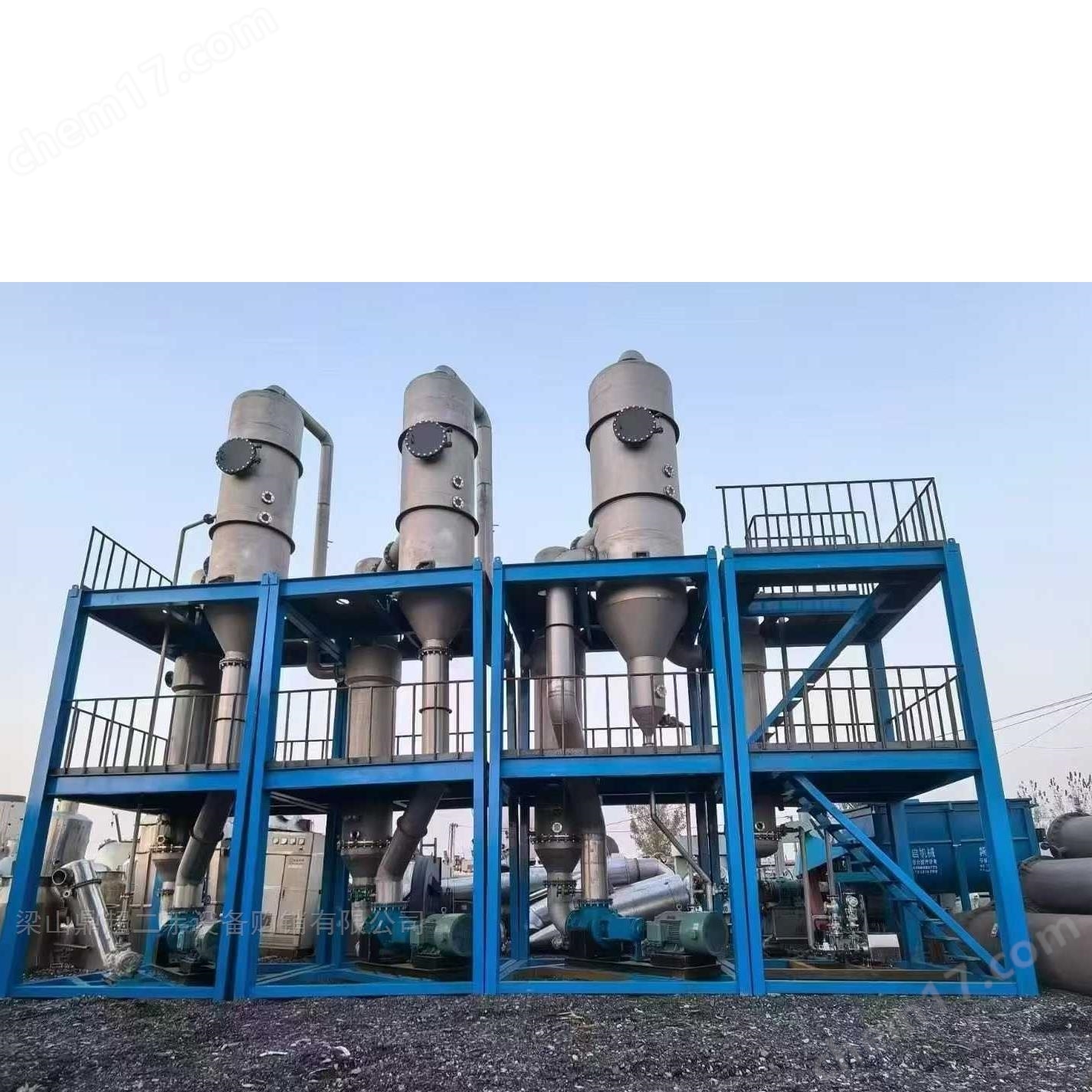
Circulating crystallization evaporator is a device that uses external power to drive the circulation flow of a solution, causing the solute in the solution to evaporate to a supersaturated state through heating, and then precipitate crystals
Circulating crystallization evaporator is a device that uses external power to drive the circulation flow of a solution, causing the solute in the solution to evaporate to a supersaturated state through heating, and then precipitate crystals. Here is a specific introduction:
working principle
MVR forced loop typeThe material is heated and evaporated in the evaporator, producing low-temperature and low-pressure secondary steam. The secondary steam is sucked in by the compressor, and after mechanical work is done to increase the temperature and pressure, it enters the shell side of the heat exchanger as heating steam. After releasing latent heat, it condenses into liquid water and is discharged. At the same time, under the action of the forced circulation pump, the material flows at high speed through the heat exchange tube to heat up, and then enters the evaporation chamber for flash evaporation. When the material reaches saturation, crystals begin to precipitate, and the crystal slurry is discharged by the discharge pump.
Double effect forced circulationThe feed liquid is input by the feed pump, heated by the heater, and enters the evaporation chamber for evaporation. Under negative pressure, some of the liquid vaporizes into steam, and the unevaporated feed liquid flows back to the heater for further heating, forming a forced circulation. The steam enters the condenser and is condensed. The concentrated liquid reaches saturation and precipitates crystals. After meeting the discharge conditions, it is discharged by the discharge pump. In double effect evaporation, one steam heats the liquid in the first effect heater, while the second steam serves as the heat source for the second effect heater, achieving the recycling of thermal energy.
structural composition
Crystallization roomGenerally with a conical bottom, used to accommodate solutions and crystals.
circulating pipeConnecting the crystallization chamber and the heating chamber is a channel for the circulation and flow of the solution.
circulation pumpProvide power for solution circulation, allowing the solution to flow between the circulation tube and the heating chamber.
heat exchangerCommonly placed in a heating chamber, used to heat solutions to achieve evaporation conditions.
separatorCan be located inside or outside the crystallization chamber, used for separating crystals and mother liquor.
Technical Features
High Efficiency and Energy SavingMVR technology can achieve thermal energy recycling, saving 60% -80% energy compared to traditional evaporators, and reducing cooling water consumption by more than 90%. The dual effect forced circulation system also improves energy utilization efficiency through multi effect evaporation.
Good anti scaling performanceThe material flows fully in the heat exchange tube with high flow rate and high heat transfer coefficient, which can effectively reduce the probability of scaling and extend the service life of the equipment.
High operational flexibilityBy adjusting parameters such as circulation pump flow rate and heating medium flow rate, the evaporation intensity, concentration ratio, and crystal particle size can be flexibly adjusted to meet different material processing needs.
Application field
chemical industryUsed for the treatment of high salt wastewater and the production of chemical raw materials such as sodium sulfate and sodium persulfate.
pharmaceutical industryUsed for drug intermediate concentration, crystallization, and solvent recovery to ensure drug quality and purity.
Environmental protection fieldTreat high concentration organic wastewater from industries such as electroplating, coatings, and metal processing to achieve water resource reuse.
food industryUsed for low-temperature evaporation concentration and crystallization of heat sensitive materials such as fruit juice, syrup, dairy products, etc.