-
E-mail
fsun@leemanchina.com
- Phone
-
Address
A-1002 Junfeng Huating, No. 69 Beichen West Road, Chaoyang District, Beijing
Product Categories
Beijing Liman Technology Co., Ltd
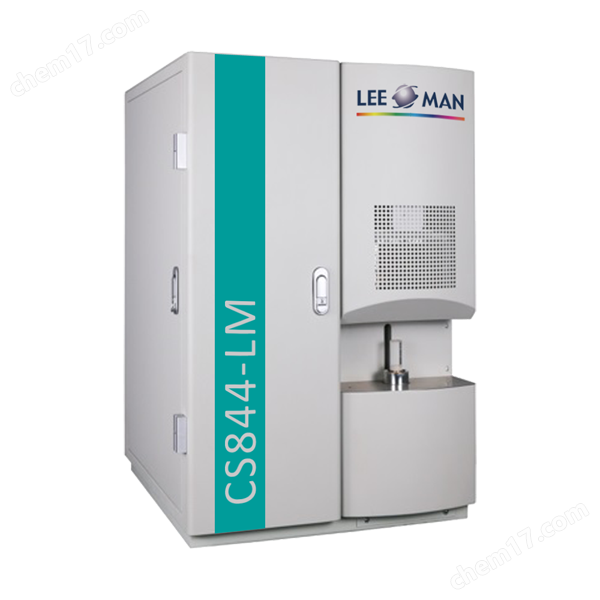
CS844-LM high-frequency infrared carbon sulfur analyzer
NegotiableUpdate on 02/12
- Model
- Nature of the Manufacturer
- Producers
- Product Category
- Place of Origin
Overview
The CS-844-LM high-frequency infrared carbon sulfur analyzer is widely used in energy, metal, chemical, material, aerospace, nuclear industry, military, university research and other fields. It is mainly used for the analysis of carbon and sulfur element content in black metals, non-ferrous metals, various alloys, rare earth metals, ores, coal, coke, lime, ceramics, cement and other solid non-metallic raw materials.
Product Details
Instrument Introduction
The CS-844-LM high-frequency infrared carbon sulfur analyzer is widely used in energy, metal, chemical, material, aerospace, nuclear industry, military, university research and other fields. It is mainly used for the analysis of carbon and sulfur element content in black metals, non-ferrous metals, various alloys, rare earth metals, ores, coal, coke, lime, ceramics, cement and other solid non-metallic raw materials.
CS-844-LM high-frequency infrared carbon sulfur analyzer, under oxygen rich atmosphere conditions, the sample is heated and burned in a ceramic crucible through induction heating in a high-frequency furnace. The carbon in the sample reacts with oxygen to generate CO2And trace amounts of CO, sulfur react with oxygen to produce SO2The analysis gas generated from this is carried by the carrier gas O2Bring in SO2The detector measures the sulfur content and then enters the converter to analyze the CO and SO in the gas2Reacts with CuO to generate CO2And SO3Among them, SO3At room temperature, it becomes a solid powder and is filtered by a filter, leaving the remaining CO2And O2Enter CO again2The detector measures the carbon content, and the final remaining CO2And O2The exhaust gas emitted from the instrument does not contain harmful gases such as CO and SO.
Main Features
High frequency induction furnace head constant temperature heating, no need to start preheating, with dual brush automatic cleaning function;
The infrared detector automatically controls the frequency of the light wave, without the need for a stepper motor, resulting in a more stable signal;
High quality pneumatic components, electronic flow control, and pressure compensation functions ensure the stability of the pneumatic circuit;
Equipped with a gas standard calibration system, it can replace solid standard samples for calibration and support multiple calibration modes;
■ Program temperature control function, suitable for different temperature control modes for different materials;
Multi variable nonlinear fitting method for the full range, avoiding segmented ranges;
Rich calibration functions, with multiple modes to choose from, including single point, two-point, multi-point, blank, linear calibration, etc.