-
E-mail
ec@hkaco.com
-
Phone
13412598543
-
Address
Science City, Huangpu District, Guangzhou City
Product Categories
Guangzhou Hongke Electronic Technology Co., Ltd


BE-GRANDIENT Microfluidic Chip
NegotiableUpdate on 01/19
- Model
- Nature of the Manufacturer
- Producers
- Product Category
- Place of Origin
Overview
The BE-GRANDIENT microfluidic chip is a device designed by us for applying electrochemical gradients to 3D cell cultures and creating barrier models. It is compatible with any type of optical microscope (inverted phase contrast, confocal, fluorescence, etc.). Be Gradient consists of a cell culture chamber and two channels in direct contact with it. Changing the concentration of an element between the channels on both sides of the central chamber will result in the formation of a chemical gradient for that element in the central chamber. For barrier and vascular system models, side channels are designed to simulate blood vessels, in which endothelial cells can be cultured.
Product Details
BE-GRANDIENT Microfluidic Chip
1、 Popularity Introduction
BE-GRANDIENT Microfluidic ChipIt consists of a central chamber (simulating cell culture) and two transverse channels (simulating blood vessels) that lead to the central chamber. Used to mimic in vitro cell culture. It can perform 2D (two-dimensional) or 3D (three-dimensional) cell culture under chemical gradients. Due to the optical transparency of the polymer used, it can be equipped with microscopes, fluorescence microscopes, and confocal microscopes for auxiliary observation.
l3D cell culture: First, cells are mixed in liquid phase hydrogel, and then they are drained to the central chamber. After the completion of hydrogel polymerization, the culture medium with different concentrations of compounds was perfused through the transverse channel, and the effect was monitored in real time.
l2D cell culture: suitable for adherent cells, can be detected not only in the central chamber but also in the transverse channel for cultivation.


2、 Material
The Be Radiant chip is made of biocompatible plastic, which is non breathable and suitable for effective gradients such as CO2 and O2. They have good optical properties, high transparency, and low spontaneous fluorescence.
3、 Product Highlights
lEasy to use:Be Radiant is compatible with any type of optical microscope (confocal, fluorescent, etc.) and uses a slide format for easy processing under the microscope.
lEasy to implement:The Be Radiant reaction chamber corresponds to a standard 96 well plate and can be used for automatic microscopy.
lEasy to connect:Be Radiant is compatible with all microfluidic systems (infusion pumps, peristaltic pumps, pressure control systems, rocker arm systems, etc.).
lNo drug adsorption: compared to othersUnlike PDMS devices, Be Radiant is made of lipophilic thermoplastic material, which does not cause non-specific drug adsorption issues. Therefore, it utilizes fluorescence to detect immunohistochemistry
lCell recycling options:The cell culture used by Be Radiant can be easily recovered for further experiments.
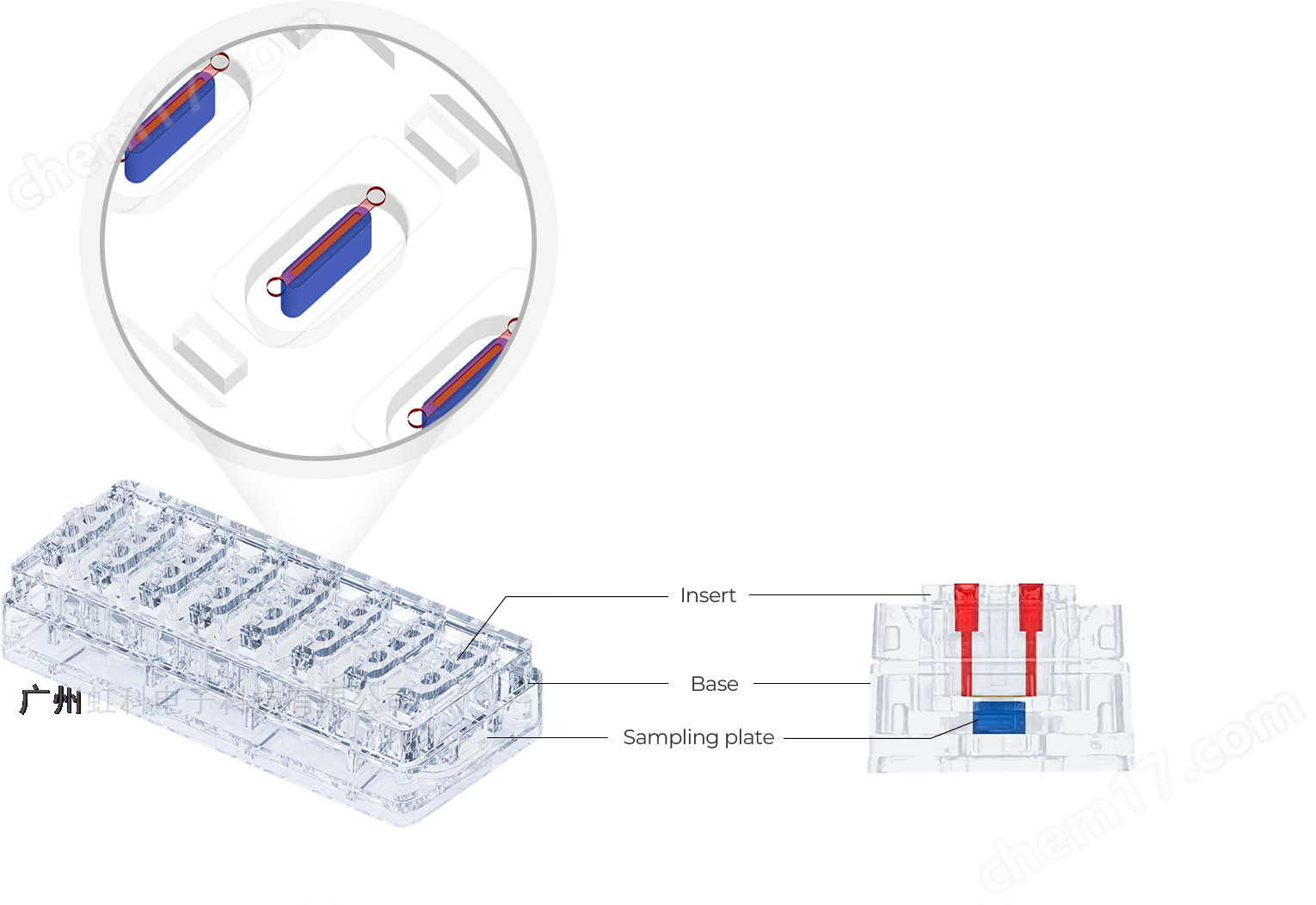
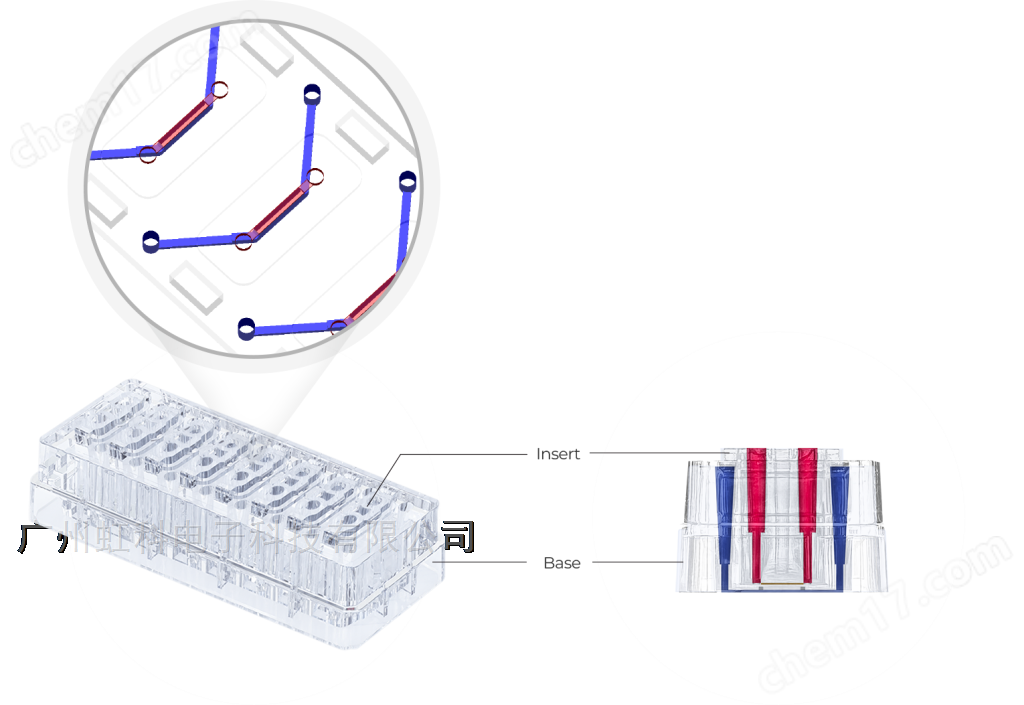
4、 Product Structure Diagram


5、 Technical parameters


6、 Application Fields
cell/Globular invasion and migration, angiogenesis, metastasis, angiogenesis, chemotaxis, ischemia, cell differentiation or oxidative stress, necrotic core generation within microdevices, glucose gradient experiments.
BE-GRADIENT BARRIER-FREE microfluidic chip
1、 Popularity Introduction
BE Radiant Barrier Free is a device we designed to apply electrochemical gradients to 3D cell cultures and create barrier models. It is compatible with any type of optical microscope (inverted phase contrast, confocal, fluorescence, etc.). BeGradient consists of a cell culture chamber and two channels in direct contact with it. Changing the concentration of an element between the channels on both sides of the central chamber will result in the formation of a chemical gradient for that element in the central chamber. For barrier and vascular system models, side channels are designed to simulate blood vessels, in which endothelial cells can be cultured.
2、 Material
The BE Radiant Barrier Free chip is made of biocompatible plastic, which is non breathable and suitable for effective gradients such as CO2 and O2. They have good optical properties, high transparency, and low spontaneous fluorescence.
3、 Product Highlights
·easy to use:BE Radiant Barrier Free is compatible with any type of optical microscope (confocal, fluorescent, etc.) and uses a slide format for easy processing under the microscope.
·Easy to connect:BE Radiant Barrier Free is compatible with all microfluidic systems (infusion pumps, peristaltic pumps, pressure control systems, rocker arm systems, etc.).
·No drug adsorption: Compared to othersUnlike PDMS devices, BE Radiant Barrier Free is made of lipophilic thermoplastic material, which does not cause specific drug adsorption issues. Therefore, it can use fluorescence to detect immunohistochemistry
·ImpermeabilityThese materials have extremely low permeability to oxygen and water vapor, and can be precisely controlled in microchannels by controlling the concentration and flow rate of these gases in the culture medium.
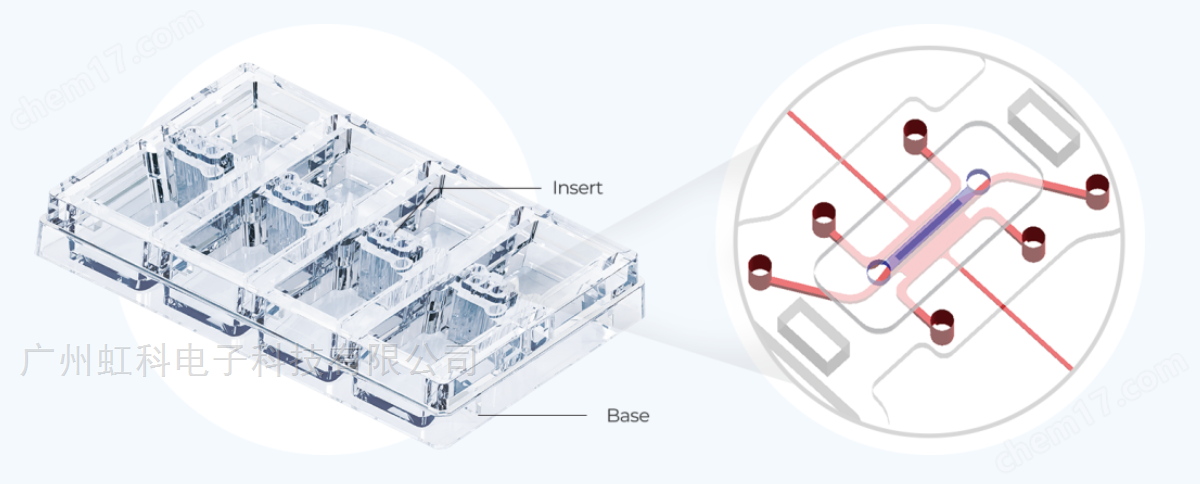
4、 Product Structure Diagram

5、 Technical parameters
height |
width |
length |
Total capacity |
|
中央通道 |
200 µm |
3 mm |
4,5 mm |
6,2 µL |
Two side channels |
200 µm |
1 mm |
50 mm |
10 µL |
entrance/Export |
7 mm |
UNF ¼’’ -28 |
130 µL |
|
culture chamber |
5 mm |
3,6 mm |
8,8mm |
185 µL |
*The volume displayed in the table is the theoretical value calculated for standard products. The changes in device characteristics of customized chips may alter the exact channel capacity.
6、 Application
BE Radiant Barrier Free is a chip used for three-dimensional cultivation that can achieve electrochemical gradients. This chemotactic stimulus contributes to the study of invasion and migration of cells/spheroids. Considering the metabolism of cell types, cell density, flow conditions, and availability of nutrients and oxygen, ischemia models can also be performed in this device. Another important application of BE Radiant Barrier Free is the barrier model, which can utilize transverse channels as endothelial cell culture zones to co culture different types of cells. In addition, this cell type can also be explored in the device to develop models for angiogenesis and endothelialization.
Similar Product Recommend