- Phone
-
Address
2nd Floor, Building D, Lane 518, Xiangjiang Road, Jiading District, Shanghai
Product Categories
Tiko (Shanghai) Biotechnology Co., Ltd

Astrocytoma of the human brain
NegotiableUpdate on 05/06
- Model
- Nature of the Manufacturer
- Producers
- Product Category
- Place of Origin
Overview
U-118MG human glioblastoma $r $n Note: According to reports, glioblastoma cell lines U-118 MG (HTB-15) and U-138 MG (HTB-16) from different individuals have consistent VNTR and similar STR patterns.
Product Details
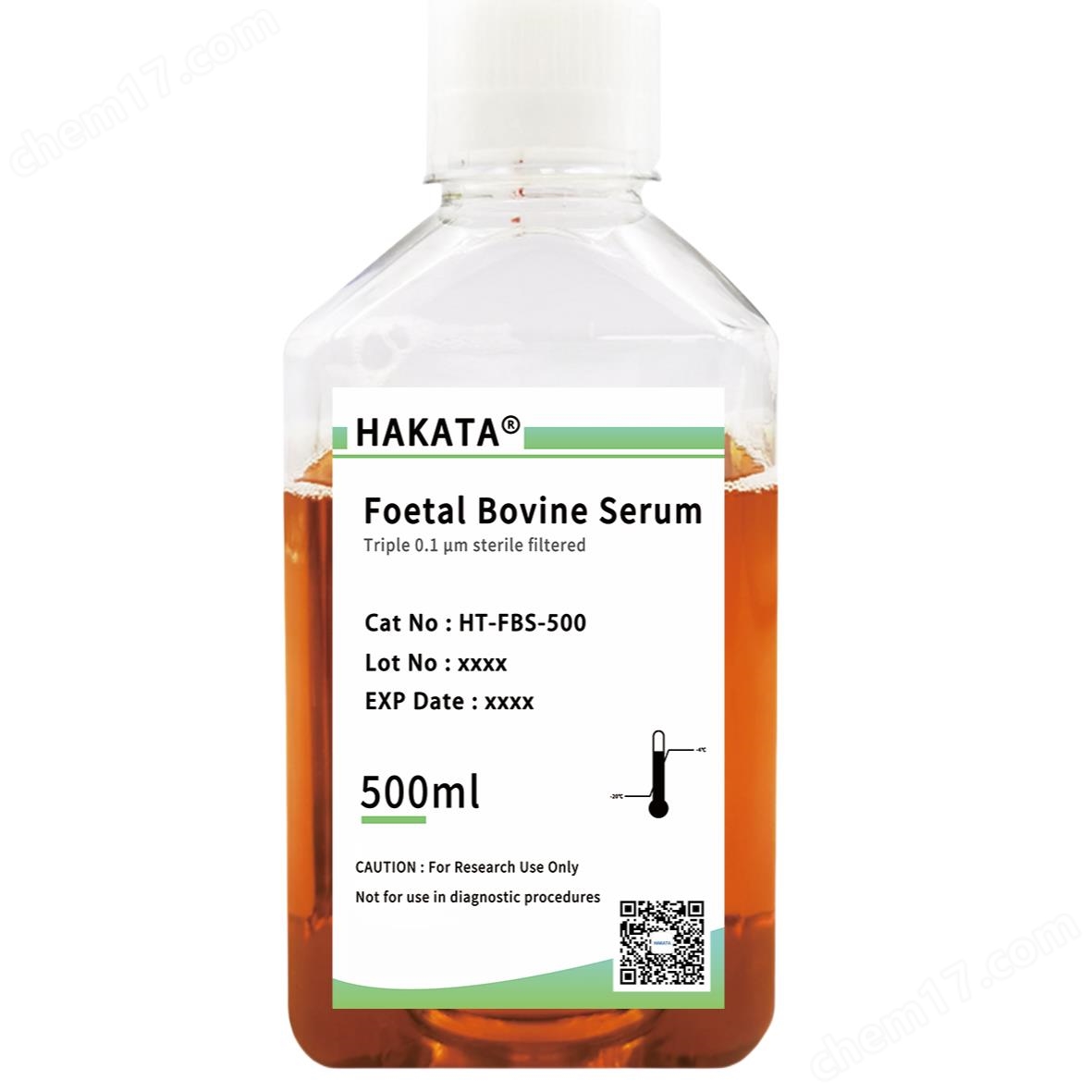
Use MEM medium (recommended HAKATA item number A19512); 10% fetal bovine serum (recommended HAKATA item number: HN-FBS-500); 1% dual antibody (recommended HAKATA item number: H8611)
AOLEWIS
A technology enterprise that focuses on the research and development, production, and service of cells and series products, and provides professional cell technology service outsourcing. The company mainly develops and produces a series of products including cell lines, primary cells, fetal bovine serum, basic culture medium, complete culture, auxiliary reagents, etc., and provides one-stop procurement services for cell and culture supporting products; The cell bank stores over 1309 cell lines and expands the variety of cell types through continuous introduction of cells; The company also provides recent STR identification services for human and mouse cell lines, species identification services for other species of cells, cell marker detection, contamination detection, and other cell related experimental services. The company's cell business covers major domestic university biology laboratories, biological research institutions, as well as some biological research, diagnosis, and pharmaceutical companies, continuously providing high-quality products and services for the vast number of scientific researchers!
Precautions ↓
Processing method for floating suspended cells
Attention: The culture medium transported in the bottle cannot be used anymore. Please use the newly prepared culture medium according to the instructions to culture the cells. It is recommended to use culture bottles that have not been treated with TC for culturing suspended cells.
1. If any abnormal phenomena, contamination, leakage, cell floating, etc. are found upon receipt of the goods, please take photos and record them, and contact our sales personnel or technical support in a timely manner;
2. Wipe the bottle body with 75% alcohol, and the sealing film does not need to be torn off. Place the T25 bottle in the incubator and let it sit for 2-4 hours before proceeding with the operation; For suspended cells, please place the culture bottle upright in the incubator and let it stand. During this period, please refer to the instruction manual to determine the cell properties;
3. After standing for 4 hours, collect all cells in the bottle and centrifuge them in 6 15ml centrifuge tubes at 110g (1000rpm) for 3 minutes. Collect all centrifuged cell precipitates in a T25 culture bottle and let it stand flat for 10 minutes. Observe the cell density under the microscope, take photos and record them, and continue to culture in the incubator. The next day, when the density reaches 80%, the cells can be passaged;
4. Suspension cell passaging method: In the absence of fragmented or dead cells, it is recommended to add fresh cultured cells directly and divide them into bottles.
Processing method for floating adherent cells
Attention: Some cells may float after transportation due to loose adhesion to the wall, and cell contraction and floating may also occur during low temperatures in winter, which is inevitable
After proper handling of factors, normal growth can be achieved.
1 . Transfer all the culture medium in the culture bottle into a sterile centrifuge tube and collect the cells by centrifugation (1200rpm, approximately 250g-300g centrifugal force, centrifugation)
3-5 minutes) Remove the old culture medium;
2. Resuspend cells in PBS, collect all cells into a centrifuge tube, and centrifuge again (at 1200 rpm, approximately 250g-300g)
Remove PBS by centrifugation for 3-5 minutes with force;
3 . Add about 1ml of trypsin EDTA solution, resuspend the cells at 0.25%, and mix well. It is recommended to shake the centrifuge tube to mix well and avoid blowing fine particles
Put the cells into a culture box to digest them, and determine the digestion time based on the characteristics of the cells (about 1-2 minutes for TM3, TM4, 293 series);
Attention: Some cells cannot be digested with trypsin. Please refer to the cell manual for instructions; A single floating cell does not require trypsin treatment.
4. After digestion, gently blow the cell suspension with a pipette to disperse the cell clusters, and quickly add 3-5ml of culture medium containing more than 10% serum
Mix the nutrient base evenly to terminate digestion, centrifuge (1200rpm for 3 minutes) to remove trypsin;
5. Add about 5ml of cells and mix well, then transfer them into sterile culture bottles in proportion;
6. Observe under a microscope whether the cells are evenly dispersed as single cells. If there are 3-5 small cell clusters, they do not need to be digested again
After sticking to the wall, wait for the cells to grow stably and then subculture again to dissipate the cells.
The use of the product is limited to scientific research and cannot be used as a therapeutic product for animal or human diseases.