Which polyacrylamide brands from china are reputable ?
Overview of major polyacrylamide manufacturers in China: 10 brands worth paying attention to09,21,2026 8 views


12,24,20250From:
Report Title:Visualization of early lesions of rice blast disease and mapping of field severity based on imaging hyperspectral imaging
Live broadcast time:December 25th, 10:00-11:00 AM
Guests of this issue:Nanjing Agricultural University - Xue Bowen (Zhongshan Young Researcher)
Participation method:
1. Follow the "Shuangli Hepu" video account and book a live broadcast immediately.

2. Scan the QR code below to schedule this live broadcast.

Speaker Introduction
Xue Bowen, Ph.D. from Nanjing Agricultural University, specializes in remote sensing monitoring of rice diseases. We have conducted in-depth and systematic research on key issues and industry demands such as disease identification, condition estimation, precise pesticide application, and yield estimation; Among them, the modeling of radiation transmission in susceptible crops, analysis of disease monitoring mechanisms, and construction of a general model for disease monitoring are the main research features, overcoming some theoretical and methodological limitations of remote sensing monitoring of diseases at the current stage. Published 11 papers (4 as one author) in well-known domestic and foreign journals such as Remote Sensing of Environment, Computers and Electronics in Agriculture, and Journal of Remote Sensing, and applied for/awarded 2 national invention patents.
Report content
The report mainly introduces a set of asymptomatic disease signal purification and visualization methods MESPOT based on the near end imaging spectral platform, which addresses the problem of inability to label pre symptomatic disease spots and weak spectral signals at the leaf scale. Based on time-series imaging spectra, multi element spectral unmixing, and spatial hotspot analysis, MESPOT achieves the visualization of potential disease spots and high-precision classification of asymptomatic diseased leaves. At the canopy scale, in response to the problems of poor generalization ability and low accuracy of multi phenological stage disease estimation models, based on parameter sensitivity analysis, confounding factor decoupling, and vegetation index normalization, the primary factors affecting the mechanism of phenological influence on disease estimation were analyzed. A high-precision disease estimation general model based on the improved rice blast index was constructed, and an accurate mapping of the severity of rice blast disease at the field scale was achieved using a drone imaging spectral platform.
Previous111
NextTime related single photon counter Time Tagger v2.17 software released, with new highlights!

Which polyacrylamide brands from china are reputable ?
Overview of major polyacrylamide manufacturers in China: 10 brands worth paying attention to
How to Source Reliable Polyacrylamide from Top Manufacturers and Suppliers
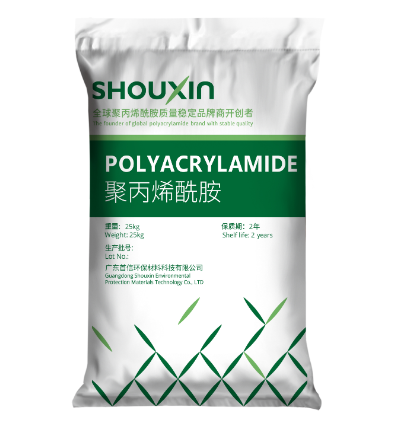
Shouxin Advanced Polymer Sciences provides high-performance polyacrylamide (PAM) solutions for water treatment, mining, pulp and paper, and industrial applications.
Polyacrylamide Manufacturer in China | Shouxin Advanced Polymer Sciences Co., Ltd.
Shouxin Advanced Polymer Sciences Co., Ltd. is a leading polyacrylamide (PAM) brand and global supplier based in China.