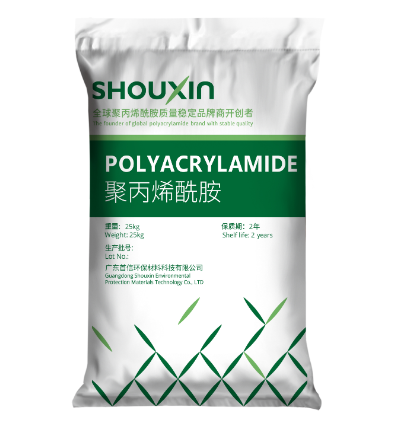
Top 10 polyacrylamide manufacturers in China
09,21,2026 16 views


viscometerProduct Introduction
Viscosity is a physical property of a flowing substance. When a fluid is moved by external forces, molecules
The resistance or internal friction between them is called viscosity. According to Newton's law of fluids, when a fluid passes between two parallel plates with a unit area and a unit distance apart, and the two plates move relative to each other at a certain shear rate, there must be a certain force to overcome the shear stress of the fluid. The ratio of shear stress to shear rate is the viscosity coefficient η (poise): η=t/D, where τ (dynes/cm2) is the shear stress and D (1/second) is the shear rate (or velocity gradient dv/dr). A fluid with a constant viscosity coefficient η is called a Newtonian fluid, otherwise it is called a non Newtonian fluid. Classification of Viscometers
viscometerclassification
The commonly used viscometers in the production process include rotary viscometers, ultrasonic viscometers, and capillary viscometers. A rotary viscometer is a type of viscometer with a rotational measurement system. There are many types of it: according to the measurement parameters, it can be divided into torque measurement (constant speed) and speed measurement (constant torque); According to different device structures, it can be divided into coaxial cylindrical and conical plate types. Figure 1 shows a torque type viscometer with a coaxial cylindrical structure. When the outer cylinder rotates at a certain speed, the viscosity can be expressed by measuring the torsional torque acting on the inner cylinder shaft. It can measure viscosity and is suitable for high temperature and high pressure. It is commonly used in industrial production such as chemical fibers, papermaking, resin polymers, etc. The ultrasonic viscometer consists of ultrasonic detection components and electronic instruments (Figure 2). When the electronic instrument outputs a pulse current to excite the iron cobalt vanadium shrapnel immersed in the measured liquid, mechanical vibrations that decay over time are generated due to the magnetostriction effect (see piezoelectric sensors). The viscosity of the liquid can be expressed by measuring the decay rate of the shrapnel in the liquid using a measurement circuit. The detection component can withstand temperatures up to 300 ℃, as well as high pressure and corrosion. Suitable for chemical, petroleum, papermaking, rubber, plastic, paint, and heavy oil combustion furnace control. Capillary viscometer is an instrument that uses capillary tubes to measure fluid viscosity. The behavior of fluid flowing through a capillary is described by the Poiseuille equation: η=(π r to the fourth power pt)/(8lv), where η is the viscosity coefficient, r is the capillary radius, l is the capillary length, P is the pressure difference at both ends of the capillary, v is the volume of liquid flowing through, and t is the flow time. There are various measurement methods for this type of viscometer, which can measure the time it takes for a certain volume of liquid to flow through a capillary tube under a certain pressure difference, and can also measure
Previous111
NextGuo Jinlong: Striving to build an ecological civilization demonstration zone - Yutong News

Top 10 polyacrylamide manufacturers in China

Which Chinese Polyacrylamide Manufacturers Offer Short Lead-Time and Reliable Delivery?
Shouxin's production lead time — the period from order confirmation and payment receipt to completion of manufacturing — is generally 1 to 2 weeks.
Which polyacrylamide brands from china are reputable ?
Overview of major polyacrylamide manufacturers in China: 10 brands worth paying attention to