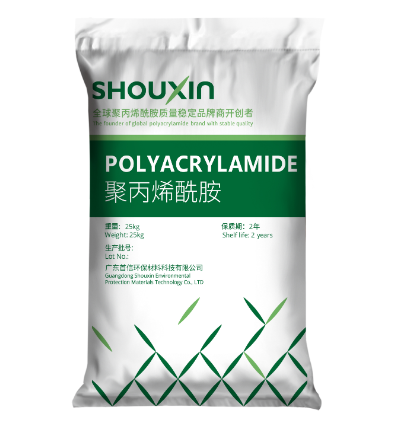
Which polyacrylamide brands from china are reputable ?
Overview of major polyacrylamide manufacturers in China: 10 brands worth paying attention to09,21,2026 8 views


06,23,20170From:
repairLeeb hardness testerGenerally, the following methods can be used to solve the problem. If you are unable to solve it yourself, you should return it to the manufacturer for repair
1、 The hardness value is inaccurate, with an error of about 50HL
It can be gradually checked and eliminated in several steps: 1) Power supply voltage: first check whether the power supply voltage of the Leeb hardness tester is normal; 2) Impact device: Remove all components of the impact device and clean any dust or dirt; 3) Control circuit: If the internal circuit components are damaged or have changed values, they need to be returned to the factory for repair.
2、 LCD screen font has missing strokes
1) Open it upLeeb hardness testerShell, re plug and unplug the IC that drives the LCD screen several times (some Leeb hardness testers use IC sockets to fix these ICs), to eliminate poor contact caused by oxidation of the IC pins; 2) The LCD screen assembly is internally damaged and needs to be replaced.
3、 When applying hardness, the LCD screen does not display any numerical values
1) Check for poor contact of the impact device. If it is damaged, replace it; 2) The internal circuit of the Leeb hardness tester has malfunctioned and needs to be returned to the factory for repair.
4、 Printing data overlaps
The problem of printing paper getting stuck can be resolved by disassembling and installing the printing paper box cover, and reinstalling the printing paper.
5、 Black screen
Measure whether the power supply voltage is normal, otherwise there is a fault in the circuit and it needs to be returned to the factory for repair.
6、 Impact does not display data
1. This is the most common fault in the repaired Leeb hardness tester, and 80% of the cause of this fault is a fault in the sensor connection wire. Why is such a high fault occurring? This is mainly determined by the structure of the sensor connection line. As the sensor connection line needs to be connected to the sensor and the Leeb hardness tester host, if one end fails, it will cause the impact to be unable to display the value. Almost all the connecting wires of the Leeb hardness tester on the market are modeled after the Swiss PROCEQ structure (the invention of the Leeb hardness tester). One end of the sensor connecting wire is equipped with a three pin plug, and high-quality manufacturers usually use gold coating on the surface to prevent air oxidation and poor contact. When this three pin plug is integrated with the connecting wire, the connection between the needle and the wire is the most critical process. If the processing factory does not do it well or uses some inferior connecting wires for processing, it is easy to reduce its service life. Users can easily damage the wire if the method of inserting and removing the connecting wire is incorrect during use.
2. The other end of the sensor is connected to the host, and many manufacturers use Remo plugs for this side of the plug. A few manufacturers use domestically produced plugs that imitate Remo plugs, while others use standard headphone plugs. However, the reason for the failure of this end is rarely due to the quality of the plug itself, that is, whether using domestically produced or imported plugs, it is not a problem. The reasons for malfunctions are usually due to poor soldering or virtual soldering between the plug and the connecting wire. Another reason is that users do not pay attention during the insertion and removal process. The correct way to insert and remove the sensor connecting wire is usually by pinching the plug, not by pinching the wire, otherwise it is easy to break the soldering between the wire and the plug.
3. Loose coil three pin socket can lead to poor contact, and multiple insertions and removals of the coil can easily cause the three pin socket on the coil to loosen, or cause the welding between the coil and the pin socket to detach, resulting in sensor impact not displaying.
4. The probability of the socket connection wire on the host falling off is relatively small. Unless the machine has been manually disassembled, the phenomenon of socket connection wire falling off generally does not occur.
5. The IC for collecting sensor signals on the host is damaged, and the probability of this happening is relatively small. If there is a power short circuit that causes the IC to burn out, it is generally easy to detect and the burnt out IC will have a burnt smell.
7、 The impact body cannot be loaded or released
Generally, the three claws that hook the impact body tightly on the sensor are not in the same center, that is, they do not form an equilateral triangle. Long term use will cause the elasticity of the three claws to change, making them somewhat loose or displaced, which can easily cause the impact body to slip off and release for the same reason. The three claws are not in the same center and cannot form an equilateral triangle. When releasing the claws, two of the claws hook the impact body while the other one is suspended, making it difficult for the impact body to release normally on the claws.
Another situation is that the top of the impactor is worn, causing the claws to be unable to grasp the impactor properly. Generally, if the above situations occur, it is necessary to return to the factory for repair.
8、 The sensor loading is not smooth
Generally, it is caused by dust entering the loading sleeve during long-term use, causing the loading spring to be covered in dust, resulting in uneven loading. Please return to the factory for maintenance
Previous111

Which polyacrylamide brands from china are reputable ?
Overview of major polyacrylamide manufacturers in China: 10 brands worth paying attention to
How to Source Reliable Polyacrylamide from Top Manufacturers and Suppliers
Shouxin Advanced Polymer Sciences provides high-performance polyacrylamide (PAM) solutions for water treatment, mining, pulp and paper, and industrial applications.
Polyacrylamide Manufacturer in China | Shouxin Advanced Polymer Sciences Co., Ltd.
Shouxin Advanced Polymer Sciences Co., Ltd. is a leading polyacrylamide (PAM) brand and global supplier based in China.