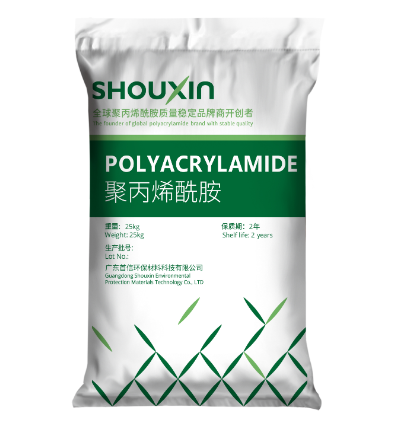
Which polyacrylamide brands from china are reputable ?
Overview of major polyacrylamide manufacturers in China: 10 brands worth paying attention to09,21,2026 9 views


10,16,20250From:
New Product Release: Ten Thousand Yuan Level! Fully automatic M2 measuring instrument

The AUT-CI-M2 series newly launched by Haoliang Optoelectronics is a high-performance fully automatic M2 measuring instrument priced at tens of thousands of yuan. It is also a price innovation for high-performance (high measurement accuracy, high repeatability stability) M2 measuring instruments!
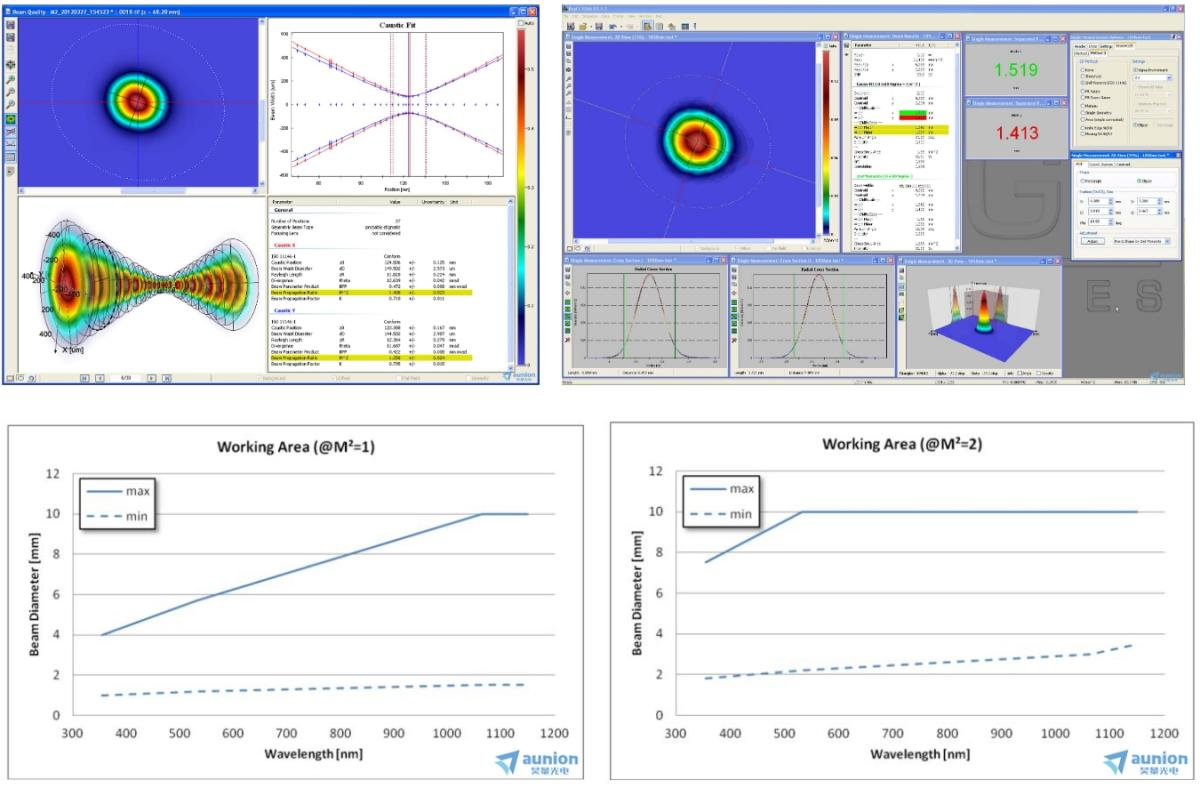
The AUT-CI-M2 series fully automatic M2 measuring instrument system is one of the CINOGY INSIDE series beam measurement system solutions developed by Haoliang Optoelectronics. It integrates high-performance CinCam series beam analyzer cameras and RayCi Pro control software with powerful measurement functions and algorithms. It can be used to measure spot size, waist diameter, 2D/3D energy distribution, beam position and stability, divergence angle, Rayleigh length, BPP, and beam quality factor M2.
The AUT-CI-M2 series M2 measuring instrument system from Haoliang Optoelectronics is an integrated compact design, fully automatic measurement, and out of the box complete solution; Each standard system includes attenuation plate group, lens group, optical path collimating mirror group, spot analyzer, etc. The system has been pre equipped and calibrated at the factory; Customers can meet different band measurement needs by replacing the spot analyzer camera;
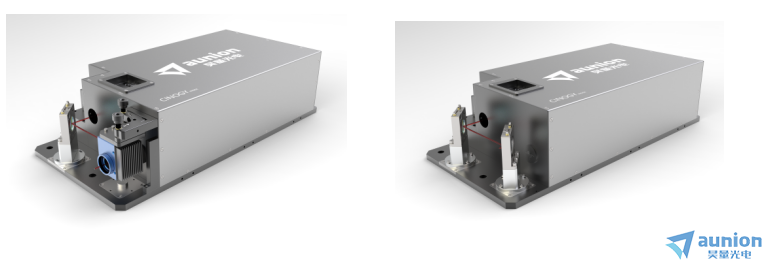
AUT-CI-M2 product features:
Wavelength coverage: 266nm to 1150nm
Measurement power: Up to 500W
Compatible with measuring continuous and pulsed lasers
Easy to operate, light collimation
The camera is replaceable and has higher adaptability
CINOGY INSIDE product solution ensures ultra-high performance

Main software diagram:
Several parameters used to characterize beam quality:
With the rapid development of the optical field, people have increasingly high requirements for beam quality in some high-precision laser application fields. Below, I will introduce several judgment methods that can characterize beam quality and their applicability.
1. Focus on spot sizeωfAnd the far-field divergence angle θ
Measuring beam quality using the focused spot size ω f is a simple and intuitive method. However, the size of the focused spot is related to the focusing optical system. The smaller the focused spot size, the greater the far-field divergence angle of the beam, and the shorter the collimation distance. Therefore, the commonly used criterion for determining the far-field divergence angle θ is derived from the size of the focused spot. Assuming a focusing optical system with a focal length of f and a diaphragm diameter of D, ideally a uniform plane wave is focused, and the radius of the focused spot (Airy spot) is ω f=1.22 λ f/D, while the far-field divergence angle θ=ω f/f. The far-field divergence angle θ of the laser indicates the distance that the laser can propagate without significant divergence, which is related to the focusing energy and is a commonly used criterion for beam quality.
2. Beam quality factor β
The beam quality factor β (also known as the diffraction limit factor) is a widely used indicator for evaluating the quality of laser beams. It is defined as the actual beam far-field divergence angle θ (referred to as the far-field divergence angle in the previous text) and the ideal beam far-field divergence θ0The ratio between angles, i.e. β=θ/θ0 .
The actual beta value of the beam is generally greater than 1, and the smaller the beta value, the higher the beam quality (similar to M)2). However, when using beta to evaluate beam quality, it is necessary to ignore the diffraction effects caused by the measurement system. The beta factor must be independent of the parameters of the measurement optical system, and it is a reasonable characteristic parameter for measuring the output beam quality of the laser; And because it can reflect the energy concentration and focusing ability of the actual beam in the far-field plane, the beta factor is also applicable to energy based applications. Relatively speaking, the obvious drawback of the beta factor is that due to the limited target surface of the measurement equipment receiving the laser far-field spot, when the beam quality deteriorates significantly after long-distance transmission, the high-order components of the far-field spot are difficult to detect. At this time, the beta factor cannot truly reflect the energy loss caused by high-order dispersion of the laser beam; And there is still some controversy over the selection of ideal reference beams for different types of lasers.
3. Strelby S
Strelby SRUsually refers to the peak Strell ratio, which is defined as the peak power I at the actual focal spotpeakidealPeak power I at the ideal focal spotpeakrealThe ratio. SR=Ipeakideal/Ipeakreal Strelby SRIt reflects the peak power of the laser at the actual focal spot in the far field, which can reflect the focusing performance of the actual beam in the far field. Therefore, it is widely used in the fields of atmospheric optics and adaptive optics to investigate the factors affecting wavefront aberration; The S of the actual beam of lightRGenerally less than 1, SRThe closer it is to 1, the better the beam quality. It is worth noting that Strelby S cannot provide spatial light intensity distribution information that is of interest to energy application systems. Additionally, Strelsby SRIt can only reflect the quality of the light beam and lacks sufficient guidance for the design and optimization of optical systems.
4. Beam propagation factor M
The commonly used beam quality evaluation standards are evaluation parameters certified by the International Organization for Optics and the International Organization for Standardization (ISO). The beam propagation factor M is defined as the spatial beamwidth product of the beam ω θ and the ideal beam spatial beamwidth product ω0θ0The ratio between them, formula M2=ωθ/ω0θ0。M2The factor simultaneously considers the effects of changes in beam width and far-field divergence angle on the quality of laser beams. Usually, when a laser beam passes through an ideal optical system, the spatial beam width product is invariant, avoiding uncertainty in evaluating beam quality based on the size of the focused spot or far-field divergence angle. (TEM00Gaussian beams have excellent beam quality, i.e. M2=1; M2The larger the factor, the farther the actual beam deviates from the ideal Gaussian beam, and the worse the beam quality.
Using M2There are still many difficulties in evaluating the quality of laser beams based on factors, such as the absence of a "beam waist" in the output beam of unstable cavity high-energy lasers, the applicability of the second-order moment definition of energy distribution discretization to target beam width, and the applicability of beam quality evaluation for hard edge aperture truncation. Moreover, in energy delivery applications such as high-energy laser systems, the far-field energy concentration of the actual beam cannot be simply measured by its M-factor.
5. Surrounding energy ratio BQ
The circumferential energy ratio BQ, also known as the power ratio in the target region, is defined as the circumferential energy E of an ideal beam in a certain "standard region"idealSurrounding energy E in the same area as the actual beamrealThe root of the ratio between them, i.e. Q=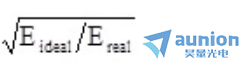 The circumferential energy ratio reflects the energy concentration on the far-field focal spot, which is particularly suitable for evaluating beam quality in energy transfer and coupling applications. For actual testing beams, BQ≥1, And the closer BQ is to 1, the better the beam quality. However, the description of the spatial distribution of energy (power) and focal spot intensity in a single region is insufficient. If different "standard region" sizes are taken, the lateral evaluation of laser beam quality with different output characteristics will yield completely different conclusions. Therefore, this method also needs to be combined with specific objectives.
6. Beam transmission factor BPF
Due to the increase in power of a single laser, the beam transfer factor BPF is introduced. Its calculation method is BPF=1.19 , where P is the power in the region with a far-field focal spot radius of 1.22 λ f/D of the actual beam, PtotalTo determine the total power of the output beam; The beam transfer factor BPF can be directly used to quantitatively analyze the energy concentration on the far-field target surface, thereby evaluating the quality of the output beam of high-energy laser systems. Among them, the reference beam is selected as a circular ideal uniform plane beam. The actual BPF value is always less than 1, and the closer it is to 1, the better the beam quality. This method was first developed by Chinese scientistsThe prospect is promising and worth promoting.
As the only generation of Cinogy in Chinese Mainland, Shanghai Haoliang Optoelectronics provides you with professional model selection and technical services. If you are interested in Cinogy or have any questions, please feel free to contact us by phone, email, or WeChat.
Regarding Haoliang Optoelectronics:
Shanghai Haoliang Optoelectronic Equipment Co., Ltd. is a professional agent for optoelectronic products, including various types of lasers, optoelectronic modulators, optical measurement equipment, optical components, etc., covering applications such as material processing, optical communication, biomedicine, scientific research, national defense, quantum optics, biological microscopy, IoT sensing, laser manufacturing, etc; We can provide customers with complete equipment installation, training, hardware development, software development, system integration and other services.

Which polyacrylamide brands from china are reputable ?
Overview of major polyacrylamide manufacturers in China: 10 brands worth paying attention to
How to Source Reliable Polyacrylamide from Top Manufacturers and Suppliers
Shouxin Advanced Polymer Sciences provides high-performance polyacrylamide (PAM) solutions for water treatment, mining, pulp and paper, and industrial applications.
Polyacrylamide Manufacturer in China | Shouxin Advanced Polymer Sciences Co., Ltd.
Shouxin Advanced Polymer Sciences Co., Ltd. is a leading polyacrylamide (PAM) brand and global supplier based in China.