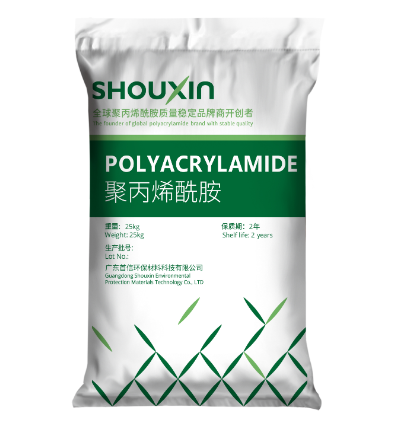
Top 10 polyacrylamide manufacturers in China
09,21,2026 16 views


10,29,202468From:
From the Electric War of 1890 to Camille Buaer's brief chronicle today
In this era, people can obtain sufficient electricity at any time and in any situation, but where does electricity come from? The majority of people's answer is: 'Of course it came out of the socket.' Does this automatically answer the question of electrical safety? We will provide a detailed introduction later. If we compare the history of electric current with the history of Camille Buaer company, we can find a good connection between the development of the two in certain fields. Why?
It all started with the War of Electricity - an economic dispute over technical standards
Around 1890, the so-called 'Electric War' broke out in the United States. The question at that time was whether the direct current voltage favored by Thomas Alva Edison (1847-1931) or the alternating current voltage praised by Nikola Tesla (1856-1943), sponsored by George Westinghouse (1846-1914), was more suitable for the technology of large-scale power supply and grid construction in the United States. However, due to Westinghouse's market power surpassing that of Edison and General Electric (known as General Electric since 1890), it soon became clear that the alternating current invented by Serbian born Nikola Tesla was rapidly gaining market recognition. This is mainly due to the absolute positive impact of reducing transmission losses by about 25%, and the breakthrough in using AC voltage to transmit electrical energy immediately emerged. At first, electricity was mainly used for lighting, but with the invention of incandescent bulbs by Thomas Alva Edison, lighting technology was improved. Westinghouse was originally a lighting manufacturing company, hoping to gain as much market share as possible through the use of alternating current. In Germany, in 1891, the first long-distance power transmission of over 170 kilometers from Laufen on the banks of the Neckar River to Frankfurt on the banks of the Main was put into use, marking a technological breakthrough using three-phase current technology. However, the topic of direct current is far from over. Especially due to the digitization of electricity, electric vehicles, distributed energy supply, and the rise of ultra-high voltage direct current transmission and distribution, direct current has begun to revive.


Camille Bauer's development history spanning over a century
The establishment of Camille Bauer company can be traced back to 1900, just after the aforementioned power war, when the importance of electricity rapidly increased. At the turn of the century, Camille Bauer began naming itself after its founder Camille Bauer judlin as a trading company for the Swiss market, importing measuring instruments for the popular "electricity" theme and selling them in the local market. A few years later, in 1906, Dr. Siegfried Guggenheim (1875-1938), former scientific assistant to Wilhelm Conrad R ö ntgen (1845-1923, Nobel Prize winner in Physics), founded a company under his name in Nuremberg, Germany, which was almost a start-up. Mainly engaged in the manufacturing and sales of electrical measuring instruments. However, due to Nazi pressure, Mr. Gugenheimer was of Jewish descent, and the company had to change its name in 1933, so Metrawatt AG was established at that time. In 1919, a man named Paul Gossen entered this field. As an employee, the latter was very dissatisfied with his work at Dr. Guggenheim, so he founded his own company in Erlangen near Nuremberg. As a result, the competition between these two rivals lasted for decades. In 1944, towards the end of World War II, Camille Bauer discovered that her trade business had actually come to a halt. All supply factories, mainly from Germany (such as Hartmann&Braun, Voigt&Haeffner, Lahmeyer, etc.), have been converted to wartime supply. Camille Ball's trading company in Basel has decided to reposition itself. In order to survive, they transformed into manufacturing companies. To this end, Wohlen's manufacturing company Matter, Patocchi&Co. AG was acquired in order to operate quickly with current resources. Camille Bauer's workplace in Volyn, Aargau canton, Switzerland was born in this way.


But the journey through time did not end here. Camille Bauer was taken over from Mannheim by the German family business R ö chling in 1979. At that time, R ö chling wanted to exit the steel business and re-enter the MSR technology field. Later, Gossen located in Erlangen and Metrawatt located in Nuremberg merged into one company in 1993. Prior to this, R ö chling also acquired Gossen as part of the Bergmann Group's acquisition from Siemens in 1989, and Metrawatt was acquired from ABB in 1992. At this time, Camille Bauer Deutschland, a sales company from Frankfurt's Dreyesch, was also integrated. Today, these companies have successfully operated globally under the GMC-I (Gossen Metawatt Camille Bauer Instrument) group brand.


The variation and constancy of electricity over time
The physical properties of electric current have not changed over time. However, the framework conditions have undergone significant changes, especially in the past 5-10 years. The liberalization of the electricity market, microgrid systems, renewable energy, photovoltaics, wind power, climate targets, carbon dioxide emissions reduction, electric vehicles, photovoltaic energy storage, Tesla, smart meters, digitization, network security, power quality and other hot topics are all on the agenda of the public and businesses. Finally, it is worth mentioning that climate change has also affected politicians through protests. We will wait and see how it turns out. The above keywords can be used to create excellent scenarios about power supply security. In fact, traditional power infrastructure, usually as old as Camille Bauer Metrawatt, was not created for new energy behaviors, whether in terms of power consumption or distributed feeding. Therefore, a more intelligent system that obtains basic data through precise measurements is becoming increasingly important for avoiding faults, power outages, and the resulting damage.
Today Camille Bauer visualized electricity
Various new themes are drivingCamille Bauer metawatt AGBoldly face challenges again - most importantly, in innovative and beneficial ways. Therefore, Camille Bauer Metrawatt AG develops, produces, and distributes its product line globally, divided into four technical sections. They are respectively in the fields of (1) measurement and display, (2) power quality, (3) control and monitoring, and (4) software, systems, and solutions. Camille Bauer Metrawatt has competent employees, modern tools, and external partners who can handle power quality issues and gain a deep understanding of them. In addition, the newly established Camille Bauer College in 2019 is taught by experienced lecturers on current and important topics. In addition, we maintain close contact with clients, government agencies, associations, technical committees, educational institutions, practical experts, and the scientific community to continuously improve the quality and impact of our products.


Top 10 polyacrylamide manufacturers in China

Which Chinese Polyacrylamide Manufacturers Offer Short Lead-Time and Reliable Delivery?
Shouxin's production lead time — the period from order confirmation and payment receipt to completion of manufacturing — is generally 1 to 2 weeks.
Which polyacrylamide brands from china are reputable ?
Overview of major polyacrylamide manufacturers in China: 10 brands worth paying attention to