-
E-mail
jackzhang2002@163.com
-
Phone
15001318480
-
Address
Room 406, No. 2 Ganlu Garden, Shilibao, Chaoyang District, Beijing (Jintai Lida Office Building)
Zhongke Weidian (Beijing) Technology Co., Ltd
High temperature and high pressure rheometer, the "rheological engine" for oil and gas exploration and industrial manufacturing
Date: 2025-12-12Read: 1
Under abnormal pressure and temperature conditions, the rheological properties of materials directly affect process safety and product quality.The M7500 high-temperature and high-pressure rheometer, with its core advantages of 30000psi ultra-high pressure, 600 ℉ (315 ℃) temperature resistance, and fully automated control, has become a "key equipment" in the fields of oil and gas development, geothermal energy, building materials testing, and moreIts application scenarios cover the entire chain from laboratory research to industrial scale production.
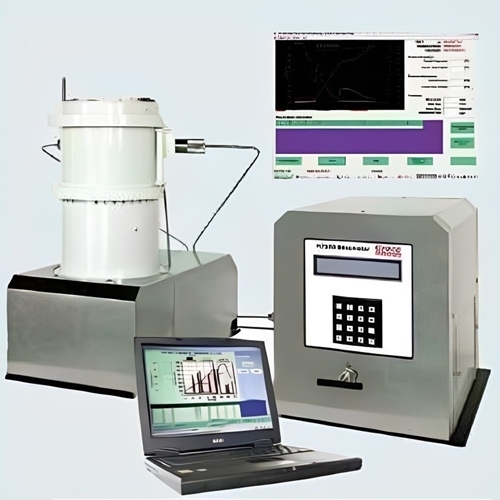
1、 Oil and gas exploration and development: the "rheological guardian" of deep well drilling
In ultra deep well (>6000 meters) drilling, drilling fluid needs to maintain stable rheological properties under high pressure and high temperature to prevent wellbore collapse and drilling accidents. The M7500 high-temperature and high-pressure rheometer can accurately simulate the wellbore environment and test the viscosity, shear stress, and thixotropy of drilling fluid. For example, after optimizing the drilling fluid formula using this instrument in a certain oil field, the drilling efficiency increased by 25% and the downhole accident rate decreased by 40%. Its anti pollution design (isolating pressurized fluid from the sample) ensures the reliability of test data and avoids measurement errors caused by the mixing of hydraulic oil.
In addition, the cement slurry testing module of M7500 can evaluate the fluidity and solidification time of cementing cement under high pressure, ensuring the sealing of the cement sheath.
2、 Geothermal and Energy Development: A 'Material Filter' for Abnormal Operating Conditions
In geothermal power generation and deep geothermal resource development, the working fluid needs to maintain low viscosity and high thermal conductivity under high temperature and high pressure conditions above 200 ℃. The PVT density testing module of M7500 can simulate the environment of geothermal wells, analyze fluid density, compressibility, and thermal expansion coefficient, and provide data support for the design of geothermal heat exchangers.
3、 Building Materials and Chemical Industry: Quality Control Instruments for Industrial Manufacturing
In the production of building materials such as cement and ceramics, the rheological properties of the materials directly affect the molding process and the strength of the finished product. The linear expansion testing module of M7500 high-temperature and high-pressure rheometer can measure the volume change of materials under high temperature and pressure, and optimize sintering process parameters.
In the field of chemical engineering, it can test the rheological properties of non Newtonian fluids such as polymer melts and coatings, and guide process optimization such as extrusion and injection molding.
4、 Research and Education: An Experimental Platform for Material Innovation
The modular design of M7500 supports customized functional expansion, making it an important tool for universities and research institutes to study material behavior under abnormal conditions. Its API standard compatibility (compliant with API 10B/13b) makes it a "standard equipment" for research and development in the oil and gas industry.
Conclusion
From deep well drilling to geothermal development, from building materials production to chemical manufacturing, the M7500 high-temperature and high-pressure rheometer has become the "core engine" for studying the rheological properties of materials under abnormal working conditions with precise, reliable, and efficient performance. Its modular design and intelligent operation not only reduce testing costs, but also promote technological upgrades in multiple industries, providing solid data support for industrial manufacturing and energy development.