-
E-mail
xinhanyq@126.com
-
Phone
18939263387
-
Address
Building 5, Left Bank International, 21st Century Plaza, Jinshui District, Zhengzhou City
Zhengzhou Xinhan Instrument Equipment Co., Ltd
Intelligent control of high temperature: analysis of core functions of intelligent high temperature furnaces adapted to harsh scenarios
Date: 2025-12-16Read: 0
In experimental scenarios such as material synthesis, ceramic sintering, and precision heat treatment, precise temperature control and stable controllability of the process directly determine the performance of the product and the success or failure of the experiment. Traditional high-temperature furnaces are difficult to meet complex requirements such as multi-stage heating, real-time monitoring, and data traceabilityIntelligent high-temperature furnaceWith targeted intelligent function design, it has become the core device for such harsh scenarios. It integrates precise temperature control, intelligent programs, data management and other functional modules to meet the high requirements of temperature accuracy, process stability and traceability in experiments, providing reliable support for experimental research.
The multi-stage programmable heating function is the core of adapting to complex processes and can accurately reproduce the temperature curve required for experiments. In material synthesis, many reactions require a multi-stage process of "low temperature pretreatment high temperature reaction gradient cooling". For example, the synthesis of nano ceramic powder requires impurity removal at 300 ℃, sintering at 1200 ℃, and finally cooling at a rate of 5 ℃/min to control grain size. The intelligent high-temperature furnace supports more than 20 pre-set heating programs, each of which can independently set the target temperature, heating rate, and insulation time. Through PID+fuzzy control algorithm, the temperature fluctuation of each segment is ensured to be ≤ ± 1 ℃, avoiding process deviation caused by manual adjustment. Some models also support curve copying and importing functions, making it convenient for different laboratories to reproduce the same experimental conditions.
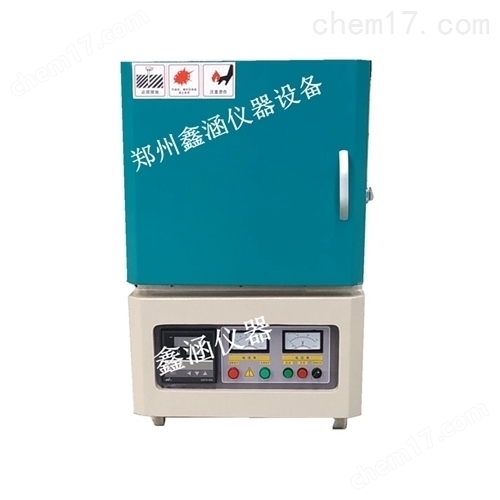
Real time temperature monitoring and dynamic compensation function provide comprehensive temperature guarantee for the experimental process. In precision heat treatment scenarios, such as annealing of aerospace titanium alloy components, even small temperature differences in the furnace can lead to uneven material hardness. The intelligent high-temperature furnace is equipped with multiple sets of high-precision thermocouples (with a temperature measurement accuracy of 0.1 ℃) in the furnace, which collect real-time temperature data from different areas and display it visually on the touch screen. When the temperature in a certain area deviates from the set value, the system immediately dynamically adjusts the corresponding heating tube power to ensure that the temperature uniformity in the effective heating area is ≤ ± 3 ℃. For long-term high-temperature experiments, the equipment also has temperature drift compensation function to avoid temperature decay caused by aging of heating elements and ensure temperature stability for continuous experiments of more than 100 hours.
The full process data traceability and analysis function meets the requirements of experimental repeatability and compliance. In material synthesis experiments for new drug development, temperature data must be traceable throughout the entire process to comply with GLP regulations. The intelligent high-temperature furnace is equipped with a large capacity storage module, which can automatically record the temperature curve, heating rate, equipment operation status and other data throughout the experiment. The storage capacity is over 1000 sets, and it supports exporting in Excel and PDF formats. Some models are also equipped with data comparison function, which can overlay the experimental curve with the standard curve for analysis, quickly locate the direction of process optimization, and provide data support for experimental improvement.
Adaptive load regulation function, adapted to the heating needs of different samples. In material synthesis, differences in sample weight and thermal conductivity can affect heating efficiency, such as the distinct heating characteristics of metal powders and ceramic bodies. The intelligent high-temperature furnace recognizes the thermal conductivity characteristics of the sample in real time through the load detection module and automatically adjusts the heating power output strategy - for high thermal conductivity metal samples, "pulse heating" is used to avoid temperature overshoot; For ceramic samples with low thermal conductivity, a "stepped power increase" is used to ensure uniform heat penetration, without the need for manual adjustment to achieve heating effects for different samples.
The core value of intelligent high-temperature furnaces lies in "matching strict requirements with intelligent functions". From multi-stage program temperature control to remote intelligent control, from precise temperature compensation to full data traceability, each function directly targets the core pain points of material synthesis, ceramic sintering and other scenarios. Through the synergistic effect of such intelligent functions, not only can experimental efficiency and data reliability be greatly improved, but operational barriers and safety risks can also be reduced, providing strong support for researchers to focus on experimental innovation and promoting technological breakthroughs in the fields of materials research and precision manufacturing.