-
E-mail
dufu2068@126.com
-
Phone
13663800518
-
Address
No. 36, Xianfu Street, Zhanjie Town, Gongyi City, Henan Province
Zhengzhou Dufu Instrument Factory
Daily maintenance checklist and execution standards for explosion-proof double-layer glass reaction kettle
Date: 2025-09-16Read: 2
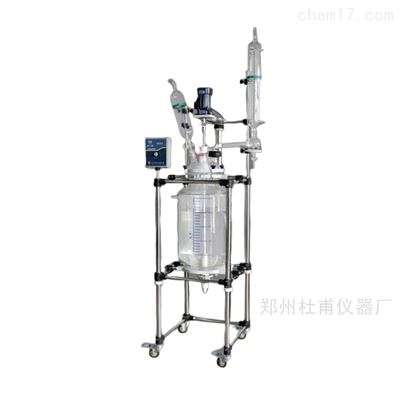
Explosion proof double-layer glass reactorIt is a core equipment for handling flammable, explosive, toxic and harmful media in the fields of chemical engineering, pharmaceuticals, new materials, etc. It achieves precise temperature control by introducing circulating media (such as cooling water or thermal oil) through a double-layer glass interlayer. At the same time, the explosion-proof motor and sealing design ensure operational safety in high-risk environments. Despite the precise structure of the equipment, potential hazards can be detected in a timely manner through a standardized three minute daily inspection, ensuring continuous and stable operation.
1、 Appearance and Sealing: Quickly Identify Risk Points
Before operation, anti-static gloves and goggles should be worn. First, check the overall appearance of the reaction vessel: whether there are cracks in the double-layer glass interlayer (especially at the connection between the vessel body and the jacket), and whether the glass surface is frosted (which may result in a decrease in insulation performance due to the vacuum failure of the interlayer). Focus on observing whether the sealing components - flange sealing rings (usually made of fluororubber or perfluoroether material) have hardened, deformed, or cracked, and whether the clamp bolts are loose (it is normal to gently pull the flange edge by hand without obvious gaps). If misty water droplets are found on the inner wall of the glass (under non condensing conditions), it may be due to seal failure causing external moisture to enter, and the machine should be stopped immediately.
2、 Connection and piping: ensuring system stability
Check all pipeline connections: whether the clamps of the feed pipe, discharge pipe, and interlayer circulation pipe are tightened (without leakage marks), and whether the hoses are aged and cracked (especially in long-term bent parts). Whether the insulation layer of the power line of the explosion-proof motor is complete (without damage or burnt smell), and whether the grounding wire is firm (grounding resistance<4 Ω). Whether the dials of the pressure gauge and thermometer are clear, whether the pointers are reset to zero (without any jamming or abnormal swinging), and whether there is any medium leakage at the interface between the connecting hose and the kettle body (if there is liquid dripping, it may be due to damaged sealing gaskets).
3、 Preparation for operation: Quick verification of functional status
Turn on the mixing motor (at low speed, such as 50rpm) and observe whether the motor runs smoothly (without abnormal noise or vibration), and whether the mixing blade (usually anchor or paddle type) has no friction with the inner wall of the kettle (which can be checked through the observation window). After starting the sandwich circulation system, touch the circulation pipeline with your hand (pay attention to anti scalding/anti freezing) to feel whether the medium flow is smooth (if a section of the pipeline is abnormally cold or hot, it may be blocked or leaking). Afterwards, check whether the lead seal of the explosion-proof relief valve (if equipped) is intact and whether the pressure setting value meets the process requirements (usually 1.1 times the design pressure).
Execution standards and precautions
All inspections must be carried out by personnel trained in the operation of explosion-proof equipment, using clean and oil-free tools (to avoid introducing impurities to contaminate the reaction medium). If the sealing ring is found to be aging (after more than 6 months of use or cracking), glass crack length>2mm, or motor operating noise>70 decibels, the machine must be stopped immediately and a "to be repaired" sign must be hung. Daily maintenance records should be filled out in detail (including inspection time, abnormal description, and handling results), and updated synchronously with the equipment lifecycle file - these three minute "micro habits" are precisely the guaranteeExplosion proof double-layer glass reactorThe key defense line that runs smoothly.