-
E-mail
marketing@alwsci.com
-
Phone
15700070305
-
Address
Building 16, Yuexing Science and Technology Innovation Park, No. 11 Fanrong Road, Binhai New City, Shaoxing, Zhejiang Province
Zhejiang Ouersaisi Technology Co., Ltd
Analysis of Nuclear Magnetic Tube Fracture Accident
Date: 2025-10-15Read: 49
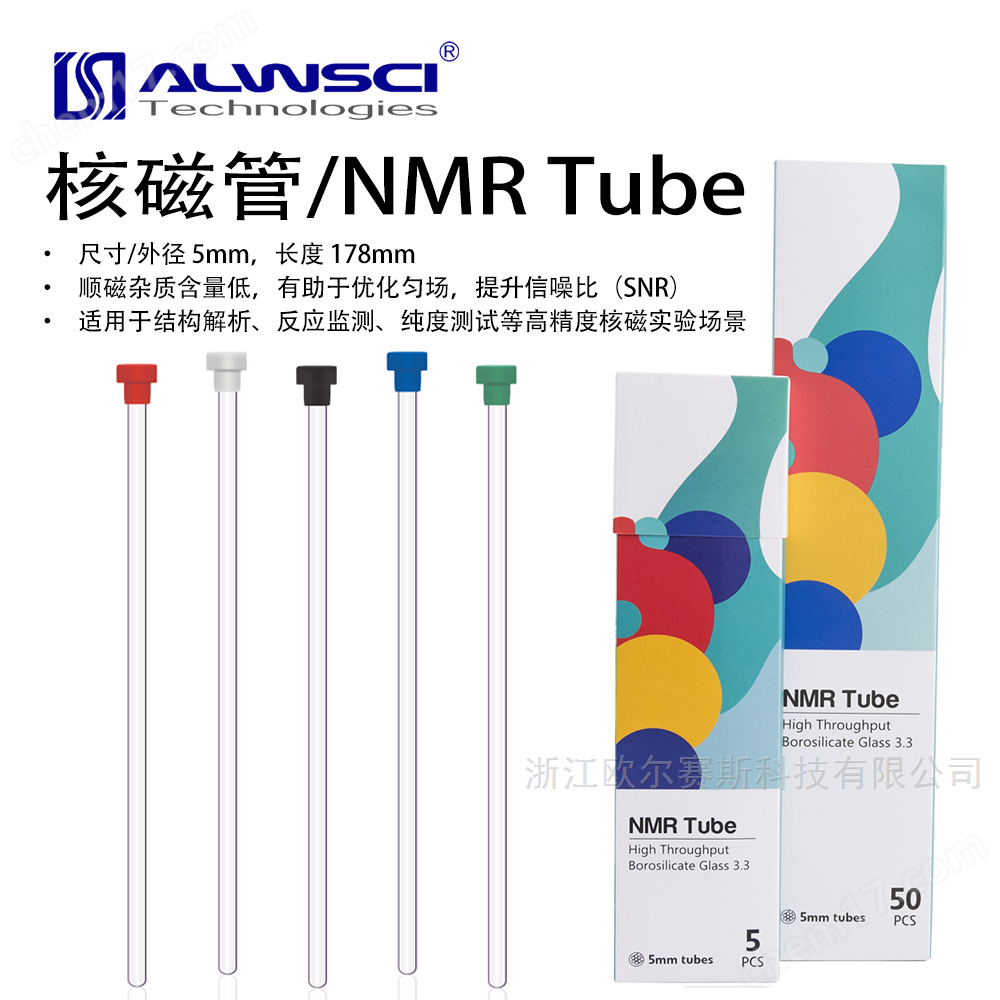
NMR tubeAs the core consumable for loading samples in nuclear magnetic resonance (NMR) experiments (commonly made of borosilicate glass material, with a temperature tolerance of -40 ℃~200 ℃ and an outer diameter of 5mm/10mm), its breakage accidents can easily lead to sample contamination, probe damage (repair costs can reach tens of thousands of yuan), and even cause personnel cuts. It is necessary to sort out the entire chain of "cause hazard emergency prevention" to reduce experimental risks.
1、 The core cause of the accident: the combination of material characteristics and improper operation
The breakage of nuclear magnetic tubes is often caused by material limitations and human operational errors, and the main causes can be classified into three categories:
Material and quality issues: Low specification nuclear magnetic tubes (such as those used for high-pressure experiments that are not resistant to high pressure, or thin-walled tubes with a wall thickness of less than 0.8mm) are selected. When the nuclear magnetic instrument rotates at high speed (usually 6000-15000Hz), it breaks due to centrifugal force exceeding the tolerance limit; Some inferior nuclear magnetic tubes have manufacturing defects such as bubbles and impurities, and can crack due to temperature changes (such as rapid temperature rise after sample freezing) or slight collisions.
Violation of operating procedures: using excessive force during sample loading (such as forcefully inserting the nuclear magnetic tube into the sample tube holder, causing the tube mouth to collide); After ultrasonic treatment, the sample was not cooled to room temperature (temperature difference exceeding 50 ℃) and was directly placed in a nuclear magnetic resonance instrument. The glass was broken due to uneven thermal expansion and contraction; The nuclear magnetic tube is not firmly fixed (such as loose sample tube holder), causing displacement and collision with the inner wall of the probe during rotation, resulting in breakage.
Equipment and environmental factors: There are foreign objects inside the sample chamber of the nuclear magnetic instrument (such as residual glass fragments that have not been cleaned), which rub and scrape against the nuclear magnetic tube during rotation; Sample chamber temperature control failure (such as actual temperature exceeding the tolerance range of the nuclear magnetic tube), resulting in a decrease in tube wall strength and breakage under centrifugal force.
2、 Consequences of accident hazards: multidimensional risk transmission
The breakage of nuclear magnetic tubes not only causes direct losses, but may also trigger chain risks:
Sample and equipment damage: The sample leaks with broken glass, contaminating the sample chamber and probe of the NMR instrument (if the sample contains corrosive reagents, it will corrode the probe coil and cause signal distortion); Broken glass may get stuck in the rotating parts of the nuclear magnetic analyzer, causing motor overload or mechanical failure. Shutdown for maintenance may take several days to weeks, affecting the progress of the experiment.
Personnel safety risk: Operators who clean broken glass without wearing protective gloves may be cut by sharp glass edges; If the sample contains toxic and flammable reagents (such as organic solvents, heavy metal solutions), leakage may cause poisoning and fire hazards through skin contact or volatile gases.
3、 Emergency response: scientific disposal to avoid risk expansion
After an accident occurs, it is necessary to follow the standardized steps of "shutdown protection cleaning detection":
Immediate shutdown and protection: Turn off the power of the nuclear magnetic instrument as soon as possible to avoid further damage caused by equipment operation; Operators should wear acid and alkali resistant gloves and goggles (if the sample is harmful), and direct contact with broken glass and leaked samples with their hands is prohibited.
Safe cleaning and isolation: Use specialized tweezers (non-metallic material, to avoid scratching the sample chamber) to collect all glass debris and place it in a sealed sharps box; Dip a dust-free cloth into a suitable solvent (such as ethanol to clean organic samples, distilled water to clean water-soluble samples) and wipe the sample chamber to ensure there are no residues; If leaked samples are harmful, they should be collected according to hazardous waste disposal standards to avoid environmental pollution.
Equipment testing and maintenance: After cleaning, check whether the nuclear magnetic detector probe is damaged (such as observing signal strength through no-load testing, if the signal attenuation exceeds 10%, contact the manufacturer for maintenance); Before replacing the new nuclear magnetic tube, confirm that there are no foreign objects in the sample chamber, and that the temperature and speed settings meet the specifications to avoid secondary accidents.
4、 Preventive measures: Reduce the probability of accidents from the source
By standardizing selection, operation, and equipment maintenance, it is possible toNMR tubeReduce the risk of breakage by over 90%:
Strict selection and quality control: Select suitable specifications according to experimental needs (such as thick walled pipes with a resistance of over 10MPa for high-pressure experiments and low-temperature pipes with a resistance of -80 ℃ for low-temperature experiments), prioritize the purchase of qualified manufacturers' products (such as nuclear magnetic tubes with ISO 9001 certification), and check the pipe wall for scratches and bubbles before use.
Standardized operating procedures: Handle the sample with care during loading to avoid collision; Ultrasonic or heated samples need to be cooled to room temperature (temperature difference ≤ 20 ℃) before being packed into tubes; Before placing the nuclear magnetic tube into the sample chamber, confirm that the sample tube holder is firmly fixed, there are no foreign objects in the sample chamber, and the speed and temperature settings match the specifications of the nuclear magnetic tube.
Regular equipment maintenance: Clean the sample chamber of the nuclear magnetic analyzer every month and check if the rotating parts are loose; Calibrate the temperature control system quarterly to ensure that the deviation between the actual temperature and the set value is ≤ 2 ℃; Establish a ledger for the use of nuclear magnetic tubes, recording the number of times they are used (usually no more than 5 times per tube) to avoid aging and damage.
Through the above analysis and response measures, the occurrence of nuclear magnetic tube breakage accidents can be effectively reduced, ensuring the safe and efficient conduct of nuclear magnetic resonance experiments, and avoiding personnel injuries and equipment and property losses.
Last Article: The 'optical code' of colorimetric bottles
Next Article: What role does a 4mm welded filter play in chromatographic analysis?