-
E-mail
info@evinstrument.com
-
Phone
13817869929
-
Address
1928 Liuxiang Road, Jiading District, Shanghai
Yiwei Technology (Shanghai) Co., Ltd
How to accurately measure vulcanization time with a rubber processing analyzer?
Date: 2025-07-24Read: 0
Rubber processing analyzers (such as rheometers or vulcanizers) can effectively determine the optimal vulcanization time by accurately measuring the physical property changes of rubber during the vulcanization process. The following are the specific methods and principles for measuring vulcanization time:
1. Measurement of vulcanization curve
By simulating actual vulcanization conditions (such as temperature, pressure, etc.), the rubber sample is heated and pressurized, and the physical properties of the rubber during the vulcanization process are continuously monitored. These changes are usually reflected through the following parameters:
Torque variation: As the vulcanization reaction progresses, the cross-linking degree of rubber increases, and its torque will correspondingly increase.
Shear modulus: The shear modulus of rubber also changes during the vulcanization process.
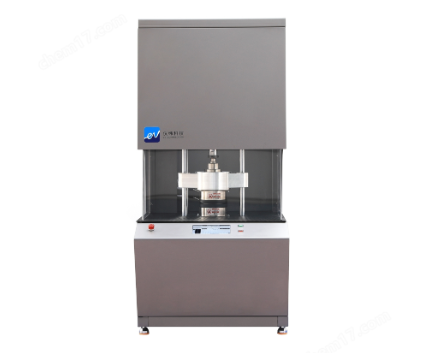
2. Determination of key parameters
By measuring the vulcanization curve, the following key parameters can be determined:
Burning time (TS1, TS2): refers to the time point at which rubber begins to vulcanize, usually expressed as the time when torque reaches a specific value.
Positive vulcanization time (T90): refers to the vulcanization time required for rubber to achieve optimal comprehensive performance, usually expressed as the time when the torque reaches 90% of the maximum value.
Vulcanization rate (VC): Evaluate the vulcanization rate by calculating the difference between the positive vulcanization time and the coke burning time.
3. Measurement method
There is a rotor vulcanizing instrument: it evaluates the vulcanization state by measuring the torque change through the rotation of the rotor in the rubber sample.
Rotorless vulcanizing instrument: measuring the torque change of rubber through oscillatory shear, this method has better reproducibility of experimental results.
4. Comprehensive consideration of temperature and time
The vulcanization time depends not only on the characteristics of the rubber material itself, but also on factors such as vulcanization temperature, initial temperature, and heating efficiency of the vulcanization equipment. For example, a higher initial temperature and good temperature uniformity can shorten the vulcanization time.
By accurately measuring the key parameters in the vulcanization curve through a rubber processing analyzer, enterprises can optimize the vulcanization process to ensure that rubber products achieve optimal performance in the shortest possible time, thereby improving production efficiency and product quality.