-
E-mail
xmyimai@163.com
-
Phone
18050037020
-
Address
Room 1401, No. 198, Building 7, Jiaxin Garden, Dongfu New City, Haicang District, Xiamen City
Xiamen Yimai Environmental Protection Technology Co., Ltd
The key to safeguarding water quality safety: Understanding the importance and core technologies of TOC analysis in one article
Date: 2025-11-12Read: 1
What is TOC?
The amount of organic pollutants in the total organic carbon measurement sample. TOC analysis is constantly conducted globally and is crucial for human safety and reproduction. Organic pollution can reduce ion exchange capacity, induce adverse biological growth, make treated water unsafe to use, and produce harmful by-products. Therefore, TOC analysis can help municipal authorities determine the effectiveness of the process.
How to measure TOC?
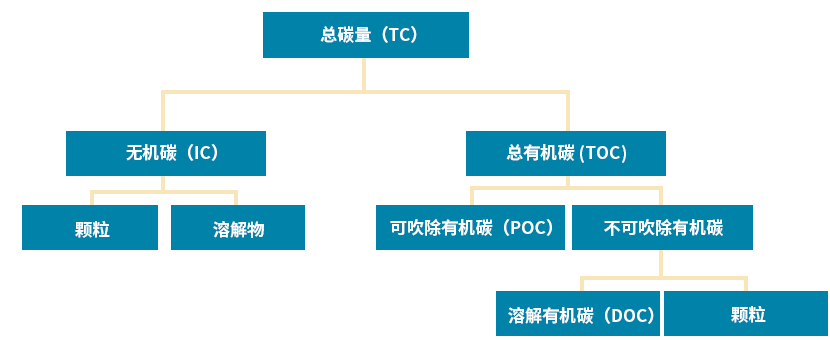
In short, the job of a TOC analyzer is to oxidize organic compounds into CO2And measure the generated CO2Quantity. Regardless of the oxidation technique, TOC must be determined by measuring or removing various components from the total carbon (TC) of the sample. These components are defined as follows:
Total Organic Carbon (TOC) -All carbon atoms covalently bonded in organic molecules
Inorganic Carbon (IC)-Carbonates, Bicarbonates, and Dissolved CO2
Dissolved Organic Carbon (DOC)-TOC component through 0.45 μ m pore size filter
Suspended organic carbon (also known as particulate organic carbon)-TOC components intercepted by 0.45 μ m filter
Blow off organic carbon (POC, sometimes referred to as volatile organic carbon)-TOC components removed from aqueous solutions by gas stripping under specific conditions
Non Blowable Organic Carbon (NPOC)-TOC components removed by gas extraction. In most cases, inorganic carbon is blown away rather than 'measured', in which case only NPOC is measured and POC is assumed to be negligible.
This figure visually illustrates how the components of TC are divided:
Other important terms
reagent blankThe detector response generated from the analysis results containing reagents without introducing samples or standards. This reaction is caused by carbon contamination in reagents, gases, digestion containers, and/or pipelines.
standard-Add any sample with known carbon content
Water blank or instrument method blank-The response of the analyzer to carbon content in water. During calibration, measurements are taken using water as the zero concentration standard.
Determine TOC
Total organic carbon is composed of all carbon atoms in organic molecules. Specifically, this is the measurement of all carbon converted to carbon dioxide through oxidation in organic compounds after removing inorganic carbon. The two most common techniques for measuring TOC are subtraction measurement and blow off measurement.
In the subtraction determination of TOC, measure IC and subtract IC from the measured TC:

The advantage of subtracting TOC is that the loss of POC is minimized. However, this technology has several drawbacks. Compared with blow off measurement of TOC, subtraction measurement of TOC has poorer processing capacity because this method requires two analyses for one TOC result. This technology is not applicable to samples with high IC content, where the IC content exceeds 50% of the expected TOC result.
In blow off determination of TOC, IC is blown off from the sample before any measurement is made. In this technique, if POC can be ignored, TOC equals NPOC. For this reason, blow off measurement of TOC is sometimes referred to as the NPOC technique.

Blow off measurement of TOC is faster than subtraction measurement of TOC because it only requires one analysis to determine TOC. For samples containing a large number of ICs, it has the highest accuracy, and due to the absence of interference generated by ICs, the overall accuracy is higher. The disadvantage of this technique is that it does not measure POC.
Xylem Saile
Main steps
TOC analysis can be divided into four main steps: sample introduction, oxidation, detection, and display. There are several options for each step; This ultimately depends on the TOC analyzer used.

Sample introduction
A simple straw system can be used for each sample introduction. Alternatively, a matching automatic sampler can be used, allowing users to load multiple samples into one sequence for analysis. If the TOC analyzer is an online TOC analyzer, it is directly connected to the water pump system and automatically collects samples for analysis at set time intervals.
oxidation
Several approved standard methods are used to measure TOC, including wet chemical persulfate oxidation and high-temperature catalytic oxidation (combustion). Wet chemical TOC analysis involves the oxidation of organic carbon to CO2 using catalysts and heating or UV lamps. The two steps of wet chemical oxidation are heating persulfate and persulfate UV. The combustion method for TOC analysis involves injecting the sample into a heated reaction chamber containing an oxidation catalyst. SM 5310B contains combustion TOC, while SM 5310C contains heated persulfate and persulfate UV methods.
detection
In TOC analysis, detection is usually carried out through solid-state non dispersive infrared detectors (NDIR) to measure the organic content in the sample. The working principle of NDIR is to pass an infrared beam through a sample chamber containing CO2 sample gas. Then measure the amount of infrared radiation absorbed by the sample within a specific wavelength range. For example, the infrared wavelength range of CO2 absorption is 4.26 μ m.
display
Finally, display refers to how to visualize the data obtained in the detection steps. This step greatly benefits from the technological revolution of the 21st century. Many TOC analyzers are equipped with internal computers and touch screen interfaces, or controlled by software on external PCs.