-
E-mail
2803218312@qq.com
-
Phone
18166600153
-
Address
Room 2804-2805, 28th Floor, T3 Building, Qidi Center, No. 67 Keji 2nd Road, High tech Zone, Xi'an City, Shaanxi Province
Xi'an Yingrun Environmental Protection Technology Group Co., Ltd
How to monitor oily wastewater from ships? Deep analysis technology, regulations, and practices
Date: 2025-12-04Read: 2
Ship oily wastewater, as the name suggests, refers to the wastewater containing various petroleum products and their residues generated during the operation of ships. This includes oily wastewater generated at machine locations (such as engine rooms), as well as wastewater that may contain residual cargo oil. If these sewage are discharged directly without treatment, they will cause serious damage to the marine ecological environment. Oil pollution can form an oil film on the water surface, hindering oxygen exchange and affecting the respiration and photosynthesis of marine organisms; Meanwhile, toxic substances in oil pollution can directly harm marine organisms and be transmitted through the food chain, ultimately posing a threat to human health. In order to implement a series of laws and regulations such as the Environmental Protection Law of the People's Republic of China, the Water Pollution Prevention and Control Law of the People's Republic of China, the Marine Environment Protection Law of the People's Republic of China, and the Regulations on the Prevention and Control of Marine Environment Pollution from Ships, protect the precious marine environment, promote the progress of ship water pollutant discharge control technology, and promote the construction of ship pollutant reception and treatment facilities, strict and effective monitoring of oily wastewater discharged from ships is particularly important. This is not only a legal requirement, but also a manifestation of responsibility for the ecology of the earth.
What are the core technologies for monitoring oily wastewater from ships?
In order to effectively control the discharge of oily wastewater from ships, a series of monitoring technologies have emerged. These technologies mainly focus on how to accurately and real-time measure the oil content in water, and are closely integrated with the ship's own oil-water separation and treatment system.
Online analytical monitoring instruments: how to achieve high-precision real-time monitoring?
Real time monitoring of oil content in water is crucial in the fields of water environment protection and industrial water treatment. Online analytical monitoring instruments have become one of the core equipment for water quality monitoring due to their high precision, real-time performance, and intelligent operation.
★UV fluorescence method
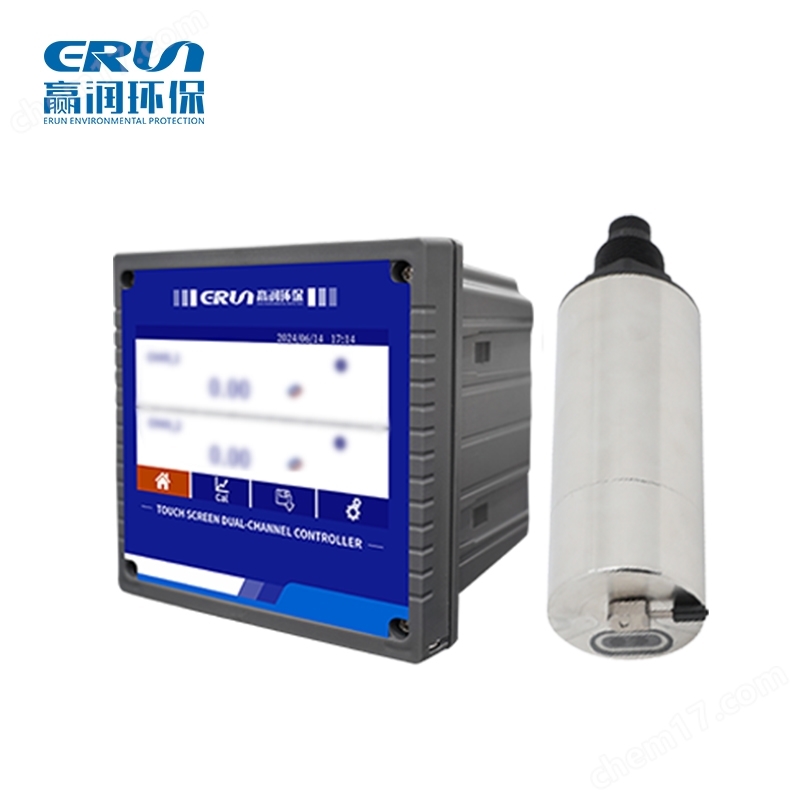
This is a widely used technology for monitoring oil content in water. For example, ERUN-SZ2-B-J4C developed and produced by Yingrun Environmental Protection GroupUV fluorescence monitoring equipment for polycyclic aromatic hydrocarbonsThis is a typical representative among them. Its working principle is to utilize the fluorescence property of polycyclic aromatic hydrocarbons (PAHs) in oil products when excited by ultraviolet light (usually 254nm UV LED light source). By detecting the intensity of fluorescence, the oil content in water can be inferred. This method has high sensitivity and can achieve detection accuracy at the ppb (parts per billion) level, which means even trace amounts of oil can be accurately captured. The device also has the characteristics of automatic error and alarm information prompts, support for multiple data transmission methods such as 4-20mA and MODBUS RS485, time display, data storage and export functions, etc., making it convenient for users to grasp the dynamic changes of monitoring parameters. The sensor part is equipped with a self-cleaning brush, which effectively prevents microbial adhesion and greatly extends the maintenance cycle, ensuring the long-term stable operation of the equipment. Its protection level reaches IP68, and it can work stably in harsh marine environments.
★other technologies
In addition to UV fluorescence method, there are other online monitoring technologies based on different principles. For example,infrared sensorDetermine the concentration of oil by measuring its absorption of specific wavelength infrared light;Optical non-contact sensorBy utilizing the natural fluorescence properties of oil, real-time detection and early warning can be achieved without direct contact with water bodies. These technologies each have their own focus, providing diverse options for precise monitoring of ship oily wastewater.
How to ensure the accuracy and compliance of ship oily wastewater monitoring?
The ultimate goal of monitoring oily wastewater from ships is to ensure that emissions comply with regulatory requirements and provide reliable data for environmental protection. To achieve this goal, in addition to monitoring technology and a sound regulatory system, it is also necessary to pay attention to the accuracy and compliance of monitoring in practice.
▲Equipment calibration and maintenance
The accuracy of monitoring equipment is the foundation of data reliability. For example, online monitoring equipment such as UV fluorescence analyzers need to be calibrated regularly. Usually includesZero point calibration, one point calibration, or two-point calibrationTo ensure the accuracy of the measurement results. Zero point calibration is used to eliminate background interference, while one or two point calibration criteria are used to establish accurate measurement curves. In addition, daily maintenance of the equipment is also crucial. For example, the sensor of ERUN-SZ2-B-J4C equipment is equipped withself-cleaning brushIt can effectively prevent microbial attachment and sample contamination, thereby extending maintenance cycles and ensuring long-term stability during operation. Regular cleaning and inspection can prevent data deviation caused by equipment failure or contamination.
▲Data recording and transmission
The integrity and traceability of monitoring data are important manifestations of compliance. Modern oily wastewater monitoring systems typically have powerful data storage and export capabilities, capable of continuously storing monitoring data for over 2 years. These data should include key information such as timestamps and oil concentration for easy access and auditing at any time. At the same time, it supports multiple data transmission methods, such as4-20mA analog signal output and MODBUS RS485 digital communication protocolEnable real-time transmission of monitoring data to the ship's monitoring system or shore based management platform, achieving remote monitoring and data sharing. Automatically prompt errors and alarm information, and implement the function of uploading alarm signals, ensuring that abnormal situations can be detected and handled in a timely manner.
▲Third party testing and supervision
In addition to monitoring and recording the ship itself, independent third-party testing and government supervision are also important steps to ensure compliance. National transportation units encourage ships to entrust qualified units to conduct annual sampling and testing of the effluent from domestic sewage and oily wastewater treatment facilities at machinery sites, and require obtaining testing reports. This annual inspection is an independent verification of the operation status and discharge water quality of ship pollution prevention equipment. At the same time, maritime management agencies will strengthen supervision and inspection of ships and their operations in accordance with regulations such as the "Regulations on the Prevention and Control of Marine Environmental Pollution from Ships", including reviewing ship oil record books, inspecting the operation of pollution prevention equipment, and conducting on-site sampling inspections. These multi-level supervision mechanisms jointly construct a compliance defense line for the discharge of oily wastewater from ships.