-
E-mail
2803218312@qq.com
-
Phone
18166600153
-
Address
Room 2804-2805, 28th Floor, T3 Building, Qidi Center, No. 67 Keji 2nd Road, High tech Zone, Xi'an City, Shaanxi Province
Xi'an Yingrun Environmental Protection Technology Group Co., Ltd
Electronic grade pure water TOC total organic carbon standard and detection: in-depth analysis and application
Date: 2025-11-24Read: 2
What is electronic grade pure water? In the modern electronics industry, especially in the semiconductor manufacturing field, the requirements for water quality have reached a high level. Electronic Grade Water refers to water that meets strict purity standards in terms of resistivity, particles, microorganisms, organic matter, metal ions, and other aspects. It is not just ordinary purified water, but also an important "blood" in the production process of high-tech products such as semiconductors, integrated circuits, and display panels.
Why is the total organic carbon (TOC) content crucial in electronic grade pure water? TOC is an indicator for measuring the total organic matter content in water, which reflects the total amount of dissolved and suspended organic pollutants in water. In the manufacturing process of electronic products, even trace amounts of organic matter can have catastrophic effects on product performance. For example, organic compounds may form residues on the surface of the wafer, leading to circuit short circuits, decreased device performance, and even failure. In addition, organic matter may also become a breeding ground for microorganisms, further polluting the production environment. Therefore, strictly controlling the TOC content in electronic grade pure water is the key to ensuring the quality and production yield of electronic products.
National standard for TOC of electronic grade pure water: strict boundaries
What is the national standard for TOC of electronic grade pure water? China has established strict national standards for electronic grade water, among which GB/T 11446.1-2013 specifies the TOC total organic carbon standards for different levels of electronic grade water. These standards are quality benchmarks that electronic industry production enterprises must follow, aimed at ensuring the cleanliness of the production process.
What are the specific requirements for TOC standards at different levels? According to the provisions of GB/T 11446.1-2013 Electronic Grade Water, electronic grade water is divided into four main levels based on TOC content, with specific requirements as follows:
| level | Total Organic Carbon TOC Standard (μ g/L) |
| EW-Ⅰ | ≤20 |
| EW-Ⅱ | ≤100 |
| EW-Ⅲ | ≤200 |
| EW-Ⅳ | ≤1000 |
From the above data, it can be seen that EW-I grade has the most stringent requirements for TOC, with its content controlled below 20 μ g/L. This is mainly applied in fields such as integrated circuit manufacturing that require the highest water quality. As the level decreases, the allowable content of TOC gradually relaxes to meet the differentiated water quality requirements of different production processes. These standards not only provide guidance for the production of electronic grade pure water, but also provide clear quantitative targets for TOC detection.
TOC detection principle and method: precise quantification method
How is total organic carbon (TOC) detected? The core of TOC detection is to convert organic carbon in water into measurable carbon dioxide. According to the national standard GB/T 11446.8-2013 Test Method for Total Organic Carbon in Electronic Grade Water, the commonly used method is the oxidation non dispersive infrared method. This method involves adding peroxides and other oxidants to water samples, and under specific conditions such as heating or ultraviolet irradiation, all organic matter in the water is oxidized and decomposed into carbon dioxide (CO ₂). At the same time, inorganic carbon in water (such as carbonates and bicarbonates) will also be acidified and converted into carbon dioxide. To distinguish between organic carbon and inorganic carbon, total carbon (TC) is usually measured first, and then non blowable organic carbon (NPOC) is measured after removing inorganic carbon through acidification, or calculated by subtraction: TOC=TC - IC (total inorganic carbon). Finally, the generated carbon dioxide gas is detected by a non dispersive infrared (NDIR) analyzer, and the TOC content in the water sample is calculated based on its concentration.
What are the common TOC detection methods? In addition to the oxidation non dispersive infrared method mentioned above, TOC detection methods also include high-temperature combustion oxidation method, ultraviolet oxidation method, etc. The high-temperature combustion oxidation method involves injecting water samples into a high-temperature furnace (usually above 900 ° C) to rapidly oxidize organic matter into carbon dioxide. The UV oxidation method utilizes the photochemical action of ultraviolet light to oxidize organic compounds without the addition of chemical reagents. The choice of detection method often depends on the characteristics of the water sample, the requirements for detection accuracy, and the functionality of the instrument. For example, online TOC analyzers typically use ultraviolet photocatalytic oxidation technology, combined with precision micro automatic sampling modules, to achieve efficient and continuous monitoring without the need for external catalysts or carrier gases.
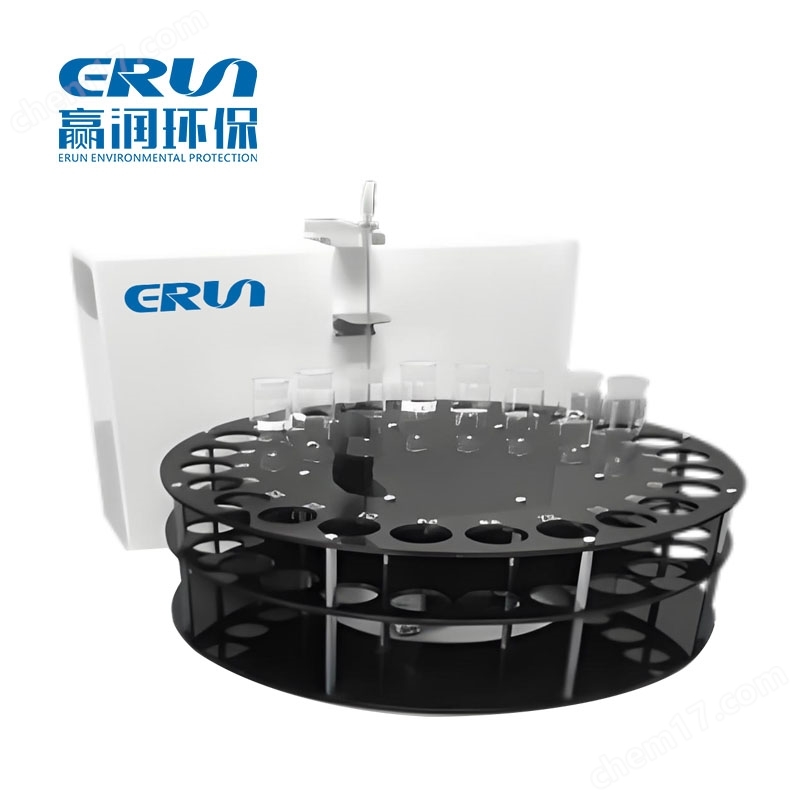
The water quality trace total organic carbon (TOC) analyzer is a highly sensitive detection device used for accurately determining the total amount of organic pollutants in water. Launched by Xi'an Yingrun Environmental Protection Technology GroupERUN-SP3-J3 TOC AnalyzerSpecially designed for ultra pure water scenarios with TOC concentrations below 1 ppm (i.e. 1000 μ g/L), with a detection limit of 1 ppb (0.1 μ g/L), it can simultaneously detect total organic carbon (TOC), total carbon (TC), total inorganic carbon (TIC), and non blowable organic carbon (NPOC). It is widely used in pharmaceutical water, electronic grade pure water, laboratory and drinking water quality control.
What is the significance of TOC control in electronic grade pure water? Strict control of TOC is not only to meet the requirements of national standards and industry norms, but also an inevitable choice to ensure the quality of electronic products, improve production efficiency, and reduce production costs. With the increasing integration of electronic products and the decreasing line width, the requirements for water quality will only become more stringent, and the control accuracy of TOC will also become an important indicator of a company's technological level.