-
E-mail
13991923748@139.com
-
Phone
13991923748
-
Address
Building 16, Puhui Zhongjin Science and Technology Innovation Park, Guangde Road, Airport New City, Xixian New Area, Xi'an City
Xi'an Taikang Biotechnology Co., Ltd
Common operational misconceptions and risk avoidance guidelines for laboratory reactors
Date: 2025-09-26Read: 95
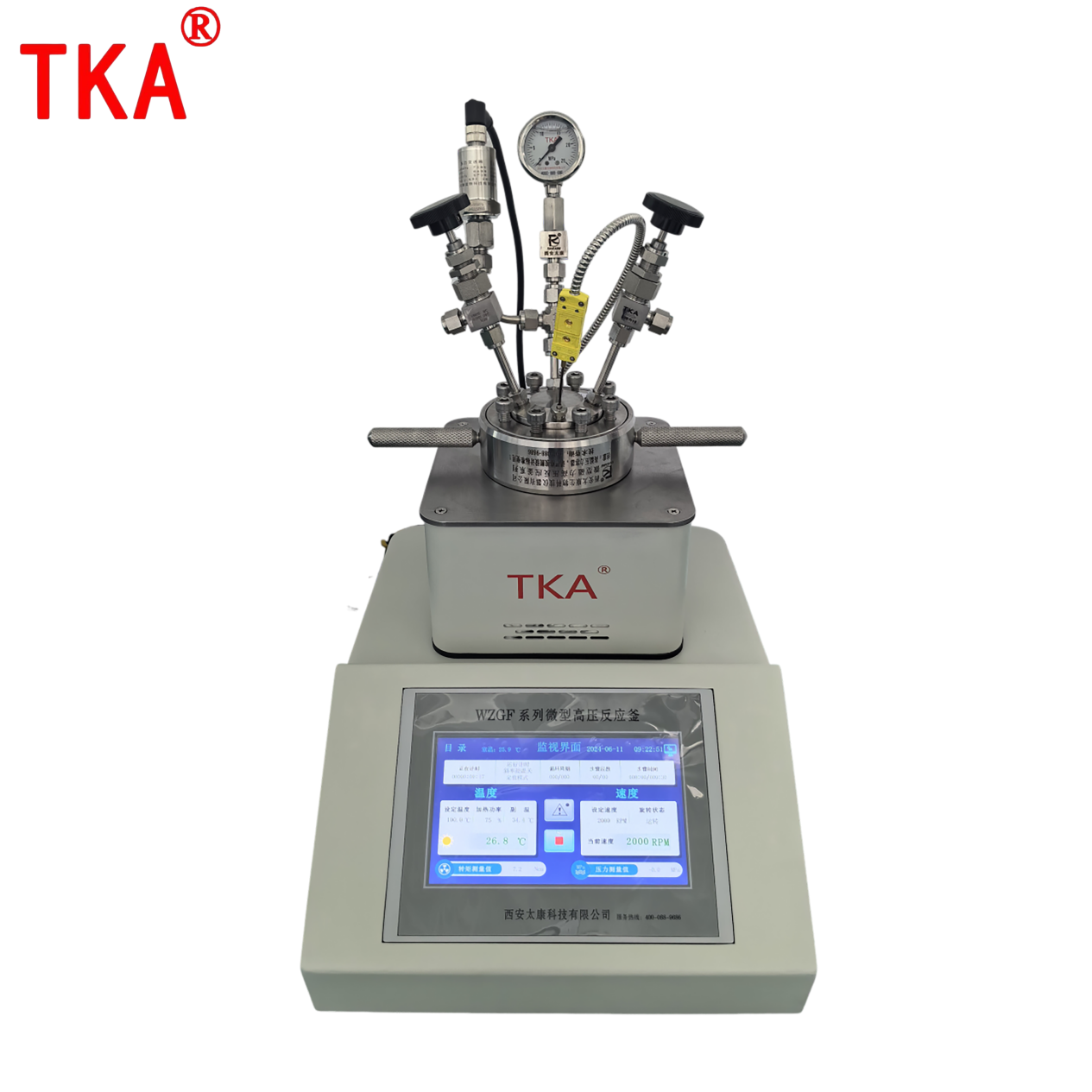
Laboratory reactors are key equipment for experiments in chemistry, materials science, and other disciplines, but improper operation can easily lead to safety accidents. This article outlines common misconceptions and provides strategies to avoid them, helping to ensure the safe and efficient conduct of experiments.
1、 Common operational misconceptions
Start without sufficient inspection
Neglecting the verification of the sealing of the kettle body, the tightness of the stirring blade, and the pressure/temperature sensor before the experiment may result in liquid leakage, stirring detachment, or data distortion during the reaction. For example, a certain university caused a fire due to the leakage of organic solvents due to the failure to check the aging of the sealing ring.
Uncontrolled heating rate
To shorten the time for rapid heating, neglecting the thermal stability of the material. In nitrification reactions, local overheating may lead to the generation of explosive by-products, and in a certain case, the reactor ruptured due to overpressure caused by rapid heating.
Wrong feeding sequence
Mixing oxidants and reducing agents directly, or not adding catalysts step by step, can easily lead to uncontrolled reactions. For example, when hydrogen peroxide is mixed with concentrated sulfuric acid without cooling, it will release heat violently and produce oxygen, increasing the risk of explosion.
Neglecting gas replacement
When gas reactions such as hydrogenation and oxidation are involved, if nitrogen is not used to replace the air inside the reactor, residual oxygen may form explosive mixtures with combustible gases. A laboratory experienced a flash explosion during ignition due to insufficient hydrogen replacement.
2、 Risk avoidance strategy
Standardize operational procedures
Before the experiment, check that there are no cracks in the kettle body, pipelines, and valves, the mixing system runs smoothly, and the sensor calibration is qualified.
Strictly control the heating rate according to the thermodynamic data of the material (usually ≤ 5 ℃/min), and use segmented heating if necessary.
Following the feeding principle of "solid first, liquid second" and "inert first, active second", the catalyst needs to be added in batches and the temperature controlled.
Replace the gas with nitrogen at least 3 times before the gas reaction, and then introduce the reaction gas after the oxygen content is ≤ 0.5%.
Strengthen security protection
Equipped with explosion-proof membranes, safety valves, and pressure interlock devices, it automatically releases pressure and shuts down when overpressure occurs.
Operate in a fume hood, wear a gas mask, goggles, and chemical resistant gloves, and stay away from sources of fire and static electricity.
After the experiment, let it stand at room temperature before opening the kettle to prevent high-temperature materials from coming into contact with air and self igniting.
Regular maintenance and training
Check the corrosion of the kettle body every quarter, replace aging seals, and clean the condenser tubes to prevent blockage.
Organize operators to learn accident cases and master emergency response skills (such as emergency pressure relief and fire extinguishing) through simulated drills.
Article source:

Xi'an TaikangbiologyTechnology Co., Ltd