-
E-mail
wxzyhs@163.com
-
Phone
13812049825
-
Address
No. 251 Changjiang East Road, Xinwu District, Wuxi City, Jiangsu Province
Wuxi Zhongya Environmental Testing Equipment Co., Ltd
Selection guide for liquid nitrogen freezer: selection of capacity and cooling rate
Date: 2025-07-21Read: 55
The selection of liquid nitrogen freezer requires precise matching of usage scenarios, where capacity and cooling rate are the core parameters determining equipment applicability. The scientific combination of the two can greatly enhance freezing efficiency and cost-effectiveness.
Capacity selection should take into account both actual needs and space efficiency. smallLiquid nitrogen freezer(50-100L) is suitable for laboratory or small batch production, such as biological sample cryopreservation or small catering stores. Its advantage is that it occupies only 0.5 square meters and has low liquid nitrogen consumption (5-8L per day). Medium sized equipment (100-500L) is mostly used in food processing plants and can process 20-50kg of ingredients at a time. Attention should be paid to the internal shelf layout and layered design to improve space utilization and avoid sample stacking affecting freezing uniformity. Large freezer containers (over 500L) are suitable for industrial mass production. When selecting, a 30% redundant capacity should be reserved to meet peak processing requirements. At the same time, the door design should be considered, and double or sliding doors are more convenient for batch loading and unloading.
The choice of cooling rate directly affects the quality of freezing. For meat, seafood and other ingredients, equipment with a cooling rate of ≥ 10 ℃/min should be selected. Liquid nitrogen shock at -196 ℃ can lower the center temperature to -60 ℃ within 15 minutes, effectively locking in cell moisture and reducing juice loss after thawing. For biological sample cryopreservation, more precise rate control is required. It is recommended to choose adjustable equipment (5-20 ℃/min) to avoid ice crystal damage to cells caused by rapid freezing through stepwise cooling. For low-temperature testing of chemical materials, uniform cooling (± 1 ℃/min deviation) is more important than rapid cooling, and it is necessary to use a programmed temperature control system to achieve linear cooling.
There is a synergistic relationship between capacity and rate matching. If small capacity devices forcefully pursue high speed, it will lead to a surge in liquid nitrogen consumption (such as increasing the speed of a 50L device to 20 ℃/min, resulting in a 40% increase in daily nitrogen consumption); Insufficient speed of large capacity equipment will prolong the freezing cycle and reduce the processing capacity per unit time. It is recommended to follow the principle of "capacity x rate ≈ constant value". For example, a 100L device with a rate of 10 ℃/min and a 500L device with a rate of 2 ℃/min can find a balance between energy consumption and efficiency.
Special scenarios require targeted selection. In continuous production scenarios, a tunnel type liquid nitrogen freezer with a conveyor device should be selected to achieve uninterrupted freezing; For scenarios that require frequent sample collection and placement, priority should be given to top opening equipment to reduce cooling loss; For industries with high requirements for temperature uniformity, such as the pharmaceutical industry, it is necessary to ensure that the temperature difference at each point inside the box is ≤ 3 ℃, and equipment performance can be verified through multi-point temperature measurement.
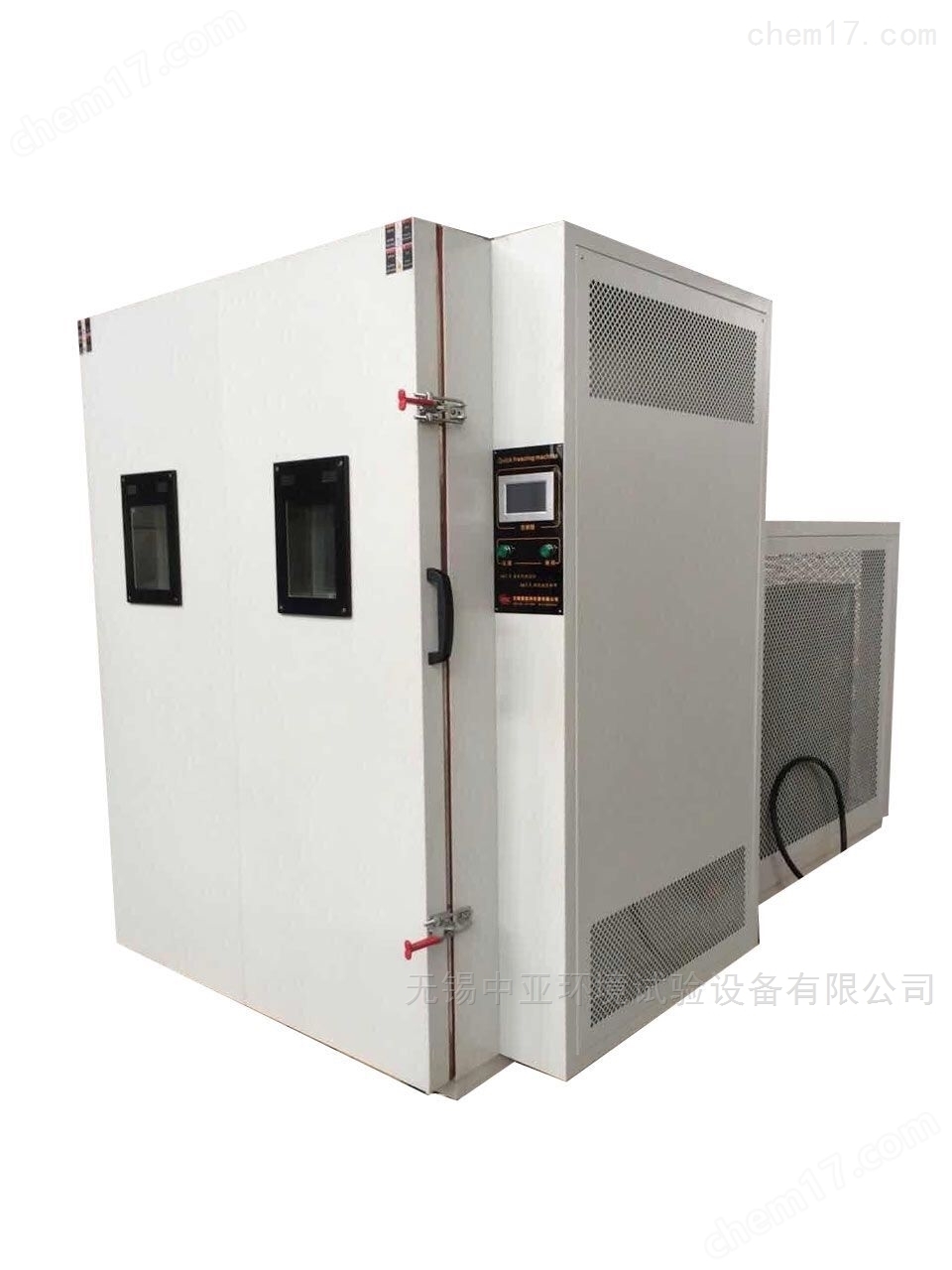
When selecting, the comprehensive cost needs to be calculated. In addition to the equipment purchase price, the consumption of liquid nitrogen (annual nitrogen consumption=daily nitrogen consumption x 300 days) and insulation energy consumption also need to be considered. Only by accurately matching the capacity and cooling rate with actual needs can they be fully utilizedLiquid nitrogen freezerOur technological advantages enable us to achieve the dual goals of efficient freezing and cost optimization.