-
E-mail
2738487025@qq.com
-
Phone
18921178801
-
Address
No. 568-7 Chunhui Road, Chang'an Street, Huishan District, Wuxi City, Jiangsu Province
Wuxi Ming'an Safety Equipment Co., Ltd
Selection and Use Guide for Waste Liquid Cabinet: Comprehensive Analysis of Classified Storage, Corrosion Prevention, and Safe Discharge
Date: 2025-11-17Read: 0
Improper storage of waste liquids generated in chemical laboratories, such as acidic and alkaline waste liquids, organic solvents, and heavy metal solutions, may lead to leakage, corrosion, and even toxic gas release. As a key equipment for temporary storage of waste liquid, the selection and use of waste liquid cabinets must strictly follow the principles of classified storage, corrosion prevention, and safe discharge.
Key points for selection: matching material, capacity, and function
The material of the waste liquid tank is the primary consideration. According to the characteristics of different waste liquids, the cabinet needs to have strong corrosion resistance: when storing strong acid (such as sulfuric acid, hydrochloric acid) or strong alkali (such as sodium hydroxide) waste liquids, polypropylene (PP) material (acid and alkali resistant range pH 1-14) is preferred, which has better corrosion resistance than ordinary steel; If organic solvents (such as acetone and benzene) are stored simultaneously, a galvanized steel plate with epoxy resin coating or a fully stainless steel (304/316L) cabinet should be selected to avoid damage to the cabinet caused by the dissolution of the coating by organic solvents.
The capacity should be designed according to the laboratory scale: small laboratories (<10 people) can choose a single door waste liquid cabinet (capacity 50-100L), which can store acid and alkali waste liquids and organic waste liquids in different zones; It is recommended to equip large laboratories (>50 people) with double door or multi-layer waste liquid cabinets (with a total capacity of over 500L) and reserve expansion space.
In terms of functional design, high-qualityWaste liquid cabinetAn anti overflow tray (with a capacity of ≥ 10L, convenient for collecting leaked liquids), ventilation openings (connected to activated carbon filters to reduce the accumulation of volatile gases), explosion-proof locks (to prevent students from accidentally opening them), and clear labeling areas (indicating the waste liquid category, composition, and hazard level) are required.
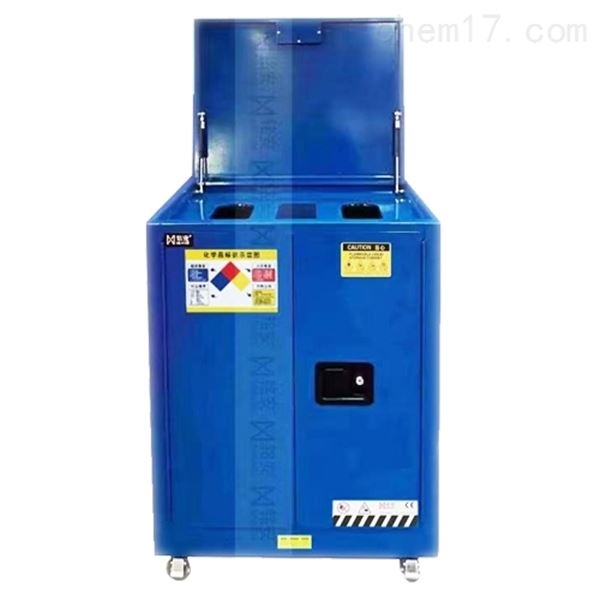
Usage guidelines: Classified storage and secure operations
Waste liquid must be strictly classified and stored, following the principle of "similar compatibility":
Acid and alkali waste liquids should be stored separately (such as hydrochloric acid and sodium hydroxide should not be mixed to avoid leakage caused by exothermic neutralization reactions);
Organic waste liquids are grouped according to polarity (such as alcohols, esters, and halogenated hydrocarbons are placed separately to prevent polymerization reactions);
Heavy metal waste liquids (such as solutions containing lead, cadmium, and mercury) should be stored separately in sealed containers to avoid toxic precipitation when mixed with other waste liquids (such as the formation of highly toxic lead sulfide from lead and sulfides).
When storing, a dedicated waste liquid tank (made of materials that match the cabinet, such as PP tank for storing acid and alkali, HDPE tank for storing organic solvents) should be used. The tank body should be labeled (indicating the composition, concentration, and production date), and the original reagent bottle label should be retained as a traceability basis.
Daily maintenance and emission requirements
regular inspectionWaste liquid cabinetThe sealing performance (whether the door gap leaks), ventilation system (whether the activated carbon filter is saturated), and corrosion of the cabinet (whether there are cracks in the PP cabinet and whether the metal cabinet coating has peeled off). The temporary storage time of waste liquid shall not exceed the regulatory requirements (usually not exceeding 90 days), and qualified treatment units shall be contacted for safe transportation and harmless disposal. Before discharge, neutralization, precipitation and other pretreatment shall be carried out to ensure compliance with environmental standards (such as pH 6-9, heavy metal concentration below the limit of GB 8978 "Comprehensive Wastewater Discharge Standard").
Standardized selection and use can make the waste liquid cabinet a "gatekeeper" for laboratory safety, effectively reducing environmental risks and personnel injuries.