-
E-mail
he.zhenzhen@yoseenir.com
-
Phone
18771127656
-
Address
Building 19, MCC Continuous Casting Industrial Park, No. 51 Guanggu Avenue
Download
Wuhan Gewu Youxin Technology Co., Ltd
Application of thermal imaging in laser cutting
Date: 2025-08-08Read: 1
Thermal imaging in laserindustryThe application
In the field of precision manufacturing, high-energy beam processing technology is widely used due to its high efficiency characteristics, but temperature control management during the process is always a key factor affecting the quality of the finished product. infrared thermographyThe instrument provides an innovative technological path for optimizing processing parameters by dynamically monitoring the temperature field distribution during the manufacturing process.
When a high-density energy beam acts on a metal surface, the phase transition process of the material will form specific thermodynamic response characteristics. Compared to traditional contact detection methods, non-contact thermal radiation monitoring systems can fully record the thermal evolution map of the processing area. Taking the processing of austenitic alloys as an example, if the supply of inert protective medium is insufficient, the processing interface will experience thermal accumulation effect due to oxidation inhibition failure. At this time, the multispectral temperature measurement device can instantly capture the temperature field distortion signal, trigger the closed-loop control system to dynamically adjust the defocus amount or auxiliary gas flow rate, effectively preventing material thermal damage.
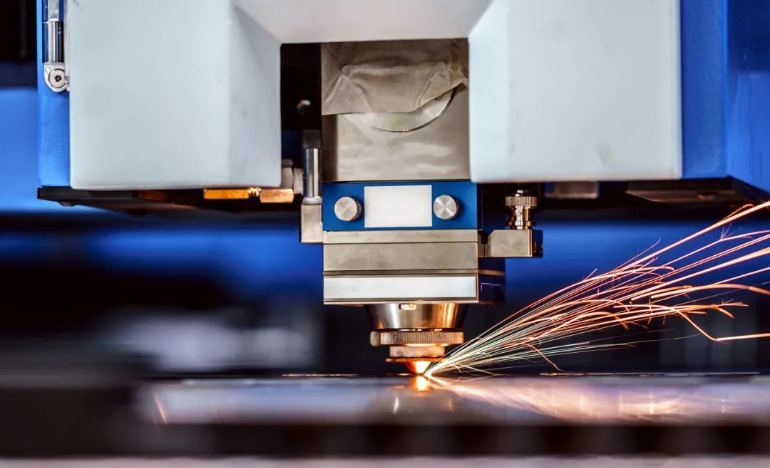
This technology system has outstanding value in the quality traceability process. When the processing penetration is insufficient, the substrate temperature will exhibit an abnormal gradient distribution. By constructing an intelligent diagnostic model, the system can match real-time thermal characteristic data with the process parameter library to accurately identify the types of machining defects. Of particular concern is the phenomenon of molten material adhesion. The thermal imager can intelligently recommend beam oscillation frequency and auxiliary gas pressure optimization schemes based on the characteristics of secondary radiation heat spots, significantly improving the quality of the machining interface.
In terms of process optimization, thermal imaging technology helps engineers set parameters more scientifically. For example, when cutting aluminum alloy, due to the high reflectivity of the material, it is easy to cause energy waste. Through thermal imaging data, engineers can accurately analyze the absorption of laser energy and optimize the pulse frequency and scanning path of the laser. For temperature sensitive materials such as carbon fiber composites, thermal imaging technology can strictly control the range of the heat affected zone and prevent interlayer cracking of the material.
The application of infrared thermal imaging technology in the laser industry is mainly reflected in the following aspects:
1. Assist in optimizing the design of laser emitters
Infrared thermal imaging technology can monitor the temperature distribution of laser emitters in real time, accurately grasp their working status, and provide strong support for the optimization design of enterprises. By using a dot matrix arrangement of infrared thermal imagers on the surface of the laser, the uniformity and stability of the laser radiation distribution can be monitored in real time, significantly improving the efficiency and emission quality of the laser.
2. boostLaser system fault detection
During long-term use, lasers often experience temperature anomalies or localized overheating due to aging electronic components and poor heat dissipation. Infrared thermal imaging technology can monitor the temperature changes of laser systems in real time, quickly locate fault points, and repair or replace relevant components in a timely manner, effectively avoiding equipment downtime and production losses.
3. Improve the performance testing level of fiber lasers
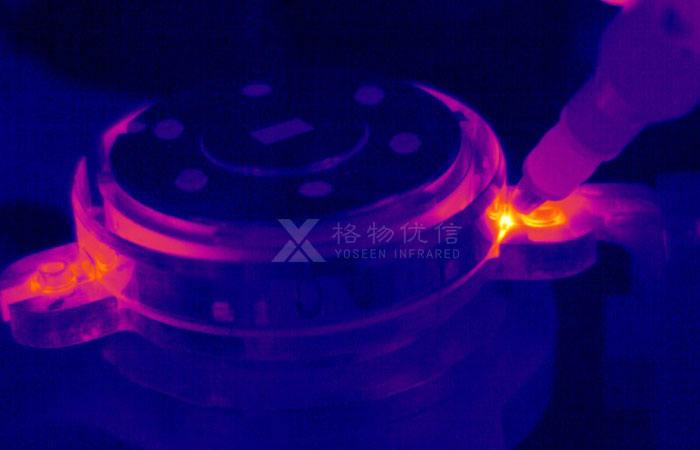
For fiber lasers, infrared thermal imaging technology plays a crucial role. By implementing infrared thermal imaging detection on it, important parameters such as power output and emission wavelength can be monitored in real time, accurately determining the working status of the laser, and adjusting the parameters of the fiber laser accordingly to maintain it in the optimal working state.
4. enhanceQuality control of laser processing equipment
In the field of laser processing, such as laser welding, laser cutting and other processes, infrared thermal imaging technology is widely used. By monitoring the temperature distribution during the processing, real-time evaluation of weld quality, material melting, and cutting surface flatness can be conducted to ensure processing quality and efficiency.
thermal imagingTechnology is changing the traditional manufacturing model, shifting laser cutting from relying on experience to data-driven, providing more reliable quality assurance for precision machining in fields such as aerospace and new energy vehicles.