-
E-mail
songyanming@wzfyyqyxgs.wecom.work
-
Phone
13758729797,13335879930
-
Address
Unit 2, Building 5, No. 28 Binhai 2nd Road, Yongxing Street, Longwan District, Wenzhou City, Zhejiang Province
Wenzhou San Craftsman Instrument Co., Ltd
Improving Textile Quality: Application of Fabric Thickness Gauge
Date: 2025-08-21Read: 1
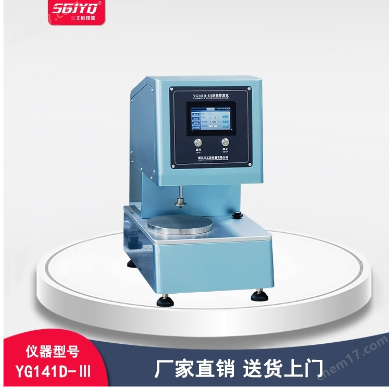
In the textile industry, product quality and performance are the core of a company's competitiveness. The thickness of fabric, as an important physical indicator, directly affects the comfort, durability, and appearance of textiles. Therefore, accurate measurement of fabric thickness is crucial for ensuring product quality. The fabric thickness gauge, as a measuring tool, is becoming a key equipment for improving the quality of textiles.
The Importance of Fabric Thickness
Fabric thickness is one of the important parameters for measuring the quality of textiles. It not only affects the warmth, breathability, and comfort of the fabric, but also determines the appearance and feel of the fabric. For example, thicker fabrics typically have better warmth and durability, but may sacrifice some breathability and comfort; Thinner fabrics are lighter and more breathable, but may be slightly inferior in terms of warmth and durability. Therefore, precise control of fabric thickness is crucial for meeting the needs of different application scenarios.
Limitations of traditional measurement methods
In traditional textile production, the measurement of fabric thickness usually relies on manual measuring tools such as calipers or micrometers. Although these tools are simple and easy to use, they have many limitations. Firstly, manual measurement has low accuracy and is easily affected by human factors, resulting in inaccurate measurement results. Secondly, manual measurement is inefficient and difficult to meet the needs of large-scale production. In addition, manual measurement cannot achieve automation and continuous monitoring, making it difficult to monitor thickness changes in real-time during the production process.
Advantage:
The emergence of fabric thickness gauges provides an efficient and accurate measurement solution for the textile industry. Its main advantages include:
High precision measurement: Using advanced sensor technology and precise measurement algorithms, it can provide high-precision thickness measurement results. This helps companies to precisely control product quality and meet the needs of different customers.
Automated operation: usually equipped with automation functions, capable of automatically measuring and recording data. This not only improves measurement efficiency, but also reduces human error, ensuring the reliability of measurement results.
Real time monitoring: It can be integrated into the production line to achieve real-time monitoring of fabric thickness. Once a thickness deviation is detected, the system can immediately issue an alarm and adjust the production process in a timely manner to avoid the occurrence of defective products.
Data management: Equipped with data management functions, it can store measurement data and generate reports. This helps enterprises conduct quality analysis and production optimization, improve production efficiency and product quality.
The fabric thickness gauge, as an important measuring tool in the textile industry, is becoming a key equipment for improving the quality of textiles. Its high precision, automation, and real-time monitoring characteristics provide enterprises with precise quality control methods to ensure that every textile can meet the high standard requirements of customers.