-
E-mail
1019062891@qq.com
-
Phone
18021603489
-
Address
Room 108, Building 3, Hexin Zhihui Technology Park, 118 Anyang Road, Huqiu District, Suzhou City
Weisite Technology (Suzhou) Co., Ltd
【 2025 Instrument Science Popularization 】 Working principle and process optimization of pharmaceutical twin-screw hot melt extruder
Date: 2025-12-02Read: 3
1、 Working principle
Pharmaceutical twin-screw hot melt extruderThe core principle can be summarized as follows:Two or more materials (usually APIs, polymer carriers, functional excipients) are heated in a barrel and conveyed, sheared, mixed, and melted by two interlocking, co rotating, or counter rotating screws to form a uniform and continuous melt. Finally, it is extruded through a die, cooled, and solidified to obtain a solid dispersion or composite of the desired shape.
The workflow can be broken down into the following key steps:
1. Feeding and solid conveying area
processPre mixed dry powder materials are added from the feeding port. In the initial stage of the screw, the material is mainly transported forward by the mechanical thrust generated by the rotation of the screw.
featureThe temperature in this area is relatively low, and the material remains mostly solid. Screw components are usually conveying components with deep grooves to establish pressure and prevent premature melting and blockage of materials.
2. Melting and plasticizing zone
processAs the material is transported downstream, the heater on the outer wall of the barrel begins to heat the material. At the same time, the strong shear of the screw on the material will also generate a large amount of frictional heat. When the temperature of the material reaches its glass transition temperature or melting point, it begins to soften and melt.
featureThis is one of the most critical areas. The combination of screw components has changed, introducingKneading blockKneading blocks can generate intense radial and axial mixing, ensuring uniform heat transfer and melting and homogenization of all components. Temperature control in this area is crucial.
3. Mixing and dispersion zone
processIn the molten state, the unique advantages of twin-screw can be fully utilized. The engagement of two screws produces a self-cleaning effect, avoiding material retention and degradation on the screws.
Distribution mixtureBy changing the lead and rotation direction of threaded components, the melt flow layers of different components are continuously stretched, folded, divided, and rearranged, achieving macroscopic uniform distribution.
Disperse and mixBy the strong shear force of the kneading block, the originally agglomerated and insoluble drug particles (API) are crushed and uniformly dispersed into the polymer melt. This is crucial for forming amorphous solid dispersions and improving drug solubility.
featureThe shear strength and mixing efficiency in this area directly determine the quality of the final product.
4. Exhaust zone (optional)
processIf the material contains volatile solvents, moisture, or low molecular weight substances, an exhaust section can be designed on the screw. By reducing the cylinder pressure, these volatile substances are released from the material and evacuated by the vacuum system.
featureVery useful for processes that require removal of residual solvents or devolatilization.
5. Measurement and construction pressure zone
processNear the mold head, the groove of the screw becomes shallower, which plays a measuring role and precisely controls the output of the material. At the same time, further establish high pressure to force the molten material through the mold head.
featureEnsure the continuity and stability of extrusion.
6. Extrusion and Forming
processUniform molten material is extruded through a specific shaped die (such as a strand die, sheet die). The extruded strip or sheet material immediately enters the cooling system (water-cooled or air-cooled) and quickly solidifies into shape.
post-processingAfter solidification, the extruded material is usually pulled and cut into pellets or thin sheets for subsequent tablet pressing, capsule filling and other formulation operations.
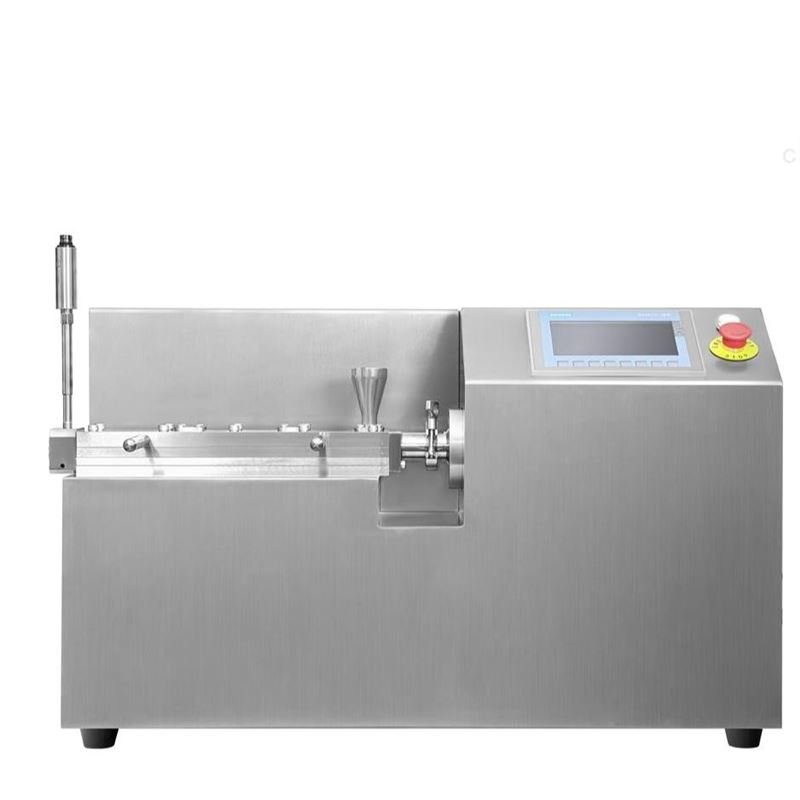
2、 Process optimization
The goal of process optimization is to achieveGood reproducibility and stable qualityThe core of the product isEnsure that the drug is uniformly dispersed in the carrier in its optimal state (usually in an amorphous form)At the same time, avoid thermal degradation and excessive shearing. Optimization mainly revolves around the following key parameters:
1. Formulation Optimization
This is the foundation of success.
Carrier selectionCommon polymers such as HPMCAS, HPMC, PVP VA64, Soluplus, etc. The appropriate carrier should be selected based on the properties of the API (acidity, molecular weight) and the target solubility (pH dependent or non pH dependent).
API FeaturesThe inherent solubility, melting point, thermal stability, dosage, etc. of API directly affect the process window.
auxiliary agentSurfactants can be added to improve wettability, or plasticizers can be added to improve the mechanical properties of extruded materials.
2. Process Parameter Optimization
This is the core control method of hot melt extrusion technology.
•too lowThe material cannot be fully melted, mixed unevenly, and has white spots. •too highMay cause thermal degradation of APIs or carriers, and drug recrystallization. •optimizeenhanceimproverefine | ||
RPM (revolutions per minute)Affects shear rate and dwell time. •high speedStrong shear strength, good dispersion effect, but high yield and short residence time; May cause overheating and degradation. •Low rotational speedWeak shear may result in insufficient mixing, but long residence time is beneficial for heat transfer and reaction.•optimize | ||
Feeding speedFeed rate (kg/h) It must be matched with the screw speed to ensure a constantfill rate. •High filling rateExcessive pressure inside the barrel may cause material overflow or motor overload. | ||
enhanceimproverefine Usually adjusted in conjunction with the screw speed to maintain a stable and moderate filling rate (usually between 50% -80%).screw combination Type, quantity, angle, and arrangement sequence of conveying components and kneading blocksThe 'engine' that determines the establishment of mixing, shearing, and pressure. | ||
Misalignment angleChange the material flow path and enhance mixing.•optimizeenhance |
improve
refineDesign appropriate screw combinations based on API particle size and hardness. For difficult to disperse APIs, it is necessary to add high shear strength kneading blocks after the melting zone.residence time distribution
-Reflect the average residence time and dispersion degree of materials in the extruder.
•optimize
enhance
improverefineBy adjusting the screw combination and speed, we strive to obtainNarrow residence time distributionThis ensures that all materials undergo the same processing history and improves batch consistency.3. In line Monitoring&QCRaman/NIR spectroscopyCan be installed on the barrel to monitor the real-time transformation of API crystal form (from amorphous to crystalline) and concentration uniformity, achievingReal time release detection.Torque monitoringReflect the pressure and material viscosity inside the barrel. Sudden changes in torque may indicate feeding interruption, poor melting, or degradation.
pressure monitoringThe stable pressure in front of the die is the key to ensuring the shape and quality of the extruded material.3、 Summary and advantagesWorking principle core:hot +cut +mix
=Homogeneous melt
→extrusion molding
.Core of process optimization
: Through systematic regulationTemperature, speed, feeding, screw combination
The four major elements, inProduct quality (solubility, stability)
、production efficiency
and