-
E-mail
qixiaowen@weissnano.com
-
Phone
13625296847
-
Address
Room 409-34, Building 11, the Taihu Lake Photon Science Park, No. 198, Jialingjiang Road, High tech Zone, Suzhou
Weisi Nano Technology (Suzhou) Co., Ltd
Design and Performance Optimization of LNP Microfluidic Control Backup Instrument
Date: 2025-10-30Read: 0
The design and performance optimization of LNP microfluidic control preparation instrument is an important topic in the fields of nanotechnology and drug delivery. Liposome nanoparticles, as a typical nano drug carrier, are widely used in fields such as drug delivery, gene therapy, and vaccine development. Traditional liposome preparation methods have some limitations, such as uneven particle size distribution, low yield, and poor controllability. Therefore, developing an efficient and controllable microfluidic control preparation technology is crucial for improving the quality and application effectiveness of LNP.
1、 Design points
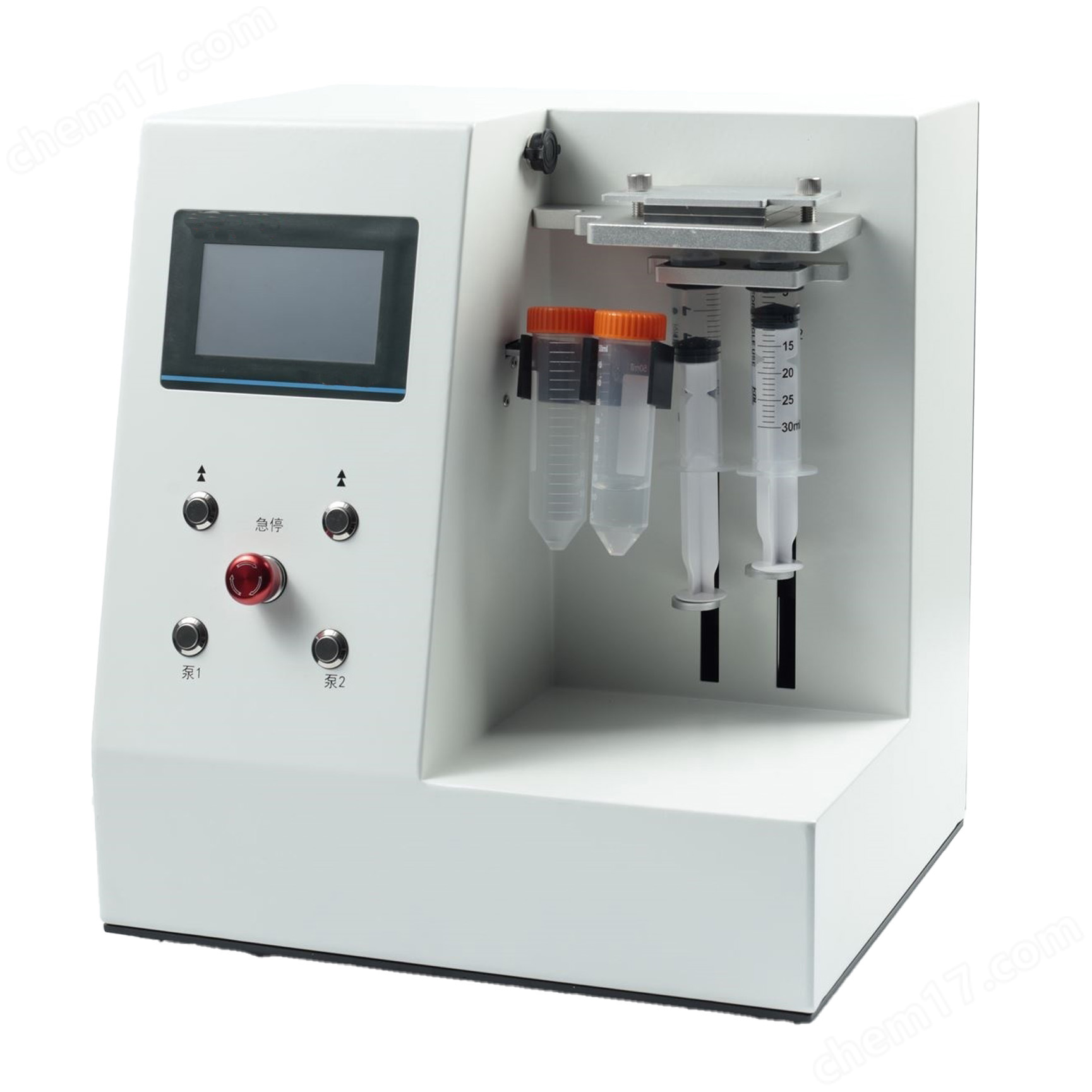
LNP microfluidic control backup deviceThe design mainly considers two aspects: one is the application of microfluidic technology, and the other is how to optimize the reaction conditions during the preparation process. Microfluidic technology refers to the technique of controlling liquid flow at the micrometer scale using tiny pipes and channels. This technology can achieve precise fluid control, improve the uniform mixing and reaction of various components during the preparation process, and effectively enhance the quality and performance of liposomes.
1. Design of Fluid Control System
The core part of the ride is the fluid control system, which requires precise regulation of the flow rate, flow rate, and mixing effect of the reaction solution. Usually, the preparation of LNP involves multiple steps such as synthesis, encapsulation, and stabilization of liposomes, so microfluidic devices should be designed as multi-channel microreactors. By designing the size, shape, and flow velocity distribution of the flow channel reasonably, the mixing uniformity of reactants can be improved and the formation of nanoparticles can be promoted. In addition, microfluidic systems also require precise pump systems to ensure stable flow rates and ratios of each reaction solution.
2. Optimization of reaction environment
The preparation process of LNP is highly sensitive to factors such as temperature, pH value, and ionic strength. Therefore, when designing, it is necessary to integrate a temperature control system and be able to adjust the pH and salinity of the reaction solution to ensure the optimal formation conditions for liposomes. Optimizing these reaction conditions can effectively improve the quality of LNP, ensuring drug encapsulation efficiency and release performance.
3. Particle size and uniformity control
The particle size distribution of LNP is one of the key factors determining its delivery efficiency and targeting in vivo. Microfluidic technology can precisely control the process of particle formation, and by adjusting flow rate, reaction time, and channel design, the size and uniformity of liposomes can be adjusted at the microscale. For example, the use of a series microfluidic design can achieve gradual particle formation, thereby reducing aggregation phenomena and obtaining smaller and more uniform particle size distributions.
2、 Performance optimization
1. Improve yield and stability
In the performance optimization of LNP microfluidic control equipment, the first thing to solve is to improve the yield and stability. Due to the complex process of lipids and drugs involved in the preparation of LNP, microfluidic technology can prevent excessive shear forces from damaging the structure of liposomes by finely controlling the flow rate and reaction conditions. Optimizing microchannel design, adjusting the ratio and temperature of reaction solution, etc. can significantly improve the yield of liposomes, reduce drug loss, and enhance drug encapsulation efficiency.
2. Control the surface charge and hydrophilicity of liposomes
The surface charge and hydrophilicity of LNP are key factors affecting its biological distribution and targeted delivery. In microfluidic devices, surface charge can be controlled by altering the composition of lipids and reaction conditions. For example, by adjusting the content of cationic lipids in liposomes, the positive charge of liposomes can be controlled to enhance their interaction with the cell membrane. In addition, the regulation of surface hydrophilicity can also optimize the stability and release characteristics of liposomes in vivo by changing their hydrophilic hydrophobic ratio.
3. Accurate control of drug encapsulation efficiency
The encapsulation efficiency of drugs directly determines the therapeutic effect of LNP. Microfluidic technology can accurately control the mixing ratio and reaction time of drugs and lipids, thereby achieving efficient encapsulation of drugs in liposomes. By adjusting the concentration, flow rate, and mixing method of the reaction solution, the encapsulation efficiency of the drug can be significantly improved, the leakage of the drug can be reduced, and the stability and effectiveness of the drug during release can be ensured.
4. Improve the repeatability and scalability of operations
In practical applications, the preparation of LNP not only requires high efficiency, but also ensures the repeatability and scalability of the preparation process. When designing, attention should be paid to the implementation of automation and standardization. For example, monitoring various parameters during the reaction process through an online monitoring system to ensure consistent conditions during each preparation process. At the same time, the equipment should have strong scalability and be able to produce on a large scale according to different production needs, from laboratory small-scale production to large-scale industrial production.
The design and performance optimization of LNP microfluidic control preparation instrument is an important part of nanomedicine preparation technology. By designing a reasonable microfluidic system, optimizing reaction conditions, and controlling the operation process, the quality and performance of liposome nanoparticles can be effectively improved, thereby promoting the application of LNP in drug delivery, gene therapy, and other fields.