-
E-mail
xinyuehuamei@163.com
-
Phone
15022775989,18033666390
-
Address
Creative Center of Binhai Private Economic Growth Demonstration Base, Gegu Town, Jinnan District, Tianjin City
Tianjin Xinyue Huamei Environmental Protection Technology Co., Ltd
The use of arsenic removal resin must strictly follow the following operating procedures
Date: 2025-11-21Read: 52
To ensure the performance and lifespan of arsenic removal resin, the following operating procedures must be strictly followed:
1. Preprocessing requirements
Filtering impurities: Raw water needs to be filtered with a precision of 1 μ m to remove suspended solids and solid particles, and prevent clogging of resin pores.
Control oil: The oil content should be less than 5mg to avoid adhesion to the resin surface that hinders adsorption.
Oxidation pretreatment: If the trivalent arsenic content in the water is high, it needs to be oxidized to pentavalent arsenic first, and then adsorbed by resin to ensure treatment efficiency.
2. Control of operating conditions for arsenic removal resin
PH value: The optimal adsorption pH is 6.5-7.5, deviation from this range may reduce adsorption capacity.
Temperature: The operating temperature should be ≤ 90 ℃, and the regeneration temperature should be between 20-30 ℃. Excessive temperature may accelerate resin aging, while insufficient temperature may reduce ion exchange efficiency.
Flow rate: Operating flow rate ≤ 60BV/h (bed volume/hour), ensuring sufficient contact between arsenic ions and resin.
3. Regeneration and maintenance of arsenic removal resin
Regeneration solution selection: commonly used 8-10% sodium chloride solution, soak in circulation at a flow rate of 5-10BV/h for 30-60 minutes. If the arsenic concentration in the raw water is high, the concentration of the regeneration solution can be increased to 12%, but the soaking time should be ≤ 45 minutes to prevent resin expansion and cracking.
Backwash and Upwash:
Backwash: Perform 1-2 reinforced backwashs per month to remove surface contaminants and loosen the resin bed layer. The direction of backwash water flow should be opposite to that during operation (entering from the bottom) to avoid mixing layers.
Positive washing: After regeneration, rinse with pure water for 30-45 minutes until the pH value of the effluent is consistent with that of the influent and there is no salty taste (residual sodium chloride). The endpoint of the washing process needs to be monitored in real-time using arsenic detection strips or portable detectors.
Long term shutdown protection: If the equipment is shut down for more than 7 days, the resin should be soaked in a 10% sodium chloride solution to prevent drying, dehydration, or microbial growth. Rinse with pure water until the effluent meets the standard before restarting.
4. Safety and environmental protection of arsenic removal resin
Operation protection: If the rejuvenator (high concentration sodium chloride solution) comes into contact with the skin, it should be immediately rinsed with clean water. If it enters the eyes, it should be rinsed with physiological saline and seek medical attention. Maintain ventilation between equipment during the regeneration process to prevent sodium chloride mist from corroding equipment or irritating the respiratory tract.
Waste liquid treatment: Regenerated waste liquid contains high concentrations of arsenic ions, which need to be collected centrally and adjusted to pH 10-11 by adding lime to generate arsenic calcium precipitate. After filtration and detection of arsenic concentration<0.5mg/L, it can be discharged.
5. Performance monitoring
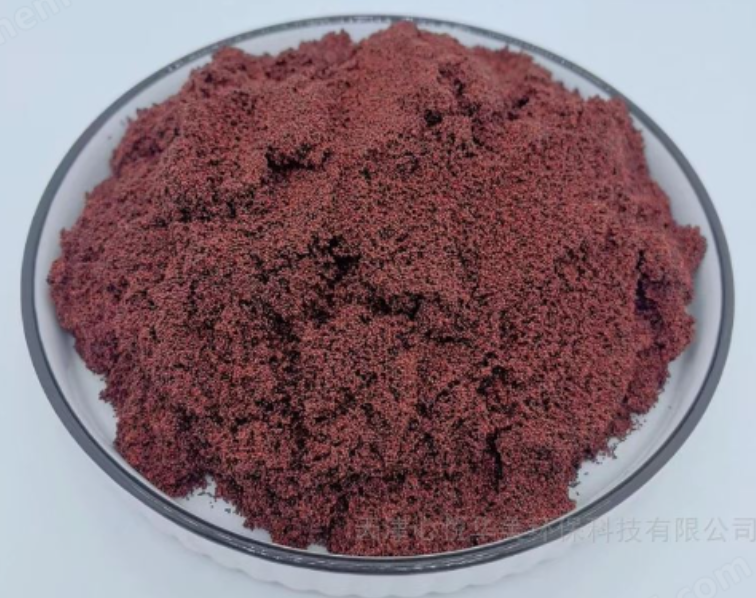
Regular testing: Check the resin color (normally reddish brown) and particle integrity every month. If lumps or lighter colors are found, it is necessary to restore performance by strengthening backwashing or partially replacing the resin.
Adsorption capacity tracking: Record data such as regenerant dosage, backwash/backwash time, and effluent arsenic concentration. If the adsorption capacity significantly decreases after regeneration, it is necessary to check whether the resin is broken or irreversibly contaminated (such as heavy metal deposition), and replace some of the resin if necessary.
Last Article: Sodium removal resin is widely used in the following fields
Next Article: Precautions for the use of cation exchange resin