-
E-mail
dyh@slectachina.com
-
Phone
15222029577
-
Address
2-1-301 Yunshui Garden, Tanjiang Road, Youyi South Road, Hexi District, Tianjin City
Tianjin Sailaite Technology Development Co., Ltd
Construction acceptance of laboratory gas supply system
Date: 2025-08-22Read: 4
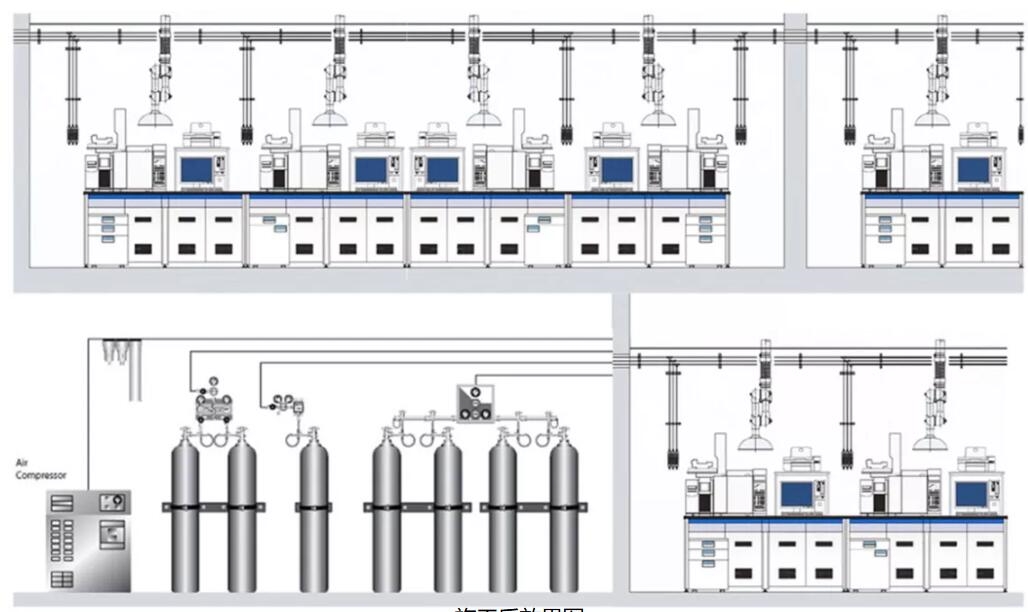
The construction acceptance of laboratory gas supply system is an important link to ensure the safe and reliable operation of the system. The following are the detailed construction acceptance contents:
1. Preparation for acceptance
-Data review: Review relevant design documents, construction drawings, construction records, and other documentation to ensure their completeness and accuracy.
-On site cleaning: After construction is completed, necessary cleaning and organization work should be carried out to prepare for acceptance.
2. Appearance inspection
-Pipeline inspection: The pipeline routing should be horizontal and vertical, firmly fixed, and have no obvious damage on the outer surface.
-Valve inspection: Each valve component should have no obvious damage.
3. Functional testing
-Pressure stability test: Gas path pressure stability refers to the pressure fluctuation of the gas supply pipeline, usually requiring no more than 10%. Professional testing instruments can be used for inspection during acceptance.
-Gas path sealing test: Gas path sealing refers to whether the various interfaces, valves, pipelines, and other connecting parts in the gas path are tight and whether there is any air leakage. During acceptance, water immersion method or airtightness tester can be used for testing.
-Gas purity testing: Testing the gas purity of the gas supply system to ensure that it meets the design requirements.
4. Security performance testing
-Safety device inspection: Check whether the safety protection devices are complete and effective, such as pressure gauges, safety valves, explosion-proof devices, etc.
-Gas leakage alarm system testing: Test the gas leakage alarm system to ensure its normal operation.
-Emergency shut-off valve test: Test the emergency shut-off valve to ensure that it can cut off the gas source in a timely manner under abnormal conditions.
5. System voltage withstand test
Inject high-purity nitrogen into the system to 0.8 MPa, close all valves, and after 24 hours, there should be no deformation such as bubbling, twisting, or expansion in the system.
6. Air tightness test
-Overall airtightness test: Use a helium mass spectrometer leak detector to conduct a leak test on the entire system, and the leakage rate should be less than 1 × 10?? mbar·L/s。
-Partial airtightness test: Key parts such as pipeline connections and valves are inspected to ensure no leakage.
7. Running status check
After the installation of the equipment is completed, it must be used and operated in accordance with the principles and specifications of the equipment manual and operating procedures to ensure that the equipment operates normally, stably, and achieves the expected results.
8. Acceptance records and rectification
-Establish acceptance records: Establish comprehensive acceptance records, including acceptance time, personnel, results, etc., to facilitate later maintenance and management.
-Rectification and re inspection: For the problems and deficiencies found during acceptance, rectification and re inspection are required to ensure that the problems are resolved.
9. User Training
Train laboratory personnel to ensure they are familiar with the operation and safety precautions of the gas supply system.