-
E-mail
sales@brillante.com.cn
- Phone
-
Address
2-1501 Henghua Building, No. 501 Dagu South Road, Hexi District, Tianjin City
Tianjin Deshang Technology Co., Ltd
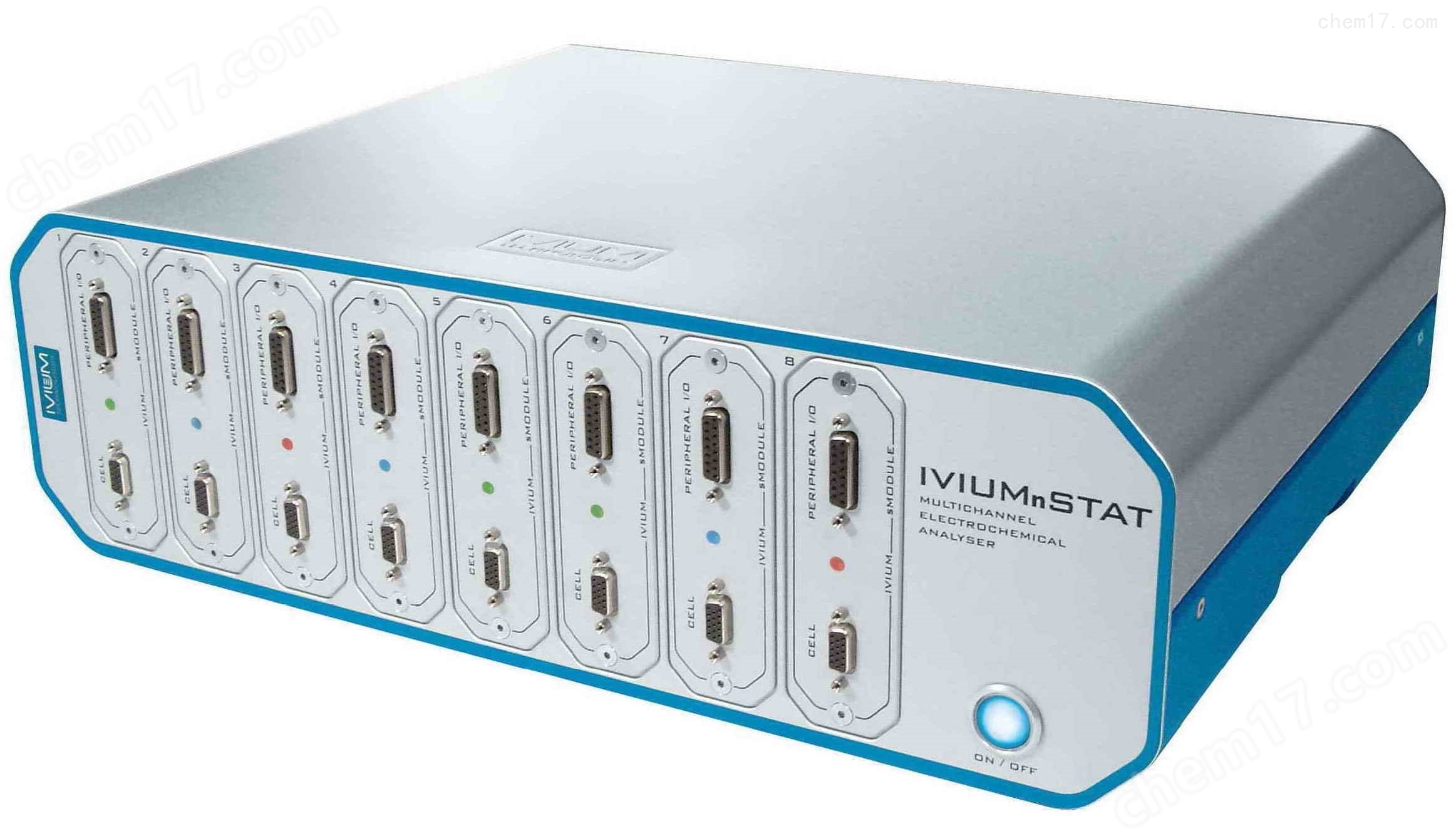
Environment and equipment preparation before using multi-channel electrochemical workstation
Date: 2025-09-15Read: 47
The following are the correct usage requirements for multi-channel electrochemical workstations:
1. Environment and equipment preparation
Grounding treatment: It is necessary to properly ground the instrument and ensure that the middle plug of the 3-core power plug is well grounded. If the indoor wiring does not meet the standards (such as using a neutral wire instead of a ground wire), the ground wire pin in the wiring board needs to be connected to the nearest steel pipe to ensure stable and safe operation of the equipment.
2. Startup sequence: When starting the machine, the computer should be turned on first, and then the power of the electrochemical instrument host should be turned on. Avoid frequent and repeated power on and off to prevent damage to the equipment.
Electrode connection: Connect the working electrode, auxiliary electrode, and reference electrode accurately and without error. This is the foundation of successful experiments, and incorrect connections may lead to inaccurate measurement results or experimental failure. At the same time, it is important to note that the working electrode clamp in the instrument specific cable should not be short circuited with the other two electrode clamps, and the electrode connection wire should be kept dry to avoid moisture affecting conductivity. When the instrument is temporarily not in use, it can be connected to a simulated electrolytic cell to maintain its basic state.
3. Software operation specifications
Start the software: After correctly connecting the electrodes, double-click to open the electrochemical working software. This software is the core tool for controlling devices to perform various electrochemical measurements. Through it, functions such as setting experimental parameters, collecting and analyzing data can be achieved.
Parameter setting: According to specific experimental requirements, reasonably set the parameters of each channel in the software, such as potential range, current range, scanning rate, etc. Different experimental methods (such as cyclic voltammetry, linear sweep voltammetry, etc.) require corresponding parameter configurations to ensure the accuracy and effectiveness of the experiment.
Shutdown process: When shutting down, follow the correct sequence of operations, that is, first shut down the software, then shut down the computer, and finally shut down the electrochemical instrument host. This can prevent data loss or device damage.
Key points of the experimental process of multi-channel electrochemical workstation:
1. Sample preparation and installation
Electrode selection and cleaning: Select suitable working electrodes (such as glassy carbon electrodes, platinum electrodes, gold electrodes, etc.), reference electrodes (such as saturated calomel electrodes, Ag/AgCl electrodes, etc.), and counter electrodes (usually platinum electrodes or graphite electrodes) according to experimental requirements. Before use, ensure that the electrode surface is clean and free of contaminants to avoid interfering with the experimental results.
Solution preparation and infusion: Accurately prepare the required electrolyte, paying attention to the purity of the solvent and the weighing accuracy of the solute. Pour the prepared electrolyte into the electrochemical cell and adjust the depth of electrode immersion into the electrolyte. Generally, the working electrode should be immersed, and the reference electrode and counter electrode should also be appropriately immersed.
2. Implementation of common experimental methods for multi-channel electrochemical workstations
Cyclic voltammetry (CV): Set the scanning potential range, scanning rate, and other parameters in the software, and record the current potential curve at different scanning cycles after starting the experiment. By analyzing parameters such as curve shape, peak potential, and peak current, the reversibility, mechanism, and electrochemical activity of electrode reactions are studied.
Linear sweep voltammetry (LSV): Set parameters such as starting potential, ending potential, and scan rate, conduct experiments, and record current potential curves to analyze the electrochemical behavior, redox potential, and electrode reaction kinetics of substances.
Differential pulse voltammetry (DPV): Configure parameters such as amplitude, width, period, and measurement time window of the pulse voltage, run the experiment and record the current potential curve, and use parameters such as peak current to calculate the content of the analyte. This method has high sensitivity and resolution and is suitable for trace substance detection.
Chronoamperometry (CA): Set parameters such as the size and duration of the potential step, start the experiment, and record the current time curve to study the kinetic process of electrode reactions, the diffusion coefficient of substances, and the adsorption behavior on the electrode surface.
Impedance Spectroscopy (EIS): Set the frequency range, amplitude, and other parameters of the AC signal, conduct experiments and record the AC impedance values at different frequencies, draw impedance spectra, use equivalent circuit fitting and data analysis to explore the dynamic parameters of electrode processes, charge transfer resistance, double-layer capacitance, and other physical quantities, in order to understand the mechanism and interface properties of electrode reactions.
3. Data processing and analysis
Data recording: During the experiment, the multi-channel electrochemical workstation will automatically collect and store potential, current, and other data from each channel. To ensure the integrity and accuracy of the data for subsequent in-depth analysis and processing.
Data analysis: Use professional data analysis software to process the collected data. For example, fitting the current potential curve obtained by cyclic voltammetry to obtain key parameters such as peak potential and peak current; Perform equivalent circuit fitting on the impedance spectrum obtained by the AC impedance method, and calculate physical quantities such as charge transfer resistance and double-layer capacitance. Interpret and discuss the experimental results based on relevant theoretical knowledge, and draw valuable conclusions.