-
E-mail
ping.shen2@thermofisher.com
-
Phone
13386161207
-
Address
China Chip Experience Center, Building A, No. 2517 Jinke Road, Pudong New Area
Thermo Fisher Scientific Chromatography and Mass Spectrometry
The versatile hunter for wide element detection using Thermo Fisher inductively coupled plasma mass spectrometer
Date: 2025-11-22Read: 70
In the field of elemental analysis,Thermo Fisher Inductively Coupled Plasma Mass Spectrometer (ICP-MS) has become the primary choice tool for environmental monitoring, food safety, geological exploration, and biomedical fields due to its core advantages of "wide element coverage and ultra trace detection".Its technological breakthrough is not only reflected in the precise capture of metallic elements, but also in the comprehensive analysis of non-metallic elements, truly achieving the "full element spectrum" coverage from alkali metals to rare gases.
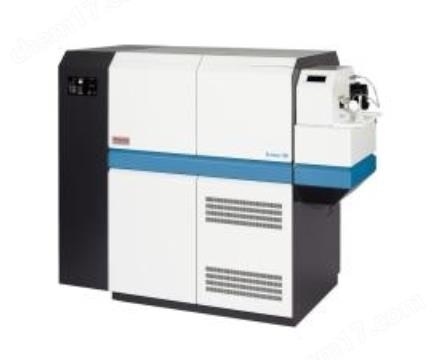
1、 Wide element coverage: full spectrum analysis from metal to non-metal
The Thermo Fisher inductively coupled plasma mass spectrometer can detect over 70 elements in the periodic table, including alkali metals, alkaline earth metals, transition metals, and rare earth elements such as lanthanum and cerium. Its unique advantage lies in its breakthrough detection capability for non-metallic elements: by optimizing the ion source and mass analyzer design, trace analysis of non-metallic elements such as arsenic (As), selenium (Se), phosphorus (P), and sulfur (S) can be achieved. For example, in food safety testing, this instrument can simultaneously determine arsenic (inorganic arsenic and organic arsenic forms) and selenium (selenomethionine and selenocysteine) in rice, with a detection limit as low as 0.01 μ g/kg, providing data support for nutritional enhancement and risk assessment.
2、 Technical Core: Collaborative Innovation of Multi level Mass Spectrometry and Interference Elimination
The core competitiveness of Thermo Fisher inductively coupled plasma mass spectrometer lies in its composite mass spectrometry system of "quadrupole+collision reaction cell". The quadrupole mass analyzer achieves precise mass to charge ratio screening with a resolution of 0.8 AMU, while the dynamic reaction cell (QCell) can eliminate over 90% of multi atom interference through intelligent switching between helium collision mode (KED) and reaction gas mode. For example, in the analysis of seawater samples, this technology can effectively separate the interference of isomers of 40Ar35Cl ⁺ and 40Ca ⁺ formed by chloride ions, ensuring the accuracy of calcium element detection.
3、 Application scenario: Cross border empowerment from environmental monitoring to life sciences
1. Environmental monitoring: In the traceability research of atmospheric particulate matter in the Beijing Tianjin Hebei region, instruments can simultaneously detect more than 20 heavy metals such as lead, cadmium, and arsenic in PM2.5, and combine isotope ratio analysis to accurately locate pollution sources.
2. Clinical medicine: By combining with liquid chromatography (HPLC-ICP-MS), this instrument can achieve the separation of methylmercury and inorganic mercury forms in blood, with a detection limit of 0.05ng/mL, providing key evidence for the diagnosis of heavy metal poisoning.
3. Geological exploration: In rare earth ore analysis, instruments can simultaneously determine the content and isotopic ratios of 17 rare earth elements, revealing the geological process of mineralization.
Conclusion
From deep-sea sediments to space dust, from nanomaterials to biomolecules, the Thermo Fisher Inductively Coupled Plasma Mass Spectrometer continues to expand the boundaries of elemental analysis with its "wide element, high sensitivity, and anti-interference" technical characteristics. It is not only a standard configuration for modern laboratories, but also a core engine for promoting scientific discovery and industrial upgrading.