-
E-mail
jay2688chou@163.com
-
Phone
18952655772
-
Address
Gongyuan Village, Jiangyan Town, Jiangyan District
Taizhou Opte Analytical Instrument Co., Ltd
Performance verification of ultra heavy oil dehydration tester under high temperature and high pressure conditions
Date: 2025-10-28Read: 0
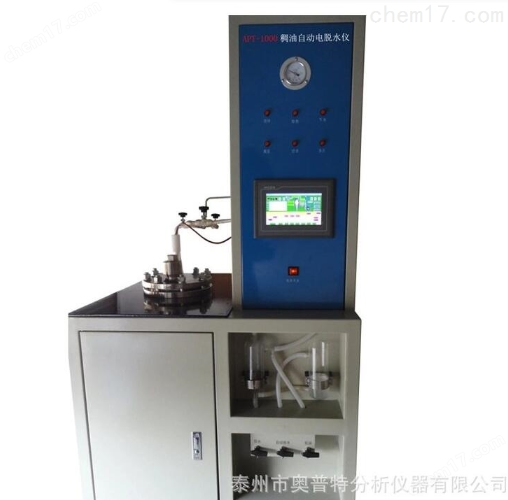
Due to its high viscosity (up to tens of thousands of mPa · s at room temperature) and high impurities, ultra heavy oil requires dehydration tests under high temperature and high pressure (usually 80-150 ℃, pressure 1-5MPa) conditions to simulate the on-site production environment.Ultra heavy oil dehydration testerThe performance verification needs to focus on the three core aspects of "temperature and pressure control accuracy, dehydration efficiency stability, and equipment safety". Through a scientific verification process, it ensures reliable output data under harsh conditions, providing accurate basis for optimizing the dehydration process of ultra heavy oil.
1、 Verification of core performance indicators: anchoring test reliability foundation
Temperature control accuracy verification: Run separately within the set temperature range (such as 80 ℃, 120 ℃, 150 ℃), use high-precision thermocouples (accuracy ± 0.1 ℃) to monitor the temperature inside the test chamber at multiple points, and record the temperature fluctuation value within 1 hour. The qualified standard is that the temperature deviation at each point inside the cavity is ≤± 1 ℃, and the temperature fluctuation during continuous operation is ≤± 0.5 ℃. If the temperature fluctuation exceeds the tolerance, it will cause uneven changes in the viscosity of ultra heavy oil (viscosity fluctuation can reach more than 20% for every 5 ℃ temperature difference), directly affecting the judgment of dehydration efficiency. It needs to be corrected by calibrating the heating module and temperature control algorithm.
Pressure stability verification: Set pressure gradients (such as 1MPa, 3MPa, 5MPa), use precision pressure sensors (accuracy ± 0.02MPa) to monitor the pressure inside the chamber in real time, and observe the pressure holding ability. The qualification requirements are: during the pressure maintenance period (≥ 4 hours), the pressure attenuation should be ≤ 0.05MPa, and there should be no sudden pressure drop (excluding seal leakage). Dehydration of ultra heavy oil requires stable pressure to promote water separation. Pressure fluctuations can cause disorder at the oil-water interface. If the pressure decay exceeds 1%/hour, it is necessary to check the temperature and pressure resistance of sealing components (such as sealing rings and valves) and replace them with materials suitable for high temperature and high pressure (such as fluororubber and metal seals).
Dehydration efficiency accuracy verification: Select standard ultra heavy oil samples (known water content, such as 20%), conduct dehydration tests at different temperature and pressure combinations (such as 80 ℃/1MPa, 120 ℃/3MPa), and calculate the deviation between the dehydrated water content and the theoretical value. The qualification standard is: the dehydration efficiency deviation of 3 parallel tests under the same conditions is ≤± 2%, and the difference with the industry standard method (such as distillation method) measurement result is ≤ 3%. If the deviation exceeds the tolerance, it is necessary to investigate the performance of the mixing module (ensuring sufficient contact between oil and water) and separation components (such as the accuracy of demulsifier injection) to avoid misjudgment of dehydration efficiency due to equipment factors.
2、 Verification process design: Simulate actual working conditions for step-by-step advancement
No load temperature and pressure debugging verification: Start with no-load operation, gradually raise the temperature to 150 ℃ and increase the pressure to 5MPa, stabilize for 3 hours, monitor the response speed and stability of the temperature and pressure control system - the heating rate should meet the set (such as 5 ℃/min, avoid local overheating), and there should be no overshoot during the boosting process (overshoot ≤ 0.1MPa). At the same time, check the equipment alarm function (such as whether to stop immediately when overheating and overpressure occur) to ensure the reliability of the basic control logic.
Load dehydration performance verification: Add actual ultra heavy oil samples (oil content ≥ 90%, water content 15% -25%), conduct dehydration tests according to on-site process parameters (such as 120 ℃/3MPa, stirring speed 300r/min), record dehydration time, separation interface clarity, and final water content. Verification is required: Under high temperature and high pressure, the equipment can effectively break the emulsion (with no emulsion layer at the oil-water interface or an emulsion layer thickness of ≤ 5mm), and the dehydration efficiency is consistent with the on-site data (deviation ≤ 5%) to avoid disconnection between laboratory data and on-site data.
Long term stability verification: Run continuously for 24 hours at rated temperature and pressure (such as 150 ℃/5MPa), take samples every 4 hours to test the dehydration effect, and check the wear and tear of equipment components (such as heating tubes and seals). The qualification criteria are: dehydration efficiency fluctuation of ≤ 3% within 24 hours, no leakage of equipment, and no overheating of components (surface temperature ≤ ambient temperature+40 ℃), ensuring that it can adapt to the long-term operation requirements of ultra heavy oil dehydration tests.
Ultra heavy oil dehydration testerThe verification of high-temperature and high-pressure performance is essentially achieved by simulating harsh working conditions, eliminating the interference of equipment defects on test results, ensuring that its output data can truly reflect the dehydration law of ultra heavy oil, providing reliable support for the development of efficient dehydration processes on site (such as demulsifier selection and temperature and pressure parameter setting), and helping to improve the efficiency of ultra heavy oil recovery.