-
E-mail
brook_meng@163.com
-
Phone
18120066267
-
Address
No. 168 Youxin Road, Wuzhong District, Suzhou City, Jiangsu Province
Suzhou Weiruike Electronics Co., Ltd
How to choose a suitable signal generator? Detailed explanation of the core differences between waveform and pulse generator
Date: 2025-12-22Read: 79
In the field of electronic testing and measurement, signal generators are crucial core tools in scientific research, production, and teaching. Faced with a wide variety of devices, how to choose the appropriate signal generator according to actual needs has become a skill that engineers and researchers must master. This article will deeply analyze the differences between waveform generators and pulse generators from three aspects: functional classification, core differences, and selection strategies, and provide practical selection suggestions.
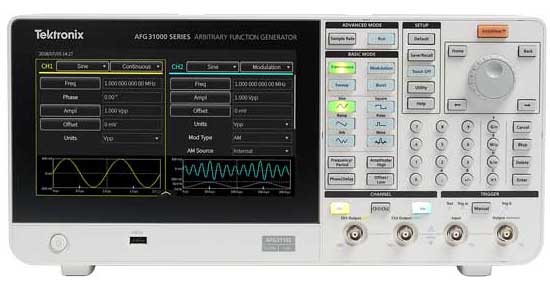
Firstly, signal generators can be divided into function generators, arbitrary waveform generators (AWG), and pulse generators based on their output characteristics, with the former two collectively referred to as "waveform generators". The core function of a waveform generator is to generate continuous and periodic electrical signals, such as sine waves, square waves, triangular waves, etc. Function generator is suitable for basic experiments and teaching, with low cost and easy operation; The arbitrary waveform generator is based on DDS (Direct Digital Synthesis) technology and can customize complex waveforms, such as electrocardiogram signals or modulated signals. It is widely used in communication, medical, and radar system simulations and has high flexibility and resolution.
In contrast, pulse generators focus on generating high-precision, short duration pulse signals. Its core advantage lies in high sequence accuracy and trigger synchronization capability, which can accurately control pulse width, rise time, and repetition frequency. This type of equipment is commonly used in scenarios such as digital circuit timing testing, high-speed logic analysis, laser driving, and radar pulse simulation, emphasizing the transient characteristics of signals rather than continuous waveforms.
The core differences between the two are reflected in three aspects:
1. Output characteristics: The waveform generator outputs continuous periodic signals, emphasizing waveform shape and frequency stability; The pulse generator outputs discrete pulses, emphasizing edge steepness and time accuracy.
2. Application scenario: The waveform generator is suitable for analog signal processing and frequency response testing; Pulse generators are used for digital system debugging, timing verification, and transient excitation.
3. Technical parameters: The waveform generator focuses on sampling rate, vertical resolution, and harmonic distortion; Pulse generators place greater emphasis on rise time, jitter, and pulse width resolution.
When selecting, the principle of "matching requirements and avoiding excessive" should be followed:
-If only conducting basic circuit testing or teaching demonstrations, choosing a function generator is sufficient, with high cost-effectiveness;
-For complex modulation or custom waveforms, any waveform generator should be selected to ensure signal restoration accuracy;
-In digital systems, high-speed interfaces, or radar simulations, it is necessary to rely on pulse generators to ensure timing accuracy.
In addition, it is necessary to comprehensively consider frequency range, output interface, synchronization capability, and budget. With the development of technology, some integrated platforms have achieved multi-mode output, but "dedicated machine" is still the mainstream idea to ensure testing reliability. Only by correctly understanding the essential differences of various generators can accurate choices be made in complex applications, improving testing efficiency and system reliability.
Our advantages include German, Tektronix, Japanese, Guwei, Adx, Puyuan, Tonghui, Dingyang, Anbai, etc.