-
E-mail
brook_meng@163.com
-
Phone
18120066267
-
Address
No. 168 Youxin Road, Wuzhong District, Suzhou City, Jiangsu Province
Suzhou Weiruike Electronics Co., Ltd
Detailed explanation of the usage method of LCR tester
Date: 2025-12-18Read: 74
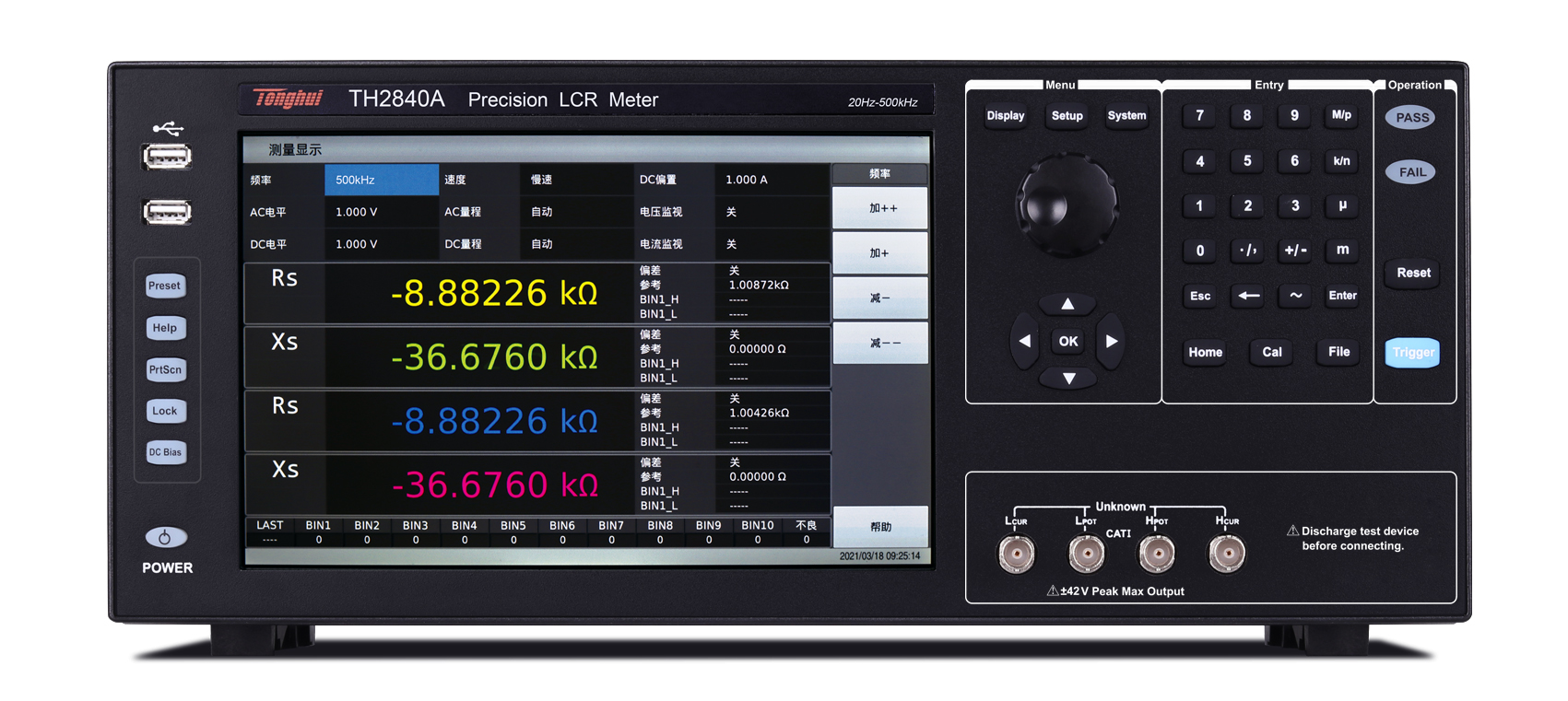
LCR tester is an important instrument used in electronic measurement for precise determination of inductance (L), capacitance (C), and resistance (R) parameters, widely used in component testing, quality control, and research and development fields. Correctly mastering its usage method can not only improve measurement accuracy, but also effectively extend equipment life and ensure operational safety. The following is the systematic usage method of LCR tester.
1、 Preparation stage
1. Equipment inspection: Before use, it is necessary to confirm that the power cord, test line, and connection interface are intact, and that the power switch is in the off state to avoid damage to the instrument caused by live plugging and unplugging.
2. Preheating treatment: After connecting the power supply, the instrument needs to be preheated for 10-30 minutes (refer to the instruction manual for specific time) to achieve thermal equilibrium in the internal circuit and reduce measurement errors caused by temperature drift.
3. Connect peripherals: If data recording is required, connect the computer or printer in advance to ensure that the communication interface is working properly.
2、 Operation steps
1. Startup and parameter settings
Press the power button to start the instrument. After the self-test is completed, use the "ZLCR" key to select the main measurement parameters (L/C/R), and use the "DQe" key to set auxiliary parameters such as Q value, D value, ESR, etc. Set the appropriate test frequency (such as 100Hz, 1kHz, 10kHz, etc.) and signal level according to the type of component being tested, and if necessary, enable DC bias to simulate the actual working environment.
2. Connect the tested component
Connect the component to the test port, paying attention to the cleanliness of the pins and firm contact. For components with different structures, appropriate fixtures should be selected: radial leads can be directly inserted into the test fixture, and axial leads are recommended to use adapters or support plates to avoid pin twisting. Components with shielded enclosures need to have their enclosures grounded.
3. Perform calibration and measurement
Calibration must be performed before measurement to eliminate systematic errors. Proceed in sequence:
Open circuit calibration: When the test clip is in an open circuit state, select the "open circuit" option for full frequency band or single point calibration;
Short circuit calibration: Short circuit the test clip (ensuring consistent polarity) and perform short circuit compensation;
Load calibration (optional): Use standard components for load calibration.
After calibration is complete, press the "Measure" button, observe the main and auxiliary parameters displayed on the screen, and record the stable values.
4. Equivalent circuit selection
Select series (Cs Rs, Ls Rs) or parallel (Cp Rp, Lp Rp) models based on the impedance characteristics of the components. Generally, low impedance components are connected in series, while high impedance components are connected in parallel to achieve higher accuracy.
3、 Advanced features and data management
Can enable list scanning function, automatically measure at multiple frequencies or levels, suitable for multi condition comparative analysis;
Using comparator mode, setting upper and lower limits to determine whether the components are qualified, suitable for batch testing;
Test data can be exported to a computer through an interface for easy archiving and analysis.
4、 Precautions
1. Safe operation: Before measuring the capacitor, it must be discharged to prevent residual voltage from damaging the instrument; Do not plug or unplug components with power on.
2. Environmental requirements: Maintain a stable testing environment and avoid strong electromagnetic interference and drastic changes in temperature and humidity.
3. Anti static measures: When operating in an anti-static work area, wear an anti-static wristband to prevent ESD damage to sensitive components.
4. Regular calibration: It is recommended to regularly send for inspection or use standard parts for self calibration to ensure long-term measurement accuracy.
5、 Shutdown and maintenance
After the test is completed, save the data, turn off the power, and unplug the power adapter if not in use for a long time. Regularly clean the testing fixtures and check if the connecting wires are aging.
Mastering the above usage methods can fully utilize the performance of LCR testers, achieve efficient and accurate measurement of component parameters, and provide reliable data support for electronic research and production.
Our advantages include German, Tektronix, Japanese, Guwei, Adx, Puyuan, Tonghui, Dingyang, Anbai, etc.