-
E-mail
leon@chinafema.cn
-
Phone
17761910072
-
Address
Building 3, Hongchuang Technology Park, Suzhou Industrial Park
Solution
Suzhou Fermaco Automation Technology Co., Ltd
1、 Sample information and testing requirements
Aluminum alloy is an alloy based on aluminum with a certain amount of other alloying elements added, and is one of the light metal materials. Aluminum alloys not only have the general characteristics of aluminum, but also have some specific characteristics of alloys due to the different types and quantities of alloying elements added. The density of aluminum alloy is 2.63-2.85g/cm3, with a high strength (σ b of 110-650MPa), a specific strength close to high alloy steel, and a specific stiffness higher than steel. It has good casting and plastic processing properties, good electrical and thermal conductivity, good corrosion resistance and weldability, and can be used as structural materials. It has a wide range of applications in aerospace, aviation, transportation, construction, electromechanical, lightweight and daily necessities.
Magnesium alloy is an alloy composed of magnesium as the basis and other elements added. Its characteristics are: low density (about 1.8g/cm3), high strength, large elastic modulus, good shock absorption, greater ability to withstand impact loads than aluminum alloy, good electrical and thermal conductivity, good processability, poor corrosion resistance, easy oxidation and combustion, and poor heat resistance. The main alloying elements include aluminum, zinc, manganese, cerium, thorium, and a small amount of zirconium or cadmium. Magnesium alloys are widely used in portable equipment and the automotive industry to achieve lightweight goals. Although the specific gravity of magnesium alloy is heavier than that of plastic, its strength and elasticity per unit weight are higher than those of plastic. Therefore, in the case of components with the same strength, magnesium alloy components can be made thinner and lighter than plastic components. In addition, due to the higher specific strength of magnesium alloys compared to aluminum alloys and iron, the weight of aluminum or iron components can be reduced without reducing their strength.

Testing requirements:
After grinding and polishing, the surface is smooth without scratches.
Testing process:
Cutting → Embedding → Grinding → Polishing → Microscopic Observation and Analysis
2、 Sample preparation
2.1 Cutting
Cutting principle:
Accurate sampling to obtain high-quality testing areas; This time, a suitable cutting machine, suitable cutting blades, stable fixtures, sufficient cutting fluid were selected, and reasonable cutting parameters were set for sampling to reduce surface damage to the samples.
Equipment: Hand to body precision cutting machine Fcut 230E
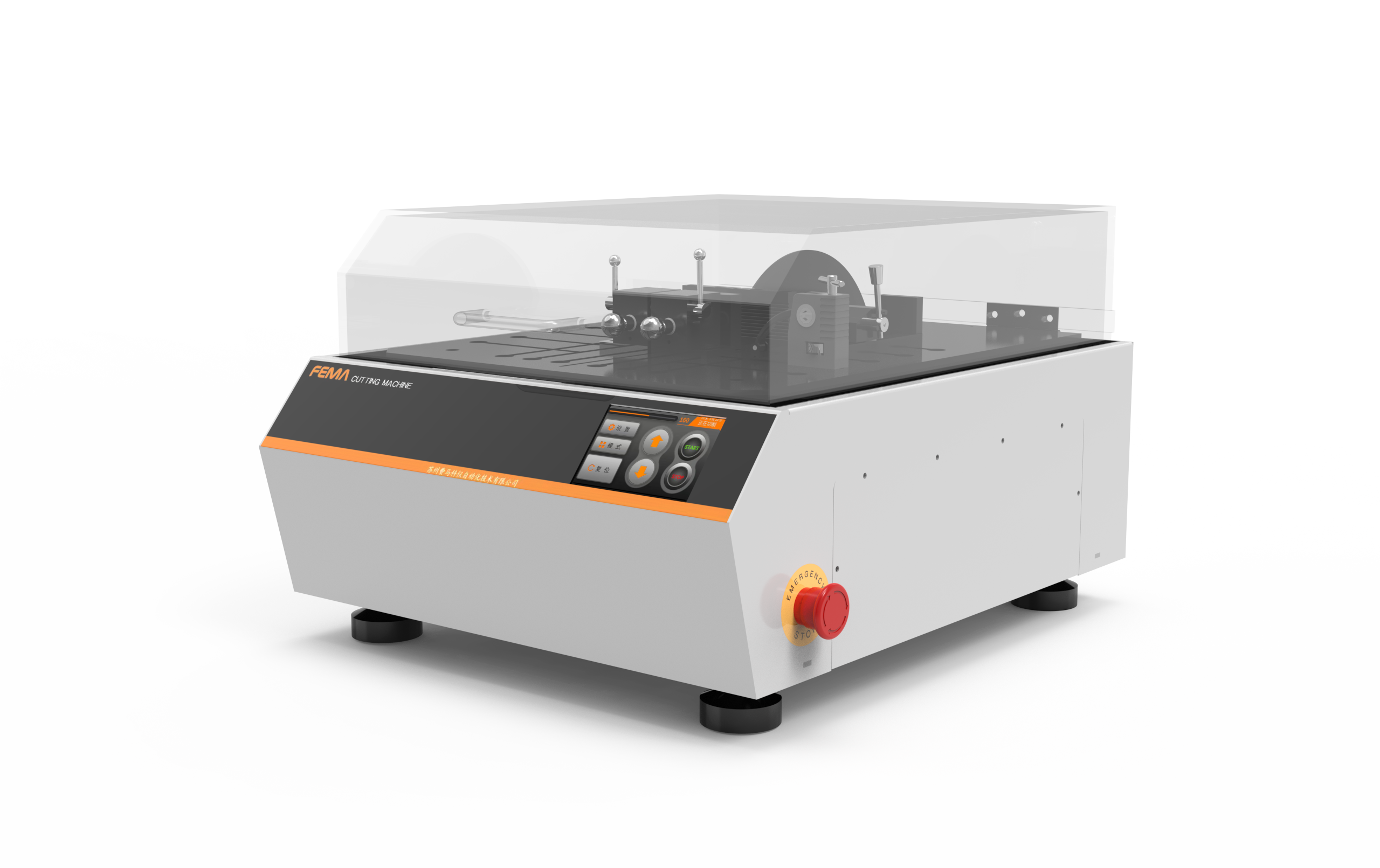
Cutting blade: Silicon carbide cutting blade (Φ 200mm)
Cutting parameters: pulse mode, cutting blade speed: 3000rpm, cutting speed 0.5mm/s; Enter 0.3, exit 0.2;
Sample cutting

cutting effect

2.2 Hot inlay
Embedding principle:
The two main reasons for choosing inlay are ease of operation and edge preservation. The factors that need to be considered when embedding include the size and shape of the sample, sensitivity to temperature and pressure, and the number of samples that need to be embedded in daily life. Hot pressing inlay is the best method to achieve optimal edge protection and meet the maximum number of samples required for daily inlay. The FH2 edge preserving inlay material used in this scheme is particularly suitable for automatic inlay machines. It has no adverse effects on the human body during use, and has good fluidity and edge preservation during the inlay process. The inlay quality is high, and it has good adhesion to the sample, thereby providing good protection for the sample. At the same time, the embedded samples have high density and good resistance to chemical corrosion.
Equipment: Single station automatic hydraulic inlay machine Fpress 31A

Hot inlay material: FH2-B01 (FH2 edge preserving hot inlay material)
Sample size: φ 30 mm
Parameter settings:
Edge protection type; Maintain a constant temperature of 130 ℃ for 240 seconds and a pressure of 200 bar; Water cooling for 120 seconds;
Embedding results
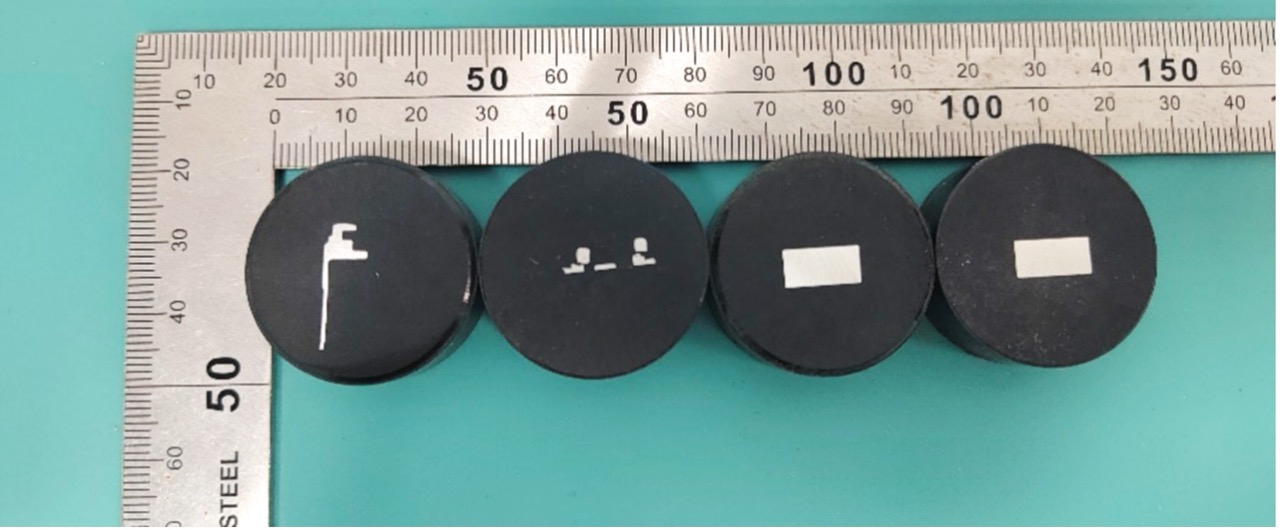
2.3 Grinding and polishing
Grinding and polishing principle: The sample after grinding and polishing is flat, shiny, and without obvious scratches.
Equipment: Fully automatic grinding and polishing machine Fpol 252A auto

Grinding disc diameter: 254mm (10 inches)
Sample fixture: φ 30mm * 6
Aluminum alloy sample parameter setting: multi process mode
step |
1 |
2 |
3 |
4 |
5 |
6 |
grit size |
800 |
1500 |
2500 |
/ |
/ |
/ |
Sandpaper/polishing cloth model |
AS10-800F |
AS10-1500F |
AS10-2500H |
FP-MOL-10H |
FP-MOL-10H |
FP-CHEM-10H |
Grinding disc speed (rpm) |
200 |
200 |
200 |
100 |
100 |
100 |
Grinding and polishing solution |
/ |
/ |
/ |
DSPF-3-500E(3um) |
DSPF-1-500E(1um) |
SDPA-0.05-500PS (0.05um silicon oxide) |
lubricating fluid |
water |
water |
water |
/ |
/ |
/ |
loading force |
15N |
15N |
15N |
10N |
10N |
8N |
Fixture speed (rpm) |
150 |
150 |
150 |
80 |
80 |
80 |
rotation direction |
same direction |
same direction |
same direction |
reverse |
reverse |
reverse |
Time (min) |
1 |
1 |
1 |
2 |
2 |
1 |
Magnesium alloy sample parameter setting: multi process mode
step |
1 |
2 |
3 |
4 |
5 |
6 |
grit size |
800 |
1500 |
2500 |
/ |
/ |
/ |
Sandpaper/polishing cloth model |
AS10-800F |
AS10-1500F |
AS10-2500H |
FP-DAC-10H |
FP-DAC-10H |
FP-CHEM-10H |
Grinding disc speed (rpm) |
200 |
200 |
200 |
100 |
100 |
100 |
Grinding and polishing solution |
/ |
/ |
/ |
DSPF-3-500H (alcohol based 3um) |
DSPF-1-500H (Alcohol based 1um) |
SDPA-0.05-500PS (0.05um silicon oxide) |
lubricating fluid |
water |
water |
water |
alcohol |
alcohol |
alcohol |
loading force |
15N |
15N |
15N |
10N |
10N |
8N |
Fixture speed (rpm) |
150 |
150 |
150 |
80 |
80 |
80 |
rotation direction |
same direction |
same direction |
same direction |
reverse |
reverse |
reverse |
Time (min) |
1 |
1 |
1 |
1 |
1 |
2 |
3、 Observation and Analysis
3.1 Observation
Observation principle: Use different observation modes such as bright field, dark field, polarization, etc. to distinguish pores, bubbles, dark pores, etc.
Equipment: Research grade upright metallographic microscope BM100G
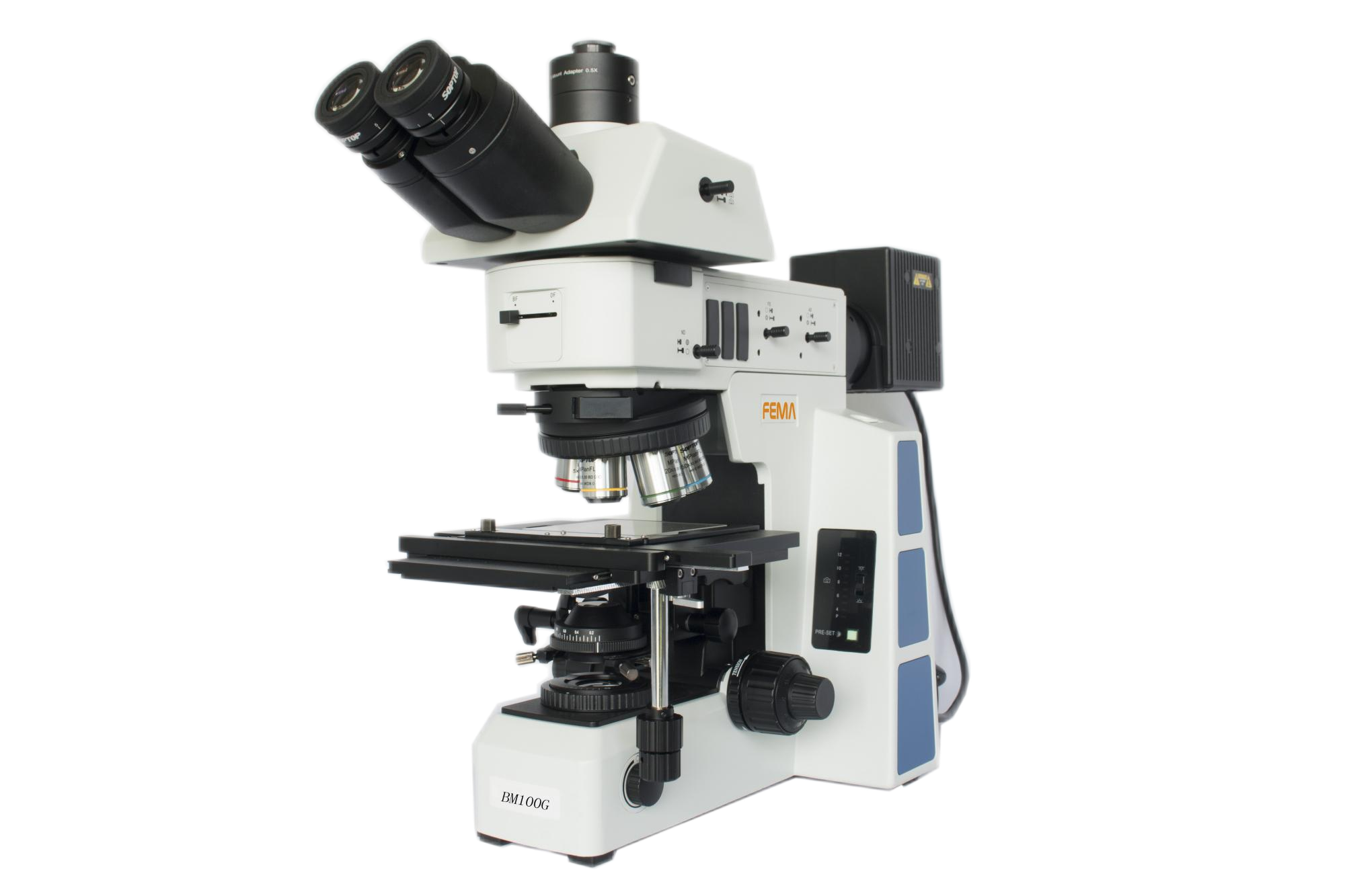
Observation methods: bright field, dark field, polarization
Magnification: 50X, 100X, 200X, 500X, 1000X
Imaging system; 20 million pixel high-definition camera
Image software: professional image processing and measurement software
3.2 Results and Analysis
① Aluminum alloy sample 100 times:

① Aluminum alloy sample 200 times:

① Aluminum alloy sample 500 times:

② Magnesium alloy sample 100 times:
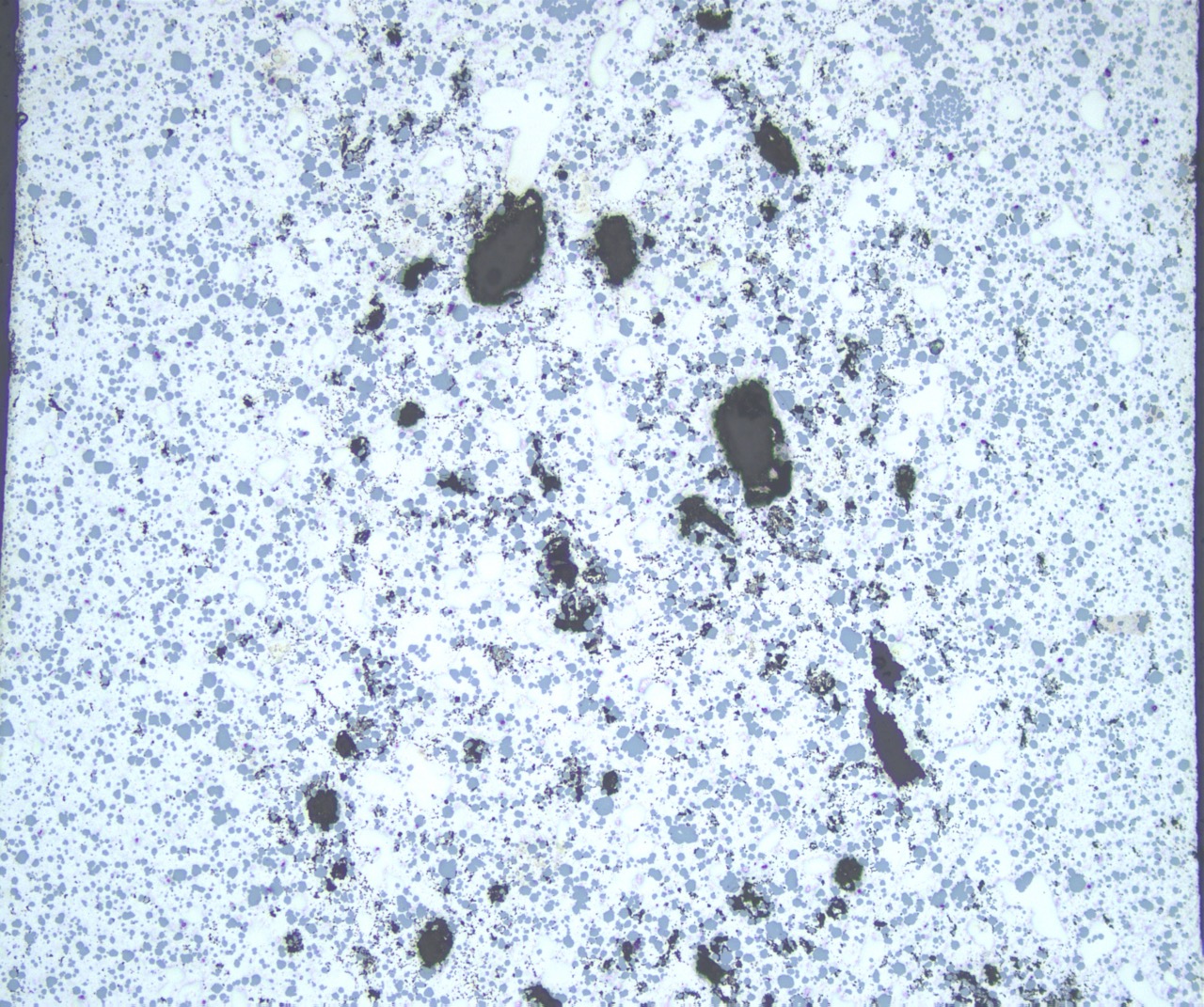
② Magnesium alloy sample 200 times:

② Magnesium alloy sample 500 times:

③ Aluminum alloy sample 100 times:

③ Aluminum alloy sample 200 times:

③ Aluminum alloy sample 500 times:

④ Aluminum alloy sample 100 times:

④ Aluminum alloy sample 200 times:

④ Aluminum alloy sample 500 times:

4、 Summary
1. The samples are aluminum alloy and magnesium alloy samples, which require precise sampling using an automatic precision cutting machine;
2. Use edge preserving hot inlay powder while ensuring high sample density, corrosion resistance, and excellent edge preserving performance.
3. Mature grinding and polishing processes combined with grinding and polishing consumables ensure that the sample surface is smooth, shiny, and free of obvious scratches;
4. Professional image software measures, edits, and saves the required information.