-
E-mail
leon@chinafema.cn
-
Phone
17761910072
-
Address
Building 3, Hongchuang Technology Park, Suzhou Industrial Park
Solution
Suzhou Fermaco Automation Technology Co., Ltd
Exploring the Microscopic World of Titanium Alloys - Metallographic Sample Preparation of TA1 Pure Titanium and TC4 Titanium Alloy
Preface
In the fields of aerospace, biomedicine, and manufacturing, titanium alloys are known as "space metals" and "ocean metals" due to their strength to weight ratio, excellent corrosion resistance, and biocompatibility. The macroscopic properties of materials are rooted in their microstructure, and accurately revealing the microstructure of TA1 pure titanium and TC4 titanium alloy is the key to evaluating their process quality and predicting their service performance. In this issue, we will delve into the challenges and solutions of these two typical titanium materials in metallographic sampling.
Preparation difficulties
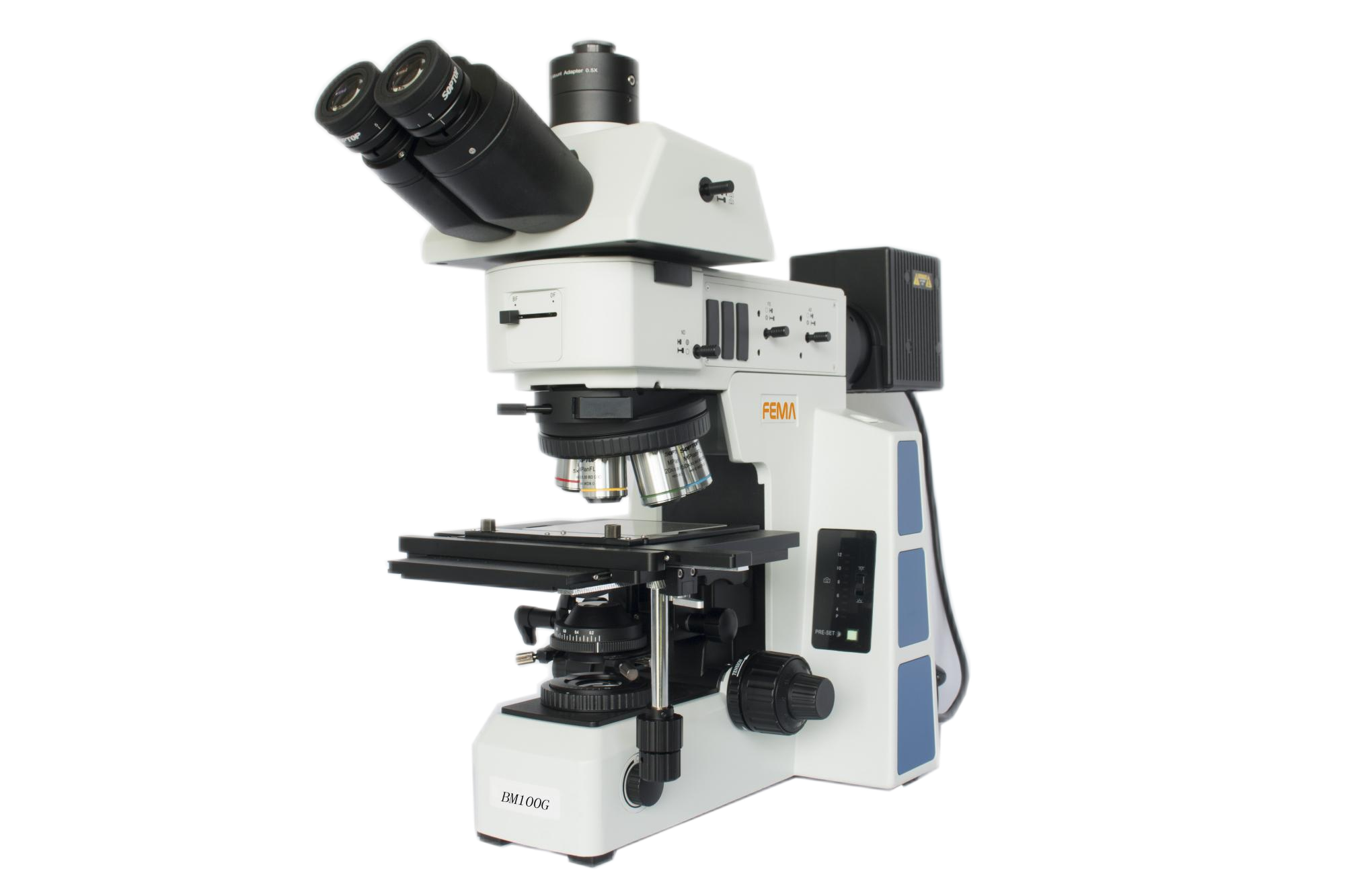
The difficulty in metallographic preparation of titanium and its alloys lies in the unique physical and chemical characteristics of the materials themselves.
High plasticity:Severe deformation layers, twinning, and "adhesion" phenomena are prone to occur during mechanical grinding, masking the true structure.
Poor thermal conductivity:The heat generated by grinding and polishing only one-fifth of steel is not easily dissipated, which can lead to local overheating, causing structural changes or deepening deformation layers.
These characteristics require the sample preparation process to abandon the "universal solution" and shift towards refinement and customization.
Preparation of TA1 Pure Titanium Sample
As an industrial pure titanium, the core goal of metallographic observation of TA1 is to obtain a pure matrix structure without twinning, scratches, and clear grain boundaries, laying the foundation for grain size grading. Therefore, we have developed the following solution for this sample.
 Grinding and polishing:
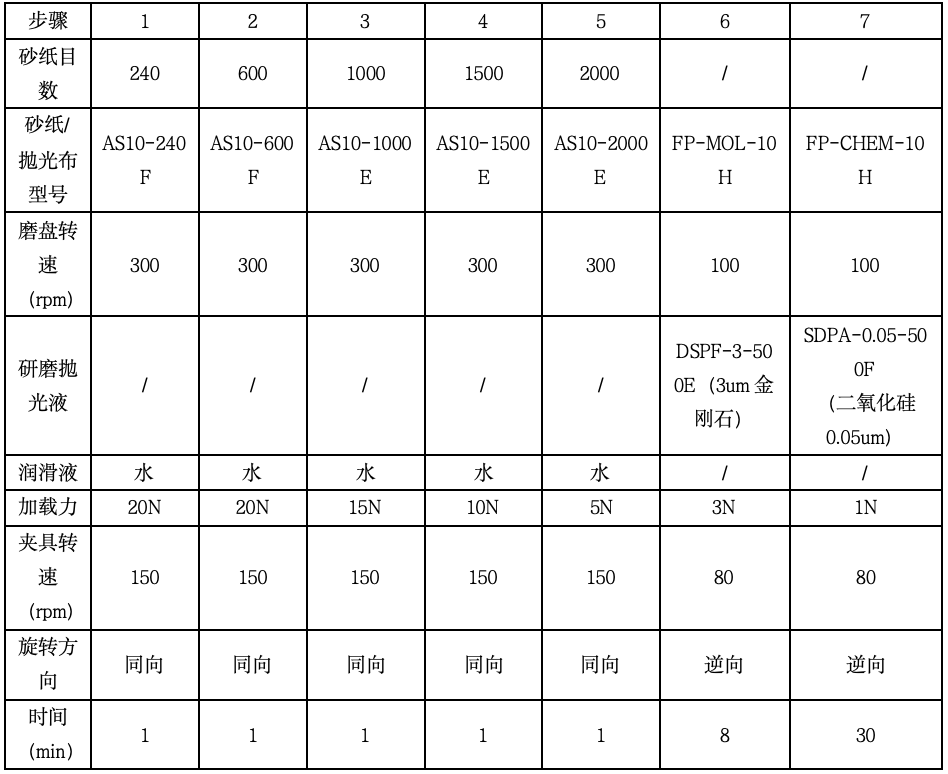
adoptProgressive pressure reducing polishingFrom rough grinding to fine polishing, the load is gradually reduced (such as from 20N to 1N), and polished with diamond suspension and final silica suspension from coarse to fine, reducing mechanical deformation while efficiently grinding and polishing.

“Alternating polishing etching polishing”Cycle. By slightly dissolving the surface deformation layer through chemical etching, and then removing the reaction products with extremely light load precision polishing, residual twinning and dislocation lines can be effectively eliminated, revealing the true grain boundaries.
Microscopic observation:
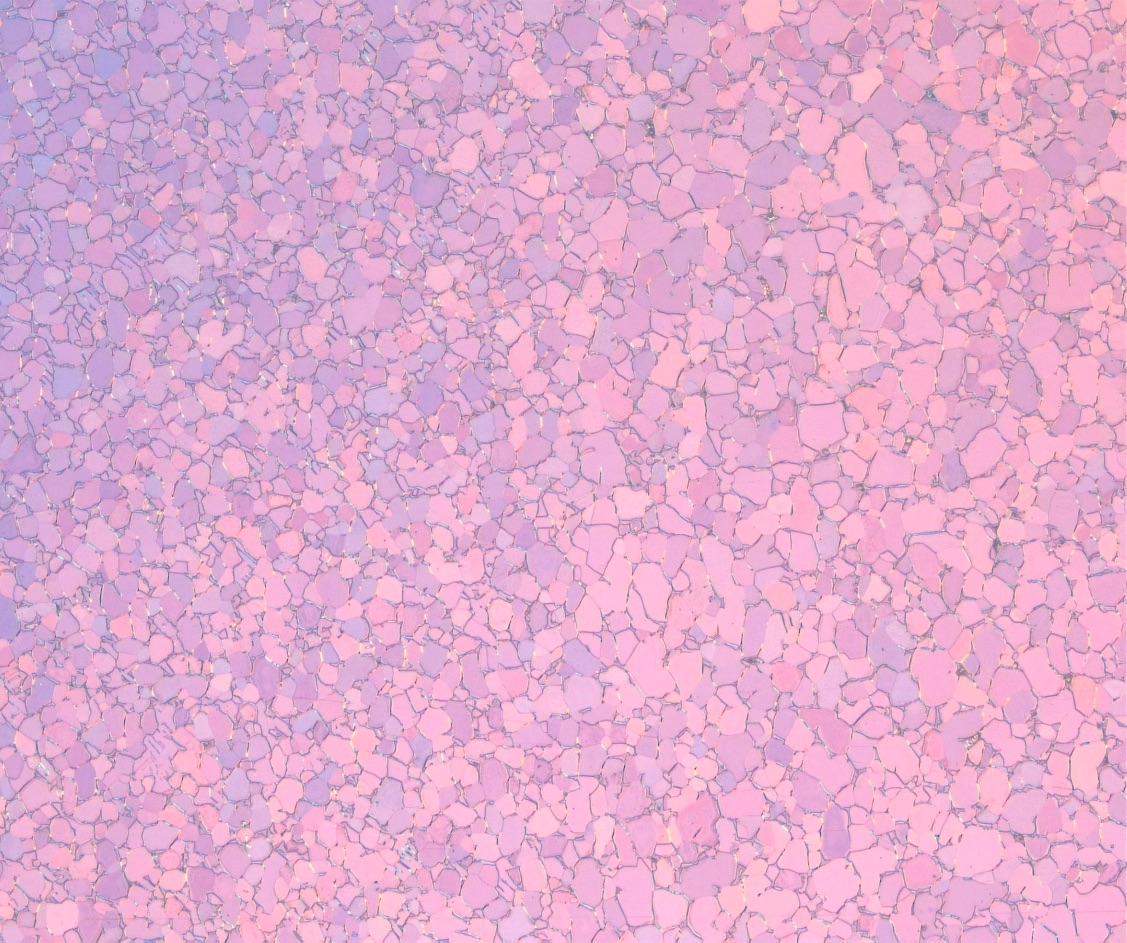
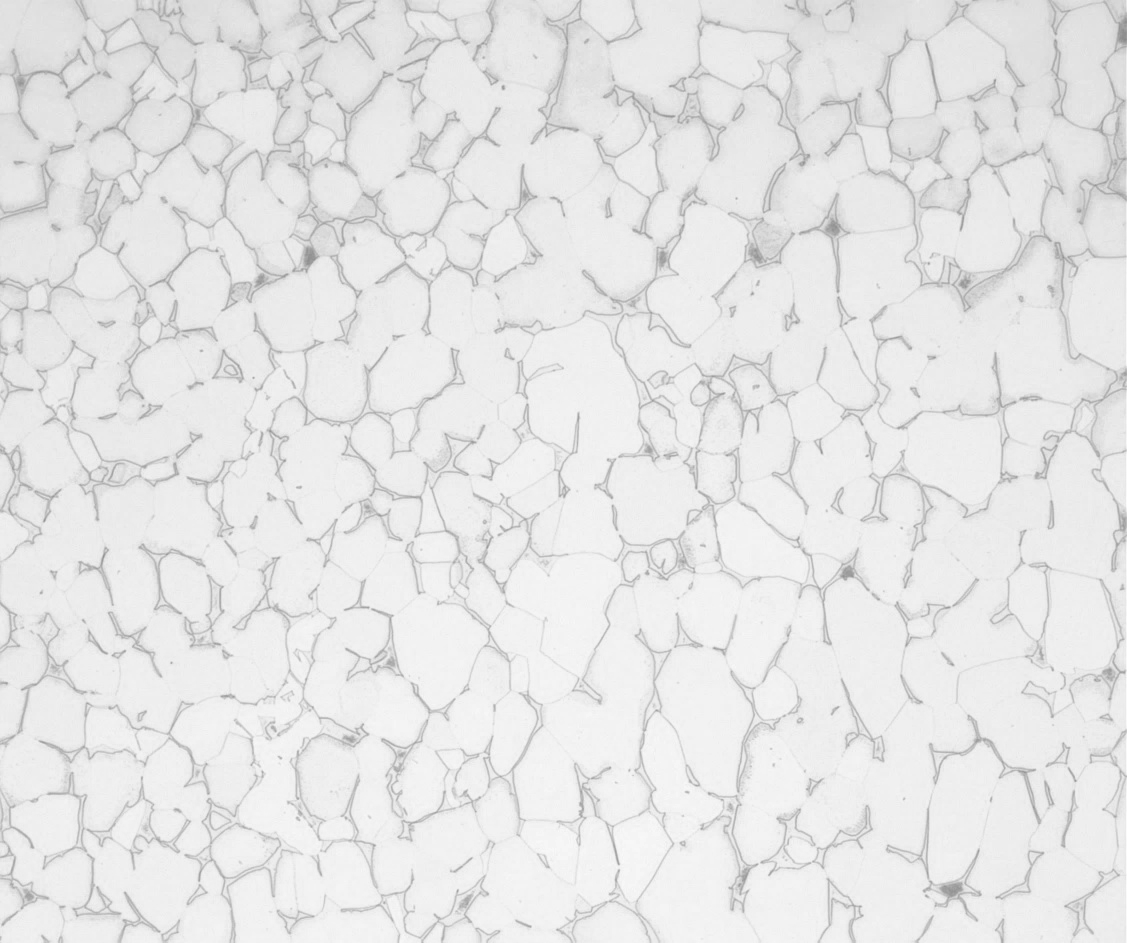
As shown in the figure, the TA1 sample prepared by optimized process has smooth grains and no scratches under bright field; Under polarization, utilizing the anisotropy of titanium, the grain contrast is significant and the grain boundaries are distinct, providing a good substrate for accurate measurement.

Sample bright field 100 times

Sample bright field 200 times

Sample polarization 100 times

Sample polarization 200x
Preparation of TC4 Titanium Alloy Sample
TC4 (Ti-6Al-4V) is a widely used α+β two-phase titanium alloy, and its metallographic analysis needs to simultaneously meet the requirements of clearly distinguishing equiaxed primary α phase, transforming β matrix, and observing the microstructure evolution in the weld area.
Grinding and polishing:
Similarly, a refined automatic grinding and polishing process is used to prepare a flat and undisturbed surface for corrosion observation. Due to the high hardness of TC4, it is necessary to adjust the grinding and polishing medium sequence and time.
Corrosion:
selectKroll reagentPerform corrosion. By precisely controlling the time, the β phase is eroded slightly deeper, forming a sharp contrast with the bright white α phase in the bright field.
Microscopic observation:
Mingchang: used to observe the morphology, size, and distribution of alpha phase.
Polarization: For certain orientations of alpha phase bundle, polarization can present brilliant color contrast and more intuitively display grain orientation and texture.

Titanium alloy TC4 bright field 100 times
Titanium alloy TC4 bright field+polarized 200
Titanium alloy TC4 bright field 500 times
After being corroded by Kroll reagent, TC4 titanium alloy shows a clear contrast between the α phase (bright white) and β transformation structure (dark black) under bright field; Under polarization, the organization has rich colors and clear orientation.
Summary
1. Pure titanium has a soft texture, high friction coefficient, and low thermal conductivity. During grinding, it is prone to deformation twinning and bonding layers, resulting in a false microstructure and masking the true structure;
After the surface scratches of pure titanium are fully removed, there will still be intragranular twinning and intragranular black flocculent dislocations. By alternating polishing etching polishing and increasing the polishing time, twinning and metal flow can be effectively removed;
During etching, using immersion wiping method can obtain cleaner grain boundaries and intragranular morphology.
After grinding and polishing the titanium alloy sample, obvious grain boundaries can be observed under polarized light; Although it is not easy to observe the weld seam after corrosion, the difference in grain size between the left and right sides of the weld seam is more obvious. The average grain size on the left side is smaller, and obvious color metallography can also be observed under polarized light.