-
E-mail
marketing@gassensor.com.cn
-
Phone
13296672587
-
Address
No. 3 Fenghuangyuan 3rd Road, Fenghuangyuan Industrial Park, Donghu New Technology Development Zone, Wuhan City, Hubei Province
Sifang Optoelectronics Co., Ltd
Humidity Detective in Lithium Battery Workshop: The Science Behind Dew Point Control
Date: 2025-08-29Read: 46
In the lithium battery production workshop, moisture is like an 'invisible disruptor' that needs to be constantly vigilant.
•Liquid battery:Moisture triggers the decomposition of electrolyte to produce HF, corroding electrode materials and SEI film, affecting battery performance and increasing safety hazards;
•Solid state battery:The reaction between water and sulfide electrolyte generates H2S and LiOH, which not only reduces battery performance but also endangers personnel safety.
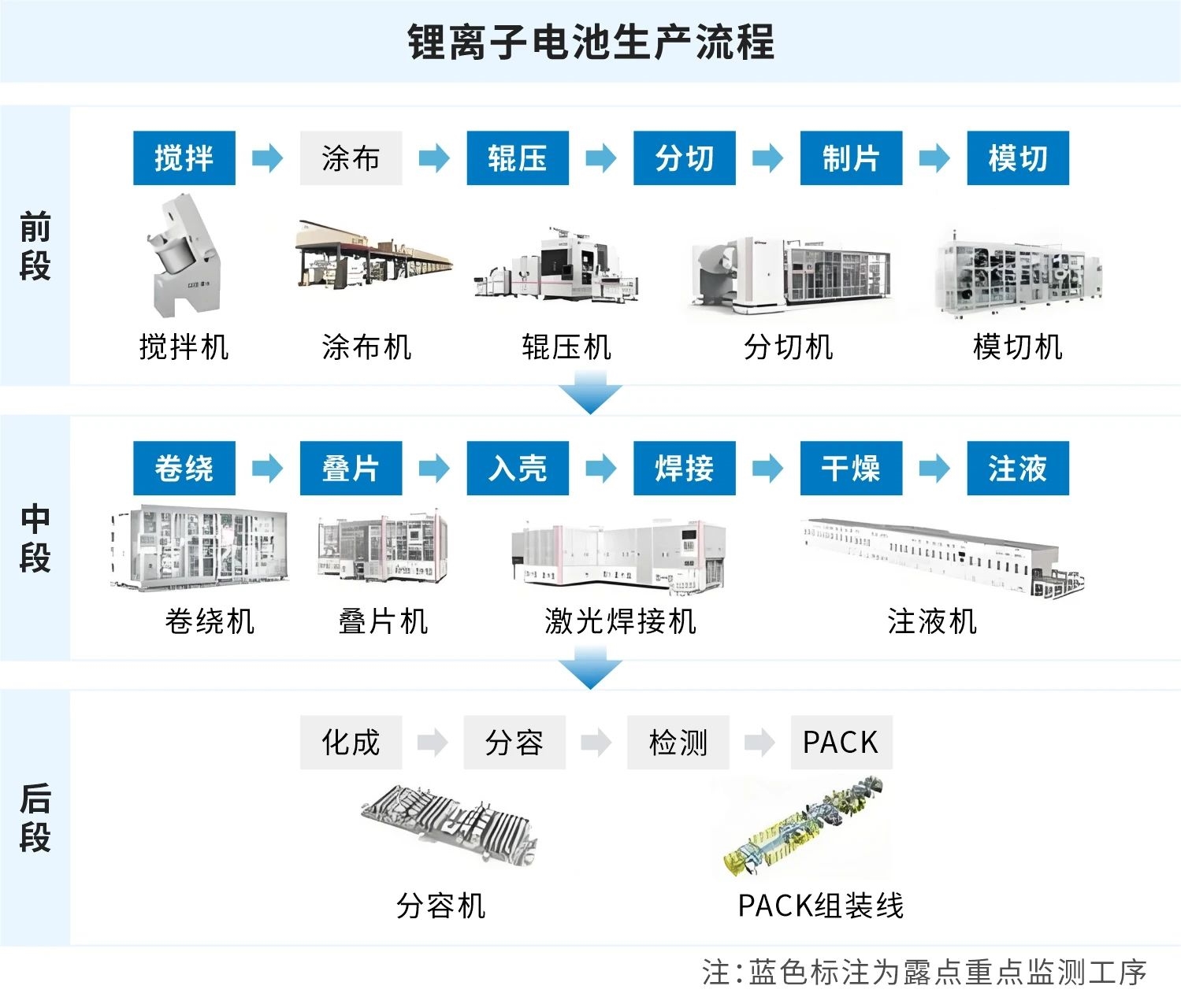 Detective: The science behind dew point control 'style='width: 800px; '/>
01.Dew point monitoring: a barometer for lithium battery production
In theory, the lower the moisture content in the lithium battery production workshop, the better, but drying requires a huge energy cost. Just like air conditioning temperature regulation, the difference in perceived temperature between 26 ℃ and 25 ℃ is small, but the difference in energy consumption can be as high as 20%; In addition, low humidity may lead to an increase in static electricity, posing a threat to the safety of personnel and equipment. Therefore, accurate dew point measurement has become the key to balancing product quality, financial costs, and production safety.
02.The 'insufficient strength' of capacitive dew point sensors
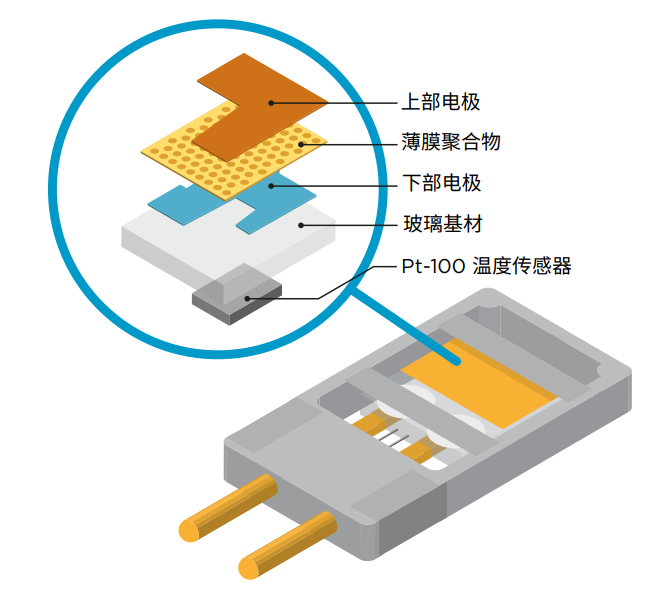
At present, capacitive thin-film polymer sensors are commonly used in lithium battery workshops to monitor dew points. The principle is that water molecules adsorb onto the thin film polymer, causing a change in dielectric constant and thus calculating the dew point temperature.
 Detective: The Science Behind Dew Point Control 'width='655' height='603 'border='0'/>
Traditional capacitive sensor structure
Image reference: Lithium Battery Alliance President's "Dew Point Impact and Dehumidification Treatment in Lithium Battery Workshop
However, capacitive sensors still have several limitations in practical applications, such as insufficient long-term stability, susceptibility to environmental material interference, and large measurement errors
I. Non idealized“Basic signal drift”(Key Limitations)
•Theoretical assumption: The capacitance value of the film remains stable over the long term.
•Reality: Thin film polymers themselves will age. With time, temperature cycling, and chemical exposure, polymer chains can break, recombine, or undergo irreversible slight deformation.
 Detective ": The Science Behind Dew Point Control" width="700" height="423" border="0"/>
△ Cracking of thin film polymer after aging
II. Unpredictable“Pollution effect”
•theoretical modelDew point monitoring based on pure water vapor environment.
•Actual: In the workshopVOC、Electrolyte solvents and other substances are adsorbed by thin films, changing their dielectric constant and being used by capacitive sensorsMisjudged as“水分”.
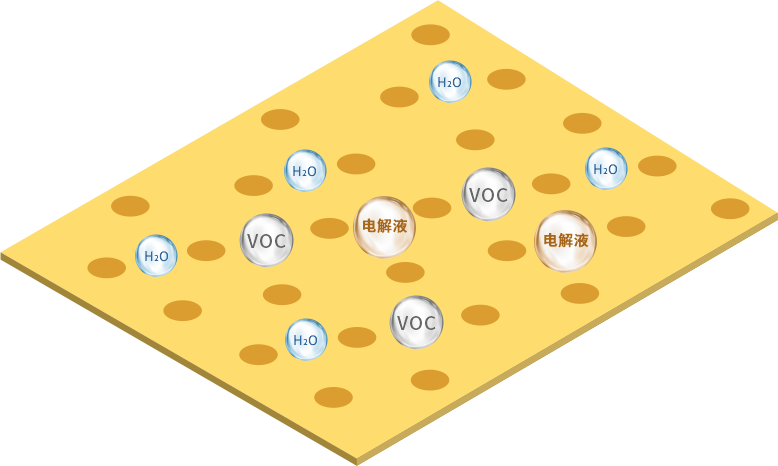 Detective ": The Science Behind Dew Point Control" width="700" height="419" border="0"/>
△ Thin film polymer adsorbs substances other than water molecules
III. Fluctuating measurement accuracy
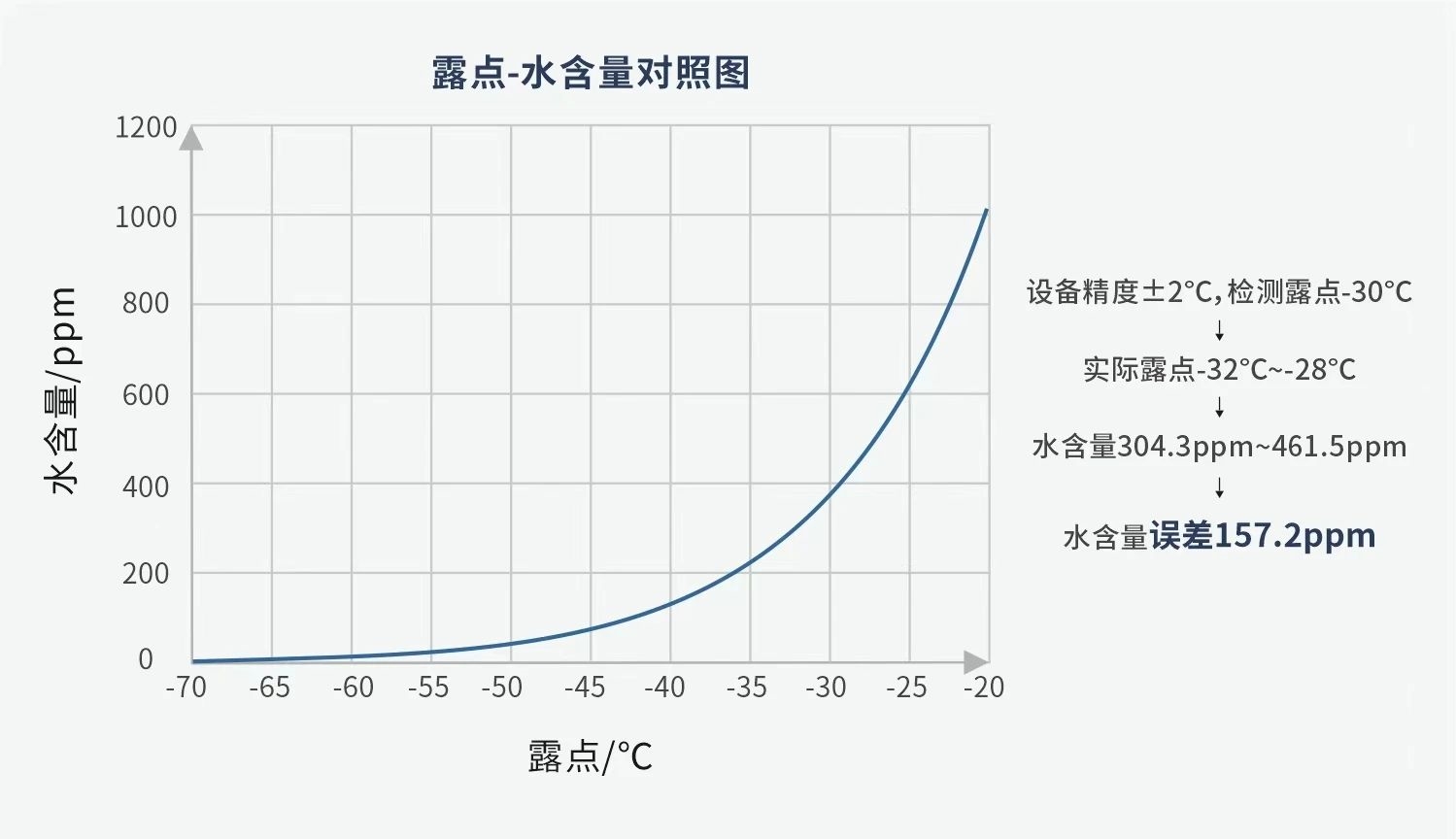
•Theoretical nominal: The measurement accuracy is usually ± 2 ℃.
•Actually, there is a non-linear relationship between dew point and water content. The higher the dew point, the greater the difference in water content. The dew point in lithium battery workshops is usually between -60 ℃ and -30 ℃, and capacitive sensors have a large error in detecting this range. If the dew point is detected at -30 ℃, the water content error can be as high as 157.2ppm.
 Detective: The science behind dew point control 'style='width: 800px; '/>
03.The 'technological breakthrough' of laser sensors
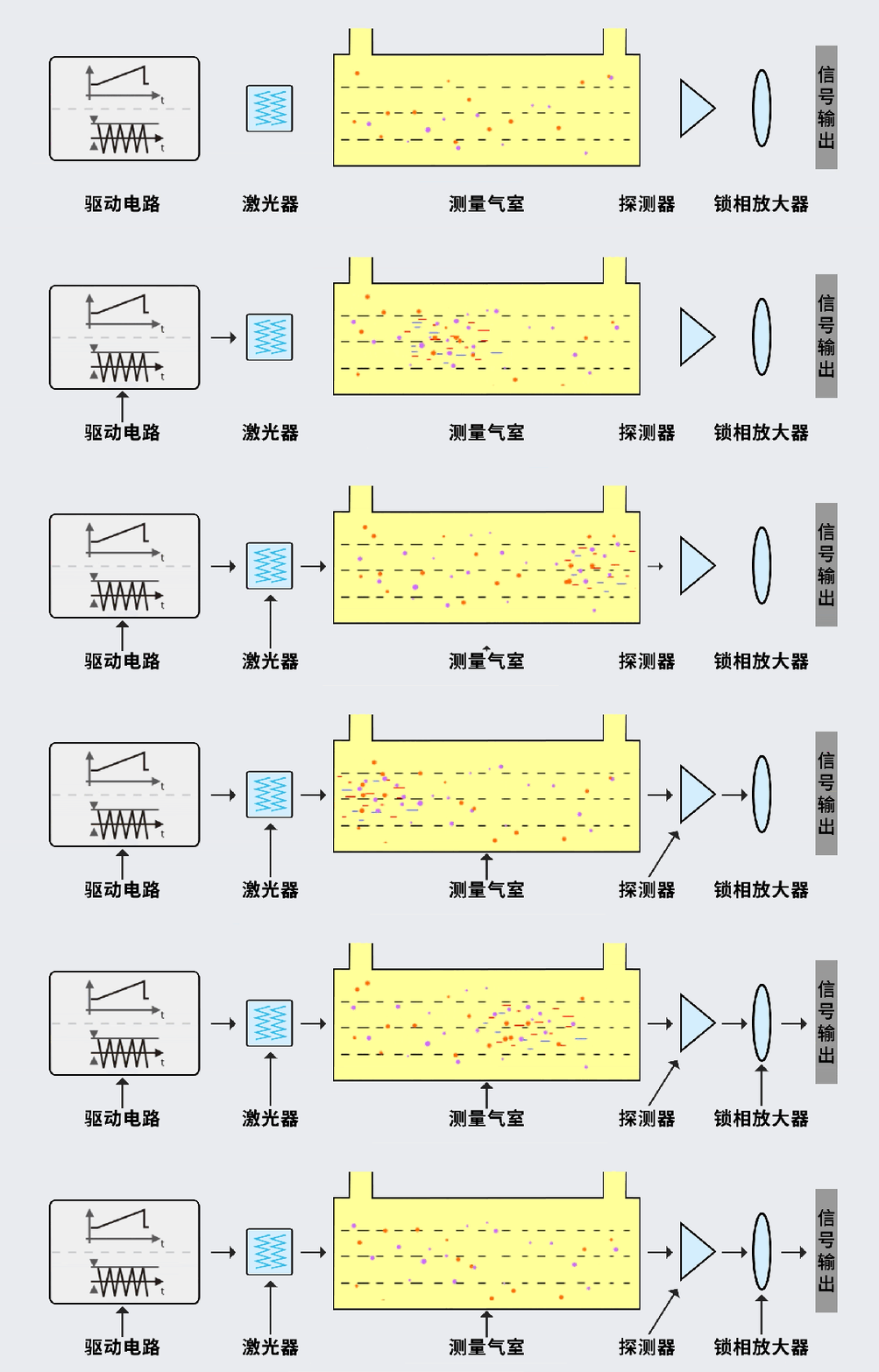
TDLAS (Tunable Diode Laser Absorption Spectroscopy) is a high-precision gas detection technology that utilizes the absorption characteristics of gas molecules at specific near-infrared wavelengths to calculate gas concentration based on the attenuation of the absorbed light intensity when the laser passes through the gas.
 Detective: The science behind dew point control 'style='width: 800px; '/>
Three major advantages based on TDLAS principle:
•Good long-term stabilityNo consumables, no accumulation of chemical reaction by-products, avoiding issues such as baseline drift;
•Strong anti-interference abilityBy detecting the absorption spectra of water molecules at specific wavelengths (such as 1392 nm), it exhibits high gas selectivity; By using narrow linewidth lasers, it is possible to distinguish the absorption peaks of different gases and avoid cross interference;
•high measurement accuracyDirectly measure the water molecule content to avoid conversion errors caused by the non-linear relationship between dew point and water content.
 Detective: The science behind dew point control 'style='width: 800px; '/>
04.Four party photoelectric laser dew point meter 'strong attack'
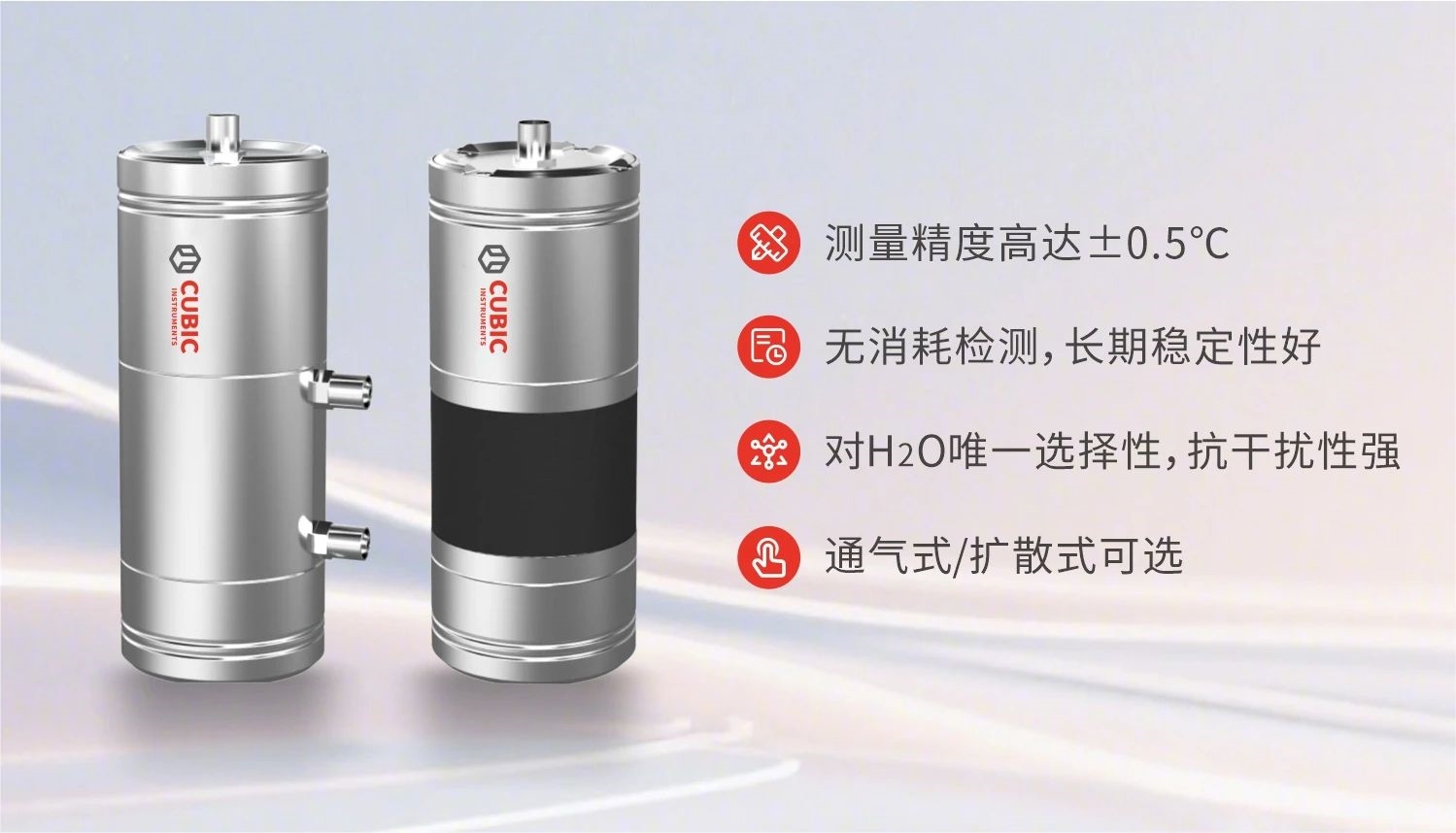
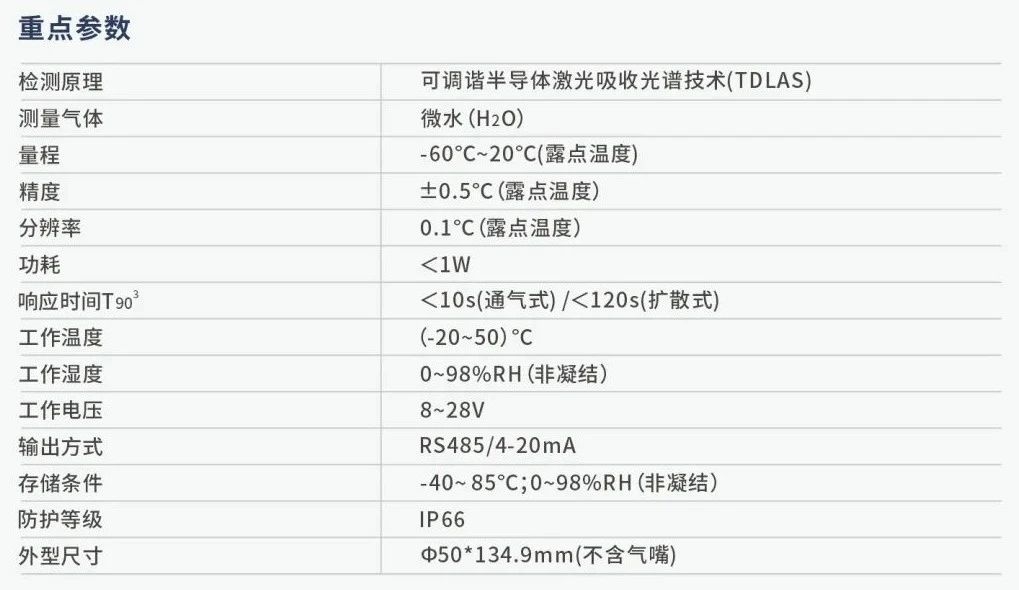
Sifang Optoelectronics has launched the Gasboard-2503-H2O laser dew point meter based on TDLAS technology, which is suitable for dew point monitoring in lithium battery workshops.
 Detective: The science behind dew point control 'style='width: 800px; '/>
This series comes in two specifications: ventilated and diffused; Adopting modular design, easy installation; Capable of calibrating and calibrating products through serial communication; Built in high-precision temperature sensor, combined with temperature compensation algorithm, can effectively suppress temperature drift and work stably in harsh working conditions and complex gas environments.
 Detective: The science behind dew point control 'style='width: 800px; '/>
Editor: Yimo
Proofreading: Daniel
Reviewed by: Xiao Jinhua
Reviewed by: Xiao Jinhua