-
E-mail
marketing@gassensor.com.cn
-
Phone
13296672587
-
Address
No. 3 Fenghuangyuan 3rd Road, Fenghuangyuan Industrial Park, Donghu New Technology Development Zone, Wuhan City, Hubei Province
Sifang Optoelectronics Co., Ltd
Electrolyte leakage 'safety guard': accurately capturing 1ppm of DMC micro leakage volatilization
Date: 2025-09-15Read: 46
As the "blood" of lithium batteries, electrolytes play a dual role as energy carriers and sources of risk. Even trace leaks can pose significant risks, ranging from affecting battery performance to causing uncontrolled heat and even fire.
In July of this year, an explosion occurred at the battery factory of Sanyuan Energy Technology, a subsidiary of Taiwan Cement Group, located in Kaohsiung. Although the cause of the accident was not clearly disclosed, the ignition point occurred in the "room temperature static area for semi-finished chemical products". Therefore, it is widely speculated in the industry that it is likely due to manufacturing defects in local battery cells (such as trace electrolyte leakage) that were not detected in a timely manner, ultimately expanding and causing accidents.
Pack shipment inspection
Strengthen the last safety checkpoint of the production line
The manufacturing process of lithium batteries is large and complex, and electrolyte leakage usually occurs in blind spots such as laser welds, dust puncture holes, and seal ring gaps. The formation process is very slow and difficult to detect. Although trace leakage does not immediately affect battery performance, it can easily affect product performance and seriously cause safety accidents.
Battery Pack Shipping InspectionAs the final safety checkpoint for batteries transitioning from production lines to terminal applications, its detection significance is extremely important. The disassembly of finished battery packs is complicated, requiring the detector to accurately detect trace leaks without false alarms or omissions, and to build a safety defense line for battery safety.
Current detection results
'Not satisfactory'
At present, battery factories usually use PID photoionization sensors and mass spectrometry analyzers to detect electrolyte leaks, but the overall detection effect is "unsatisfactory" and cannot accurately match the requirements.
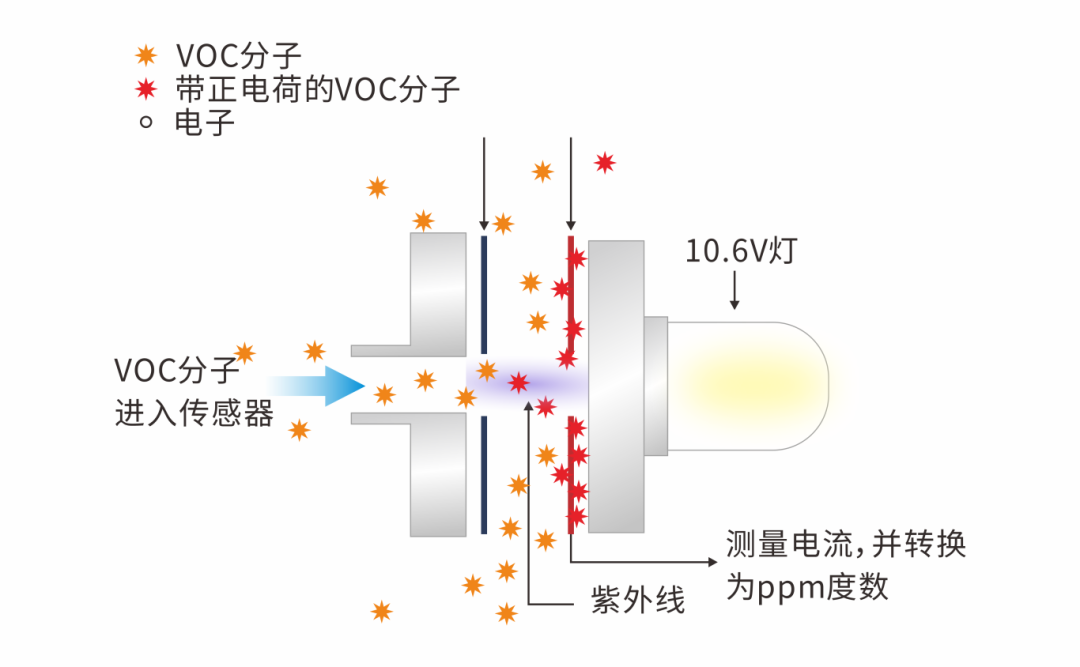
PID: Lack of specificity, high false alarm rate
PID (also known as photoionization detector) ionizes volatile organic compounds (VOCs) through high-energy ultraviolet lamps and detects their concentration by measuring ion current. The disadvantage is that it lacks specificity and cannot distinguish the types of VOCs gases, making it prone to false positives and false negatives. It is only suitable as a preliminary and rapid screening tool.
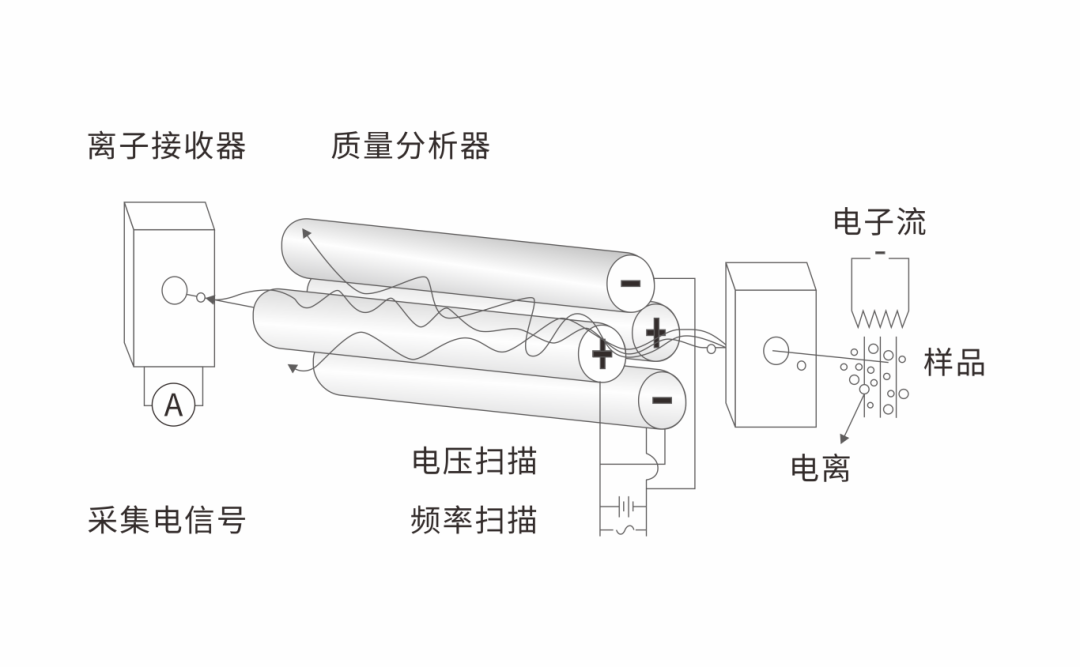
RGA mass spectrometry analysis method: high threshold, with "side effects"
The quadrupole mass spectrometer ionizes gas molecules, separates and detects them according to the mass to charge ratio, and can identify small leaks in the electrolyte. The disadvantage is that the high-voltage testing process can cause the size of the pack body (especially the soft pack) to increase, which can easily damage the sealing of the pack body. And the equipment procurement cost is expensive, relying on professional technical personnel to maintain the vacuum system and calibrate instruments, with a high threshold for use. At the same time, the large size of the equipment cannot match the detection needs of different scenarios in lithium battery workshops.
NDIR
Optimal solution for trace electrolyte leakage
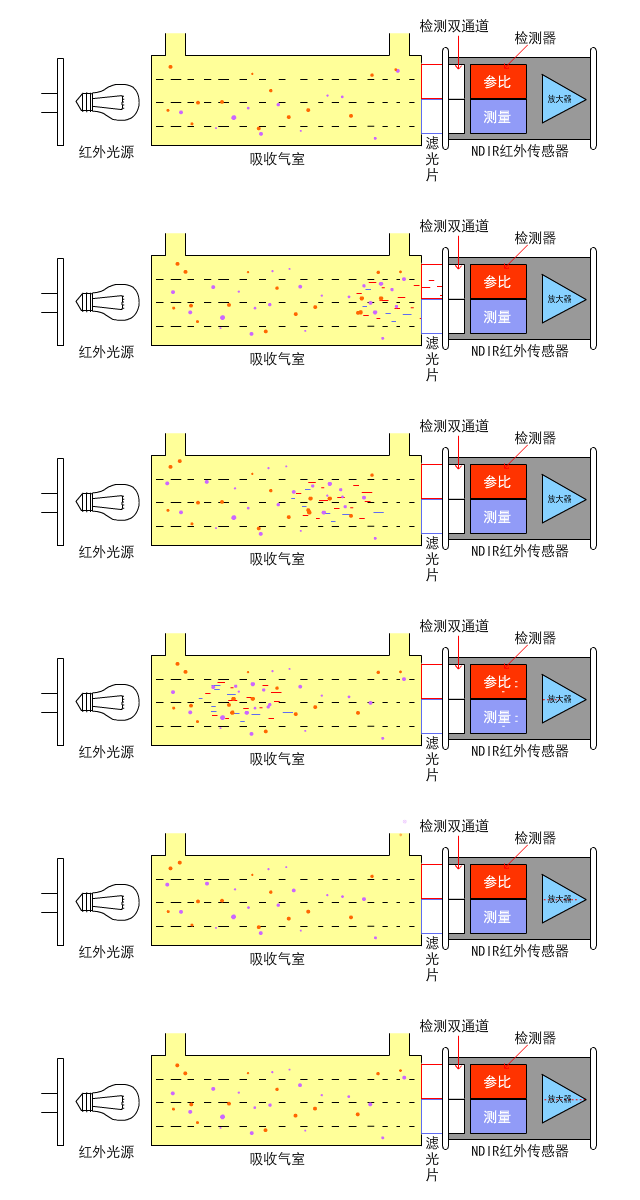
NDIR technology is based on optical principles and can detect trace leaks by measuring the absorption of specific wavelengths of infrared light by the core organic solvent DMC in the electrolyte(1 ppm level)Accurate identification. The specific absorption wavelength determines that only the target gas can be detected,Strong ability to resist gas cross interferenceEffectively avoiding false alarms and omissions, meeting the demand for precise detection of trace electrolyte leaks.
Four sided photoelectric weapon
Gasboard-3902
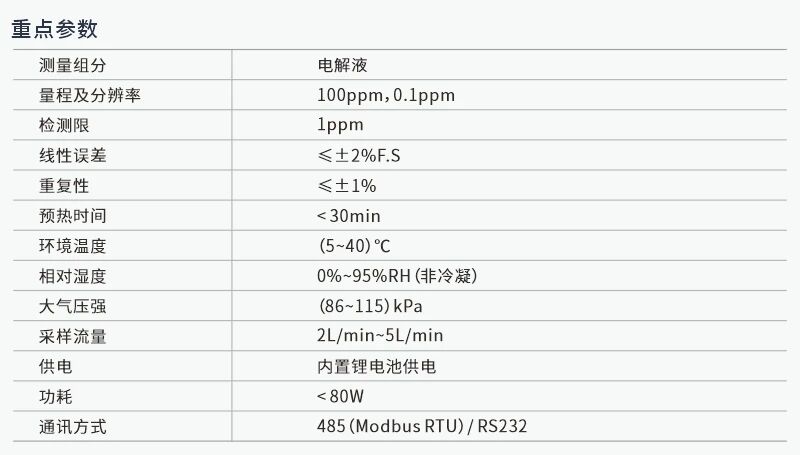
Sifang Optoelectronics is based on 22 years of maturityNDIRThe Gasboard-3902 electrolyte leakage detector, developed with advanced technology, has excellent gas selectivity and a detection limit as low as 1ppm, making it suitable for lithium batteriesPack shipment inspection、Power battery maintenance and inspection、Inspection of energy storage power stationsDifferent application scenarios require electrolyte leakage detection.
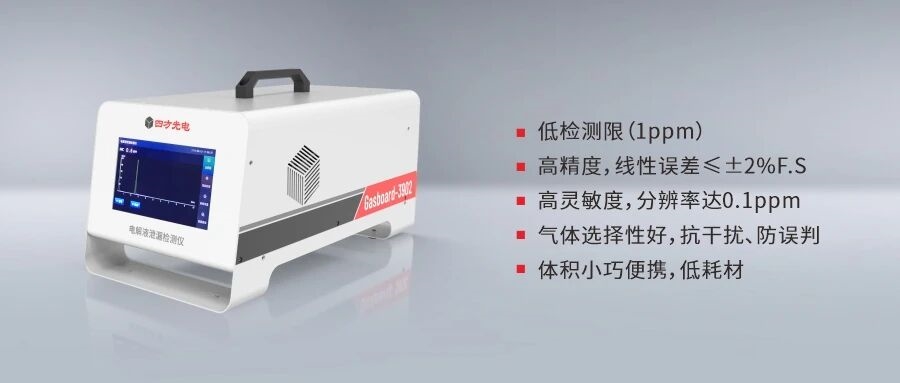
The product is equipped with high-precision sensors, built-in temperature control, integrated precision signal extraction and processing design, and can display measurement results and monitoring curves in real time; Built in battery power supply, convenient for on-site integration testing and mobile use, meeting the needs of different measurement scenarios.