-
E-mail
2260209398@qq.com
-
Phone
18980943378
-
Address
Haolang Technology Park, No. 2666 Konggang Fourth Road, Shuangliu District, Chengdu City
Sichuan Xuxin Technology Co., Ltd
The 'safety eye' of dangerous scenes: how can explosion-proof digital cameras protect and record moments?
Date: 2025-10-26Read: 66
In flammable and explosive scenarios such as petrochemicals, gas maintenance, and hazardous chemical storage, the hidden dangers of electric sparks and circuit heating in traditional digital cameras may pose fatal risks.Explosion proof digital cameraThis imaging device, specially designed for hazardous environments, with its rigorous explosion-proof design and professional imaging capabilities, has become a reliable eye for safety records in high-risk scenarios, providing critical visual support for safety production and equipment inspections.
The core advantage of digital cameras lies in the explosion-proof structural design that eliminates safety hazards from the source. Unlike ordinary cameras, it adopts an intrinsic safety design concept, which limits the current and voltage in the circuit to ensure that the equipment will not generate electrical sparks or high temperatures sufficient to ignite explosive mixtures under normal operation or fault conditions. The body is made of high-strength aluminum alloy material, and the sealed interface can effectively isolate dust and flammable gases, making it suitable for most explosive gas environments. At the same time, the camera lens, battery and other components have been certified for explosion-proof, and the battery adopts a dual protection circuit to avoid safety risks caused by overcharging and overdischarging, building a solid safety defense line from the hardware level.
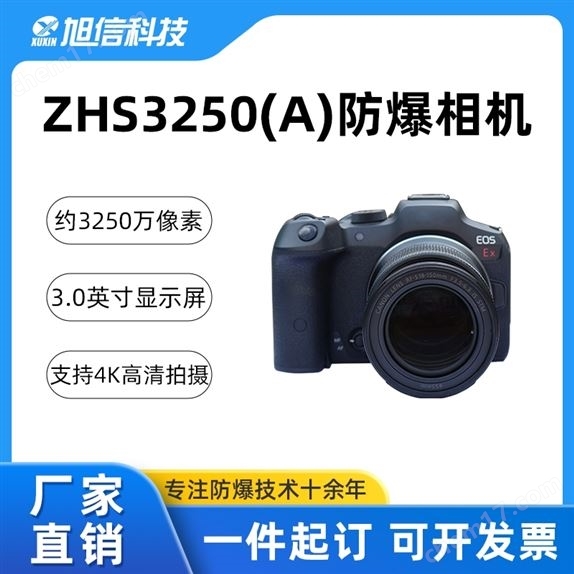
Professional imaging performance enables explosion-proof digital cameras to achieve a balance between safety and clarity in hazardous scenarios. The high pixel sensor and large aperture lens it is equipped with can capture clear details in dim environments such as chemical workshops and oil and gas storage tanks. Even during night inspections, low-noise images can be captured through high sensitivity mode. In response to equipment inspection requirements, some models support macro photography function, which can clearly record small defects such as valve sealing surfaces and pipeline welds; The wide-angle lens can fully present the overall state of large storage tanks and reaction vessels. In addition, the camera has waterproof, dustproof, and anti drop properties, and can cope with complex environments such as humidity, dust, and bumps in chemical sites.
In diverse scenarios, digital cameras are becoming a standard equipment for safety production. In the petroleum refining plant area, inspectors can use it to capture the operation status of equipment and promptly detect problems such as flange leaks and pipeline corrosion; At the gas station, it can safely record the operation process of refueling equipment and pressure instrument readings, providing visual evidence for compliance checks; In the transportation of hazardous chemicals, law enforcement personnel can use it to retain image data of the loading and unloading site to ensure transportation safety.
With the increasingly strict supervision of safety production, explosion-proof digital cameras are upgrading towards intelligence. The new generation of products integrates GPS positioning function, which can synchronously record the shooting location and time, making it easy to trace the inspection trajectory; Some models support wireless transmission and can upload the captured images in real time to the security management platform, achieving real-time reporting and collaborative processing of hidden dangers. From daily inspections to emergency response, digital cameras provide safe and reliable performance to safeguard the safety production of high-risk industries.