-
E-mail
yibao@szyibao.com.cn
-
Phone
18675539088
-
Address
312, Shangshuijing Comprehensive Building, 333 Jihua Road, Jihua Street, Longgang District, Shenzhen City, Guangdong Province
Shenzhen Yibao Technology Co., Ltd
Maikexin Oscilloscope Selection Guide: Practical Suggestions for Choosing Bandwidth/Channel Count/Storage Depth According to Requirements
Date: 2025-11-17Read: 3
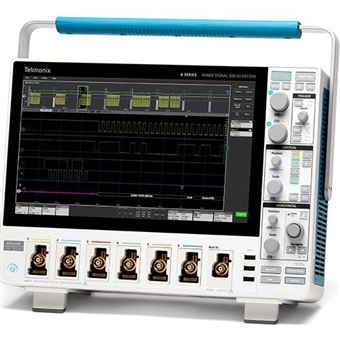
select麦科信示波器When matching, it is necessary to match core parameters such as bandwidth, number of channels, and storage depth according to the actual application scenario to avoid "virtual high parameters" or "insufficient performance".
Bandwidth: determines the ability to capture high-frequency signals. The bandwidth indicator can accurately measure higher frequency signals (usually the frequency at which the amplitude of the sine wave decays to -3dB). If testing a 1MHz square wave (containing rich high-frequency harmonics), it is recommended to have a bandwidth of ≥ 5 times the signal frequency (i.e. above 5MHz); Testing high-speed digital signals (such as 480Mbps for USB 2.0) requires at least 100MHz bandwidth; For professional RF or high-speed chip debugging, it is recommended to choose 500MHz or even higher. Maikexin's mid to low end models (such as DS1000 series) cover 100-200MHz and are suitable for embedded development; High end models (such as MSO5000 series) offer 500MHz-2GHz to meet high-speed signal analysis requirements.
Number of channels: a must-have for synchronous measurement of multiple signals. A single channel can only measure one signal, a dual channel can compare two signals (such as input/output voltage), and a four channel can simultaneously monitor multiple signals such as power, clock, and data. If only debugging simple circuits (such as amplifier gain), dual channels are sufficient; If analyzing bus communication (such as I2C/SPI) or power integrity (multi rail voltage), four channels are more practical. Some models of Maikexin support mixed signal (MSO) and provide an additional 16 digital channels for synchronous observation of analog and digital signals.
Storage depth: the key to recording long waveform details. The storage depth determines the number of sampling points that an oscilloscope can store (formula: storage depth=sampling rate x time window). If it is necessary to observe the details of low-frequency signals for a long time (such as a 1-second waveform during power startup), a large storage depth (≥ 100Mpts) is required; If only measuring short-term high-frequency pulses (such as nanosecond level trigger signals), a small storage depth (such as 12Kpts) can also meet the requirements. Maikexin entry-level model has a storage depth of about 10-50Kpcs, suitable for basic testing; Mid to high end models (such as the DS5000 series) offer 100Mpts or more and support long-term waveform recording and slow scan analysis.
In addition, additional features such as protocol decoding and waveform recording, screen resolution (affecting waveform clarity), and portability (handheld vs. desktop) need to be considered. Balancing parameters based on actual needs is necessary to select the most suitable one麦科信示波器.