-
E-mail
sales@sinmary.com
-
Phone
13266639695
-
Address
Room 1008, Building C, Xinghe Legend Phase III Commercial Building, Lvjing Road, Minzhi Street, Longhua District, Shenzhen
Shenzhen Xinma Technology Co., Ltd
The development of electric vehicles has driven the rise of power batteries
Date: 2018-12-14Read: 40
With the diversification of the automotive industry and the increasingly severe environmental issues, the development of the new energy vehicle industry is rapidly advancing in the context of the consensus on energy diversification strategy. As the heart of electric vehicles, power batteries are the key to the development of the new energy vehicle industry. With a series of policy measures and efforts from all parties, China's power battery industry has achieved remarkable results in development. What is the prospect of future power batteries?
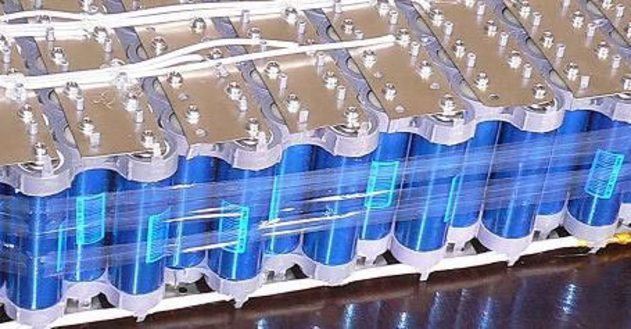
The scale of power batteries is growing rapidly
It is predicted that the production and sales of new energy vehicles in China will maintain rapid growth in the next five years, with an expected compound annual growth rate of over 30%. The new energy vehicle market is experiencing explosive growth, directly driving the rapid expansion of the scale of power batteries.
According to the "Forecast and Investment Analysis Report on the Development Prospects of China's Power Battery PACK Industry" by Forward Industry Research Institute, the output value of power batteries in China reached 38 billion yuan in 2015, a year-on-year increase of 262%, and the output value is close to that of digital lithium batteries. In 2016, the output value of power batteries in China reached 64.5 billion yuan, surpassing the scale of traditional digital lithium batteries and becoming a major sector in the consumption structure of lithium batteries.
With the introduction of a new round of promotion policies, as well as the impact of future improvements in lithium battery production technology and cost reduction, the demand for power batteries for new energy vehicles will grow rapidly in the next five years. In 2016, the production of power batteries for automobiles in China was 30.8 GWh, and it is expected that the production of power lithium batteries for automobiles in China will reach 141 GWh in 2020.
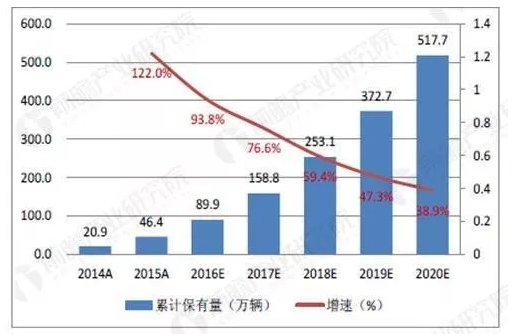
Prediction of cumulative ownership of new energy vehicles in China in the next 5 years
From the perspective of domestic power battery companies' production capacity, BYD and CATL alone are already close to 35GWh, and the total production capacity of the top six power battery companies exceeds 75GWh. Assuming that these six power battery companies only have 32% of passenger car production capacity supply, the power battery industry's production capacity is basically in a surplus state. The overcapacity of power batteries is evident, which will accelerate the differentiation and adjustment of the power battery industry. Only enterprises with strong competitiveness can stand out.
At present, China's power battery industry has entered a new stage of development, but there are still many problems in terms of industrial structure, manufacturing processes, technological innovation, etc. In addition, it faces enormous pressure from the rapid improvement of vehicle and power battery technology. The development of China's power battery industry and the status of new energy vehicles are facing challenges.
Suggestions for the Development of Power Battery Enterprises
From the perspective of power battery companies, overcapacity is becoming increasingly apparent, and the transformation of power batteries into ternary systems and the improvement of energy density are irreversible. However, the speed of the transition from lithium iron phosphate power batteries to ternary systems may slow down in 2018. In view of this, the following suggestions can be considered for reference:
1. Further improve policies for the new energy vehicle industry, enhance production management for new energy vehicle enterprises, strengthen sales standards for new energy vehicle enterprises, and create a fair competitive environment.
2. Persist in the management of power batteries, strengthen industry capacity monitoring, promote the coordinated development of industrial chains and economies of scale enterprises, and promote mergers and acquisitions among similar enterprises.
3. In response to the dual credit policy in terms of technology, the focus is on accelerating the innovation of power battery technology, improving the energy density of power batteries, and breaking through core technologies such as battery charging speed, safety, reliability, and service life.
Despite facing market pressures such as subsidy reduction, 30000 kilometers policy, and overcapacity, the capacity gap remains the logical pivot for power battery companies to accelerate investment and expansion. Each party must adopt a development model that suits their own characteristics, while also further enriching the industrial model.