-
E-mail
dawoxiyq@126.com
-
Phone
13902313436
-
Address
Building 3, No.1 Huafa North Road, Shangcun Community, Gongming Street, Guangming New District, Shenzhen
Shenzhen Dawosi Equipment Co., Ltd
Application of Dawosi High and Low Temperature Liquid Cooling Testing in the OBC Industry
Date: 2025-12-23Read: 1
Dawosi High and Low Temperature Liquid Cooling TestOBCIndustry applications
1、 Core Definition and Differences
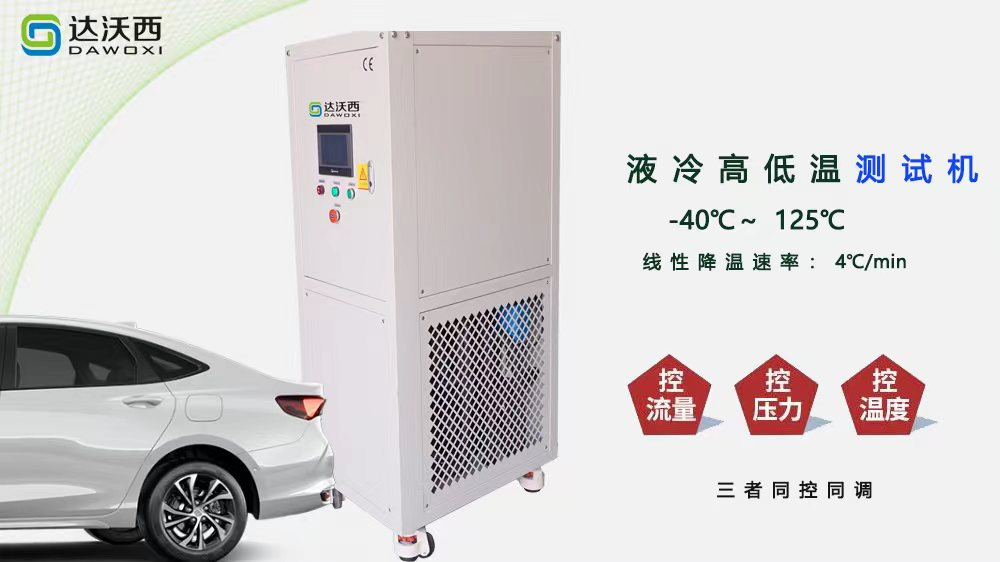
Firstly, clarifyHigh and low temperature liquid cooling testing machineKey differences from general high and low temperature chillers:
Universal high and low temperature chiller: mainly provides temperature controllable cooling water, commonly used in environmental test chambers or indirect cooling test benches.
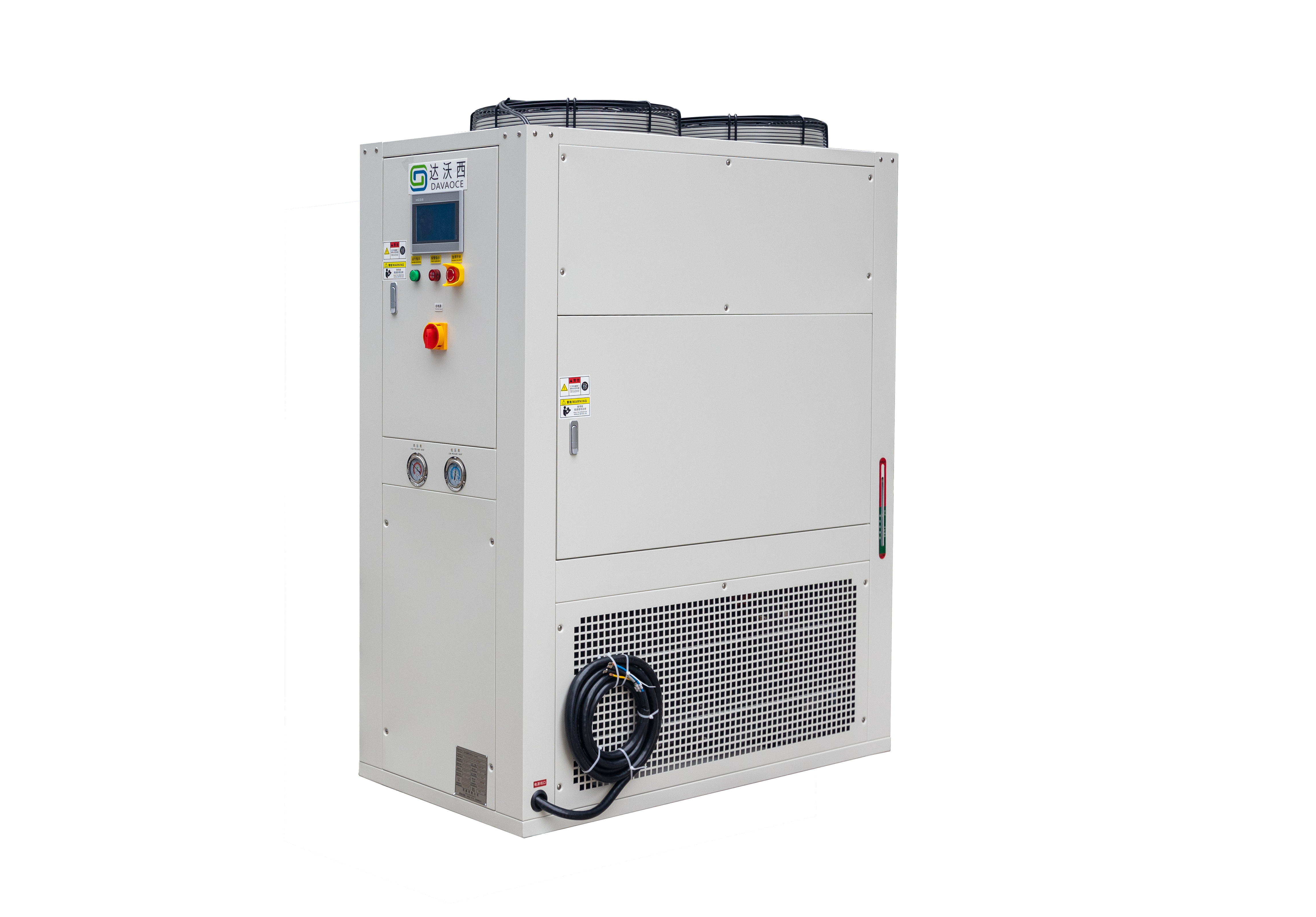
High and low temperature liquid cooling testing machine: It is an integrated high and low temperature control, flow rate/An integrated professional testing platform for pressure control and precise simulation of liquid cooling system operating conditions. It directly relates toOBCThe interface connection of the liquid cooling plate accurately reproduces the real working conditions of the vehicle cooling system.
2、 InOBCThe main application scenarios of the industry
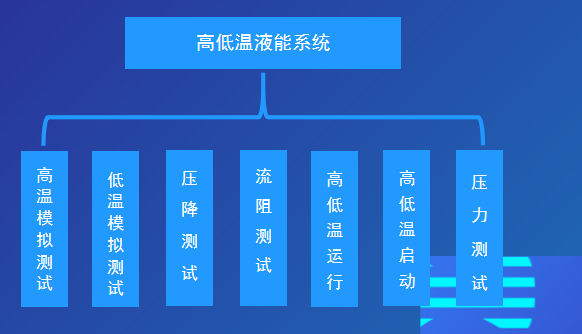
High and low temperature liquid cooling testing machineIt is the core equipment in the research and development, verification, and production processes, and is applied throughout the entire process
1. Thermal management and in-depth performance testing
Accurate heat dissipation performance evaluation: directly simulate at different environmental temperatures (such as-40Simulating extremely cold start-up with cold water at ℃,+85Under the simulated hot chamber environment of ℃ hot water, the coolantOBCInternal key power components (such asSiC/GaNThe cooling effect of the module. Measure the junction temperature and temperature rise rate of the device to verify whether the heat dissipation design meets the standards.
Cooling system boundary condition testing: testingOBCEvaluate the accuracy and reliability of strategies such as overheat protection and power derating in response to extreme or fault conditions such as insufficient coolant flow, high temperature, and abnormal pressure.
System efficiency chart drawing: Measurement at different coolant temperatures and load powersOBCOverall efficiency, drawing efficiencyMAPFigure provides core input data for the vehicle thermal management control strategy.
2. Environmental reliability and durability testing
Temperature shock and cycle testing: Quickly and accurately change the coolant temperature through programming (such as from-30℃ to+80Perform thousands of cycles at ℃ for testingOBCThe mechanical stress fatigue caused by thermal expansion and contraction of liquid cooled plates and internal materials (such as thermal grease and welding points) exposes potential failure in advance.
Load aging and lifespan testing: in high-temperature coolant (such as+65Under conditions of ℃ or higher, forOBCApply full load or overload power, conduct long-term (hundreds to thousands of hours) aging tests, accelerate life assessment, and screen for early defects.
Ice and cavitation testing: simulate the risk of coolant freezing in cold environments, or the cavitation phenomenon that may occur under high temperature and high flow rates, to verifyOBCDesign of cooling channelrobustness.
3. Production testing and functional verification
EOL(End-of-Line)Testing: At the end of the production line, use a liquid cooled testing machine to quickly verify eachOBCThe basic functions and heat dissipation performance of the product under standard temperature conditions ensure factory quality.
Sealing test of cooling circuit: integrated pressure sensor and flow meter, which can detectOBCPerform air tightness leak detection and flow testing on the coolant circuit to ensure that there are no leaks and the flow resistance is within the design range.
3、 Core role and value
Implement real working condition simulation to enhance verification confidence
Modern high-powerOBC(such as11kW, 22kW)Active liquid cooling is commonly used. Relying solely on air temperature simulation (environmental chamber) cannot reflect the real heat dissipation conditions. The liquid cooling testing machine can accurately control the temperature, flow rate, and pressure of the coolant, providing the closest testing environment to the actual vehicle and making the test results valuable for reference.
Accelerate R&D cycle, optimize thermal design
Engineers can quickly and independently adjust cooling parameters, without relying on the vehicle cooling system, and efficiently complete the validation and iteration of thermal design in the laboratory, finding cooling schemes and thermal equilibrium points.
Ensure reliability and safety under high power density
To ensureOBCThe key verification method for long-term stable operation under high load and high ambient temperature to prevent overheating damage or safety accidents. Through boundary testing, a secure work window can be defined.
Meet rigorous industry standards and customer specifications
helpOBCManufacturers meet international and domestic standards (such asISO 16750, LV 123, GB/T)And strict personalized testing standards from major car manufacturers (especially specific requirements for liquid cooling systems).
Support the development of cutting-edge technologies
For devices using wide bandgap semiconductors such as silicon carbide and gallium nitrideOBCIts high efficiency and high-temperature working characteristics place higher demands on heat dissipation. The liquid cooled testing machine is a tool for verifying the thermal management capabilities of these technologies. At the same time, it also supportsV2GTemperature control testing for new functions such as bidirectional charging and discharging.
4、 Technical requirements and equipment characteristics
DavosiOBCThe high and low temperature liquid cooled testing machine used for testing should have the following characteristics:
Wide and precise temperature control range: Typical requirements include -40℃ to+100℃ or higher, the temperature control accuracy should be within ±0.5Within ℃.
Accurate flow and pressure control: programmable control of coolant flow (range coverage)OBCDesign flow rate, system pressure, simulate different pump speeds and pipeline states.
High dynamic response capability: able to quickly achieve temperature changes (such as5℃/minThe above temperature rise and fall rates meet the requirements of temperature shock testing.
Compatible with multiple cooling media: In addition to water, it needs to be able to accommodate common automotive cooling fluids such as ethylene glycol aqueous solution.
Security and integration functions: with traffic capability/pressure/Abnormal temperature alarm and protection; Provide standard communication interface(CAN, Ethernet, ModbusEtc., to facilitate integration into automated testing systems.
Data collection and monitoring: Real time recording and output of key parameters such as temperature, flow rate, pressure, etc., and coordinate withOBCSynchronization of test data.
summary
DavosiHigh and low temperature liquid cooled testing machines have evolved from auxiliary testing equipment to developing and validating high-performance, liquid cooled typesOBCThe 'essential' tool. It has achieved accurate simulation and reproduction of the real working conditions of the vehicle's liquid cooling system in a laboratory environmentOBCThe most rigorous assessment of thermal management performance, environmental adaptability, and long-term reliability. withOBCWith the continuous increase in power density and the popularity of liquid cooling solutions, the role of such testing equipment will become increasingly irreplaceable, serving as the technical cornerstone for ensuring the safe, efficient, and reliable operation of electric vehicle charging systems
Last Article: How to choose a suitable chiller for a vacuum furnace
Next Article: Energy saving performance analysis of split type chiller