-
E-mail
info@shzhongyou.com
-
Phone
15021052444
-
Address
Room 902, Dongbao Building, No. 19 Dongbao Road, Songjiang District, Shanghai
Shanghai Zhongyou Industrial Co., Ltd
Selection Guide for Rotary Dehumidifiers: Matching Strategies for Dehumidification Capacity, Regeneration Method, and Applicable Environment
Date: 2025-11-17Read: 1
Rotary dehumidifiers are the core equipment for controlling humidity in industrial and civilian fields, such as pharmaceutical workshops, museums, and basements. However, their selection requires precise matching of dehumidification capacity, regeneration method, and applicable environment, otherwise it may result in poor dehumidification effect or high operating costs.
Dehumidification capacity: Tailored according to space requirements
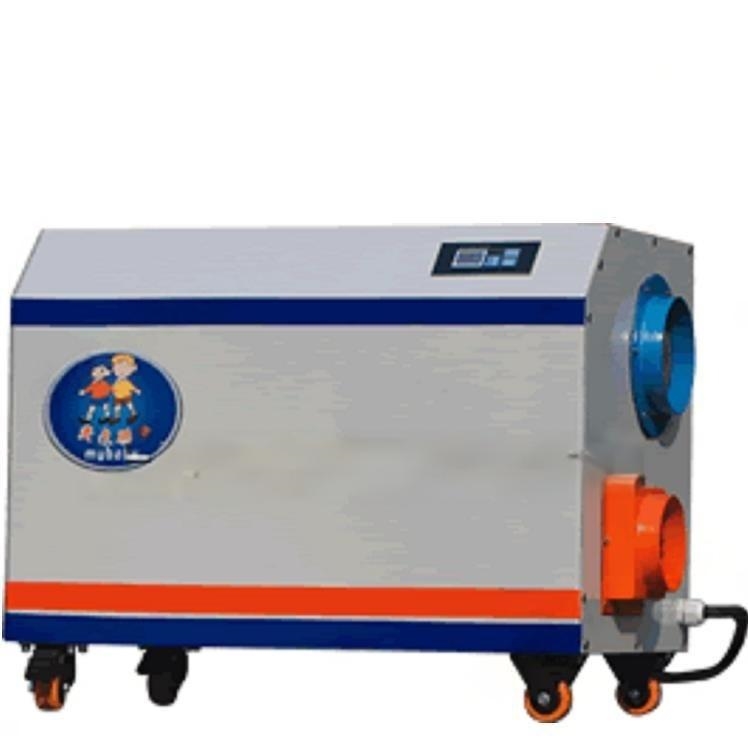
The dehumidification capacity isWheel dehumidifierThe core parameter of, usually expressed in liters per day (L/D), refers to the amount of water that can be removed under standard operating conditions (temperature 27 ℃, relative humidity 60%). When making a purchase, it is necessary to calculate based on the volume and humidity requirements of the target space
Small spaces (such as laboratories and archives, 50-100 square meters): If the humidity needs to be controlled at 40% -50%, choose equipment with a dehumidification capacity of 5-15L/D;
Medium sized spaces (such as electronic factories and warehouses, 100-500 square meters): If the environment is humid (such as coastal areas), 20-50L/D is required;
Large spaces (such as pharmaceutical workshops, data centers, over 500 square meters): high-precision humidity control (such as humidity<30%) requires 100L/D or more.
Attention: The dehumidification capacity will vary with the ambient temperature and humidity (the lower the temperature and the higher the humidity, the lower the dehumidification efficiency). When purchasing, a margin of 20% -30% should be reserved (if the actual demand is 15L/D, it is recommended to choose a 20L/D model).
Regeneration method: key factors in energy consumption and maintenance costs
The core component of a rotary dehumidifier is the adsorption wheel (usually filled with silicone or molecular sieve), which achieves dehumidification by adsorbing moisture from the air. But after the wheel is saturated with adsorption, it needs to be "regenerated" (desorbed moisture to restore moisture absorption capacity), and there are two mainstream regeneration methods:
Electric heating regeneration: Heating air (at a temperature of about 120-150 ℃) through an electric heating wire, blowing it through a rotating wheel to desorb moisture. The advantages are simple structure and easy maintenance; The disadvantage is that the energy consumption is relatively high (accounting for 40% -50% of the total operating cost of the equipment), which is suitable for small scenarios with sufficient power resources.
Heat recovery and regeneration: using the waste heat from air conditioning or boilers (such as hot water/hot air at 50-80 ℃) as a heat source, with significant energy savings (reducing energy consumption by 30% -40%), but requires a matching heat source system suitable for industrial scenarios (such as factory waste heat utilization).
When making a purchase, it is necessary to choose based on energy costs and scenario conditions: with limited budget and stable electricity, electric heating can be selected; Pursuing long-term energy conservation (such as 24-hour continuous operation), prioritizing heat recovery.
Applicable environment: Match humidity and spatial characteristics
High temperature and high humidity environment (such as summer basements in the south with a temperature of 30 ℃+and humidity>80%): High temperature resistant wheels (made of silicone material with a stable adsorption efficiency of over 80%) should be selected, and auxiliary cooling equipment (such as pre coolers) should be used.
Low humidity demand scenario (such as precision electronic factory, humidity<40%): Choose a molecular sieve wheel (with stronger adsorption capacity, which can be reduced to below 10%), but the cost is higher.
Corrosive environment (such as chemical workshops, containing acidic and alkaline gases): It is necessary to choose anti-corrosion materials for the impeller (such as titanium coated silicone) and stainless steel shell to avoid equipment corrosion and failure.
By accurately matching dehumidification capacity, regeneration method, and applicable environment,Wheel dehumidifierTo efficiently and economically achieve precise humidity control and provide reliable humidity solutions for different scenarios.