-
E-mail
zx.liu@zxsensor.com
-
Phone
13764316958
-
Address
308A, Building 5, Nanxiang Zhidi Phase III, No. 1101 Nanxiang Huyi Road, Jiading District, Shanghai
Shanghai Zhengxin Electronic Technology Co., Ltd
Precision grating for non-contact detection of reflective photoelectric switches
Date: 2025-10-26Read: 41
In many fields such as industrial automation, logistics sorting, and security protection,As an efficient and reliable non-contact detection sensor, the photoelectric switch plays a crucial role.Its core function is to detect the presence, count, or accurately locate objects. Understanding its concise and clever working principle is the key to selecting and optimizing its application correctly.
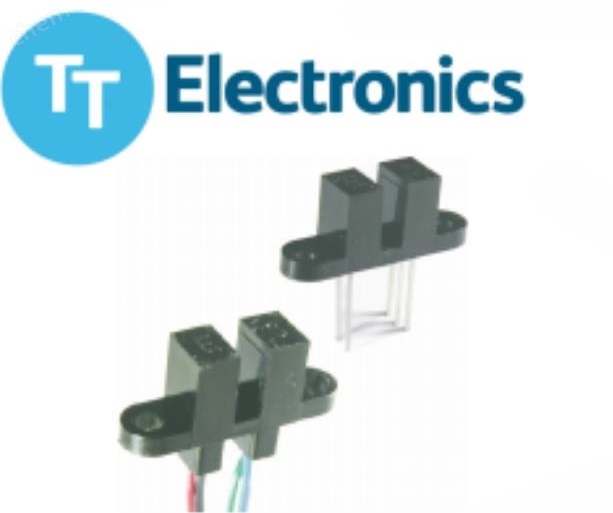
1、 Basic composition: Separate transmitting and receiving units
As the name suggests, the structural feature of a photoelectric switch is that its optical path is in the "opposing" mode. It consists of two independent components that are physically separated and arranged relative to each other: a projector (transmitter) and a receiver (receiver). The projector is equipped with a built-in light-emitting element, which continuously emits a modulated infrared or visible light of a specific frequency. The light receiver is equipped with a built-in photosensitive element, facing the projector and specifically responsible for receiving this beam of light.
This physically separated structure is the essential characteristic that distinguishes it from reflective photoelectric switches and determines its unique working characteristics.
2、 Working principle: detection mechanism based on "optical path interruption"
Its working principle can be summarized as the transition between two states: "light on" and "light blocking".
1. Normal state (no object passing through): Under normal working conditions, the modulated beam emitted by the projector can be stably and completely received by the opposite receiver. The internal circuit of the photodetector detects a sufficiently strong optical signal and outputs a specific electrical signal. At this point, the switch indicates the "obstacle free" status.
2. Action state (with an object passing through): When the detected object enters the light path between the projector and the receiver, the object will completely or partially block the light path. Causing a sharp decrease or complete disappearance of the optical signal intensity received by the photodetector. Once the light intensity falls below the preset trigger threshold, the detection circuit inside the photodetector will immediately undergo a state flip, changing its output electrical signal. The change in this electrical signal is transmitted to the PLC or other control equipment, triggering subsequent control actions such as equipment stop, counter increment, alarm, etc.
3、 Core advantages and application scenarios
The principle of "light path interruption" endows the photoelectric switch with significant advantages:
1. Long detection distance: As its detection ability depends on whether the speed of light can reach directly, rather than the intensity of reflected light, the effective detection distance can be made very far (up to tens or even hundreds of meters).
2. Strong anti-interference ability: The projector usually emits modulated pulsed light, while the receiver is only sensitive to modulated light signals of the same frequency. It can effectively suppress the interference of stray light such as ambient natural light and lighting, and has high stability.
3. High detection accuracy and fast response speed: Almost any opaque object, regardless of its color, material, or shape, can be reliably detected as long as it can block the light path.
Therefore, it is particularly suitable for demanding environments such as remote detection, harsh industrial environments (with high dust and oil pollution), high-speed counting, and advanced safety protection.
In summary, the reflective photoelectric switch is based on its separate structure, which accurately determines the on/off of the optical path and converts the simple action of physical obstruction into a reliable electrical control signal. This concise and efficient working principle makes it a crucial "perception sentinel" for achieving industrial automation and intelligent control.