-
E-mail
742805758@qq.com
-
Phone
15216837090
-
Address
No. 601 Dongshe Road, Dongjing Town, Songjiang District, Shanghai
Shanghai Yuyang Science and Education Equipment Co., Ltd
Overview of the Development and Trends of New Energy Vehicle Technology
Date: 2019-01-07Read: 0
Overview of New Energy Vehicle Theory and Analysis of Development Status
1.1 Overview of New Energy Vehicle Theory
New energy vehicles refer to vehicles that use unconventional vehicle fuels as their power source (or use conventional vehicle fuels and adopt new on-board power devices), integrate advanced technologies in vehicle power control and drive, and form advanced technical principles, new technologies, and new structures.
New energy vehicles can be divided into the following categories according to their scope of use:
(1) Pure electric vehicle: A Battery Electric Vehicle is a vehicle that is powered by an onboard power source and uses an electric motor as a single driving source. The power system of a pure electric vehicle mainly consists of components such as a power battery, a driving motor, and an electric drive controller. Due to the lack of an engine and a multi gear transmission, pure electric vehicles use lower priced electricity as a power source. Compared with traditional fuel vehicles, they have obvious advantages such as low operating costs, comfortable driving experience, and convenient maintenance in the later stage. The disadvantages are short range and long charging time, mainly suitable for commuting in urban areas. Representative models include Tesla Model S, Nissan Leaf, and BYD e6.
In 2016, the sales of pure electric vehicles reached 492800 units, accounting for 64% of the total sales of new energy vehicles. Pure electric vehicles have become the main force in the sales of new energy vehicles and play an important and irreplaceable role in the promotion of new energy vehicles. They are the main development direction of new energy vehicles in the future.
(2) Plug in Hybrid Electric Vehicle: Plug in Hybrid Electric Vehicle is an electric drive system installed on the basis of traditional fuel vehicles. The electric drive system of plug-in hybrid electric vehicles is the same as that of pure electric vehicles. Due to the presence of both fuel and electric drive systems in the same volume of fuel vehicles, the battery capacity is smaller and the engine performance is weaker than that of pure electric vehicles. However, the two drive systems can be combined and stacked to achieve higher performance and longer range, or the electric drive system can be used separately to achieve energy-saving effects. The disadvantage is that due to the existence of two drive systems, the structure is more complex than that of fuel vehicles and pure electric vehicles, which increases the energy consumption. Vehicle weight, High fuel consumption and poor driving experience in low battery state, representative models include BMW i8 and BYD Tang.
Plug in hybrid vehicles have effectively solved the problem of short range of pure electric vehicles and can be used for long-distance travel. At the same time, due to the engine, gasoline can be used as a substitute for charging for a long time, greatly reducing the energy supply time. It is an ideal transitional model for pure electric vehicle technology bottlenecks at present. Plug in hybrid vehicles will still be an important force in the promotion of new energy vehicles for a considerable period of time.
(3) Conventional hybrid electric vehicles: Conventional hybrid electric vehicles, like plug-in hybrid electric vehicles, have two sets of drive systems: fuel and electric. The difference is that conventional hybrid electric vehicles do not have charging ports and cannot be charged from an external power source. They mainly generate electricity by driving the generator through the engine. Like plug-in hybrid electric vehicles, they can use separate fuel or electric drive systems, or combine the two drive systems. Representative models include Toyota Prius and Honda Accord hybrid versions.
Conventional hybrid vehicles do not require an external power source, are easy to charge, and have significantly lower fuel consumption than traditional fuel vehicles. They played an important role in the early development of new energy vehicles, but due to the inability to use them separately from the engine, the energy-saving effect is average. At the same time, with the gradual improvement of charging facilities and the rapid development of more energy-efficient plug-in hybrid vehicles, the development of conventional hybrid vehicles has been slow. In addition, some countries and regions currently define such vehicles as traditional fuel vehicles without preferential policies and financial subsidies, making conventional hybrid vehicles in a difficult situation.
(4) Other new energy vehicles, including range extender electric vehicles, hydrogen fuel vehicles, solar powered vehicles, etc., have a narrow range of applications due to technological and promotional reasons. Some models are even in the experimental stage and have not been launched on the market, accounting for a very low proportion of the overall scale of new energy vehicles.
1.2 Characteristics and advantages of new energy vehicles
Compared with traditional fuel vehicles, new energy vehicles have the following significant advantages:
(1) Energy saving and environmentally friendly, with low usage costs.
At present, most new energy vehicles use electric energy as their power source, with a small portion using clean energy such as hydrogen fuel and solar energy. Compared to traditional cars that use gasoline or natural gas, electric energy has significant characteristics such as low price and *, which can achieve energy conservation and environmental protection. It conforms to the emission reduction initiatives advocated by governments and civilians in various countries, reduces damage to the earth's environment, and better improves the atmospheric environment. At the same time, for consumers, the energy consumption of new energy vehicles is much lower than that of traditional fuel vehicles, and the cost of the same mileage is only about one-fifth of that of fuel vehicles, with lower operating costs.
(2) The driving and riding experience is excellent.
Due to the absence of an engine and a multi gear ratio gearbox in the drive system of pure electric, hydrogen fuel, and solar powered vehicles, there is no NVH (noise, vibration, and harshness) or jerkiness during gear shifting. At the same time, all required energy sources are electric and clean energy, which does not produce pungent odors. The entire driving process is smooth, comfortable, and quiet, providing drivers and passengers with a better driving experience than gasoline powered vehicles. Even hybrid vehicles generally do not have a separate fuel mode and require the intervention of an electric drive system at any time, resulting in a better driving experience than gasoline powered vehicles. In special situations such as following the car for photography and transporting fragile items, the vehicle can be smoothly maintained. Strong practicality.
(3) The structure is simple and easy to maintain in the later stage.
Due to the lack of an engine and a multi gear ratio gearbox in the drive system of pure electric, hydrogen fuel, and solar powered vehicles, only a new energy drive system is available. The internal structure is relatively simple, and the manufacturing difficulty is greatly reduced. Although hybrid vehicles have a more complex structure compared to traditional fuel vehicles, they can be used as pure electric vehicles for urban commuting because they can use the electric drive system alone. Due to their simple structure, compared to the tedious post maintenance of fuel vehicles, the maintenance of new energy vehicles is very convenient, requiring only the replacement of necessary components. In addition, the maintenance cycle of new energy vehicles is longer than that of traditional fuel vehicles, with fewer maintenance times, saving users costs, time, and energy.
1.3 Development Status of New Energy Vehicles
The development of new energy vehicles has a history of more than 200 years, and all electric vehicles are powered by British man Robert·Davidson invented it in 1873, even before the German Carl·The internal combustion engine car invented by Benz was a golden period for the development of electric vehicles in the late 19th and early 20th centuries. At that time, electric vehicles accounted for more than 50% of the total number of cars. However, with the large-scale extraction of oil and the rapid development of internal combustion engine technology, coupled with the slow development of electric vehicles in technology, fuel vehicles gradually dominated the automotive industry. The development of electric vehicles almost stagnated and gradually became marginalized. By the end of the 20th century, after experiencing two consecutive oil crises, automobile companies began to develop new energy vehicles led by electric vehicles. In 1992, General Motors launched the pure electric vehicle EV1, opening a new chapter in the development of new energy vehicles. Afterwards, in 1997, Toyota launched a hybrid vehicle, the Prius, In 2003, Tesla, a single mass-produced pure electric vehicle company, was established and subsequently launched multiple electric vehicles. Since then, new energy vehicles have entered a period of rapid development. In 2017, sales of new energy vehicles reached 1.224 million units, a year-on-year increase of 58.14% compared to 2016, accounting for approximately 1.32% of the overall automobile market share. Although the overall proportion of automobile sales is still low, the growth rate is much higher than that of traditional fuel vehicles, and the potential is enormous.
Research on the Technological Development Trends of the New Energy Vehicle Industry
New energy vehicles have significant advantages in performance, energy saving, driving experience, and many other aspects. The industry has developed rapidly and has already occupied its place in the overall automotive market in just a few years. However, the overall proportion is still relatively low. At the same time, new energy vehicle enterprises are currently facing development bottlenecks in the fields of battery life, cost control, structural design, etc. They are trying to research innovation and seek technological breakthroughs. Once the current development difficulties are successfully solved, the new energy vehicle industry will usher in even faster development. The future development direction of energy vehicles mainly includes the following aspects.
2.1 Power Battery Technology
The main function of power batteries is to store electrical energy, transmit it to the motor, convert it into kinetic energy, and drive the vehicle. They are the source of energy and power for new energy vehicles. In terms of production costs, the cost of power batteries generally accounts for one-third or even half of the total vehicle cost, making them an important and high cost core component of new energy vehicles. The technical level and product quality of power batteries often determine the overall technical level and product quality of new energy vehicles. The energy density, service life, safety guarantee, and other aspects of batteries largely determine consumers' willingness to purchase new energy vehicles. Currently, new technologies related to power batteries are rapidly developing in the following areas.
2.1.1 All solid state lithium battery
All solid state lithium battery refers to an energy storage device that does not contain liquid in its structure and all materials exist in solid state, relative to liquid lithium battery. Specifically, it is composed of a positive electrode material, a negative electrode material, and an electrolyte, while a liquid lithium battery is composed of a positive electrode material, a negative electrode material, an electrolyte, and a separator. The electrolyte of a solid-state battery is solid, with a density and structure that allows more charged ions to gather at one end, conduct larger currents, and thus increase battery capacity. For the same amount of electricity, the energy density of a solid-state battery is higher, and its volume will become smaller. At present, in the passenger car and car markets, ternary lithium batteries occupy the mainstream position, with a single energy density of approximately 120-140Wh/kg; In the bus market, lithium iron phosphate batteries occupy the majority, with a single energy density of 130-220Wh/kg. The current range of pure electric vehicles is generally between 300-500 kilometers. The energy density of solid-state batteries with the same volume is around 400Wh/kg, and can reach up to 600Wh/kg, which is 4-5 times the energy density of current power batteries. This means that the battery capacity will increase by the same multiple, and the range will be greatly improved compared to before. It is expected to be several times or even 10 times the current range, reaching thousands or even thousands of kilometers“range anxiety”The troubles caused by this will be greatly alleviated, and the range of new energy vehicles will significantly surpass that of fuel vehicles, achieving longer distances and fundamentally solving the problem of short range that currently hinders the development of new energy vehicles.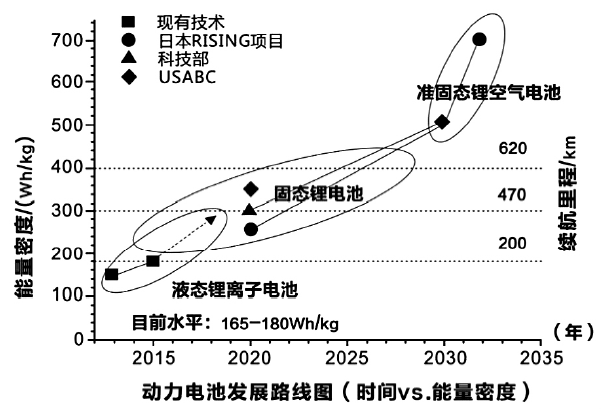
Figure 1 Ladder diagram of battery technology development
All solid state lithium batteries are the main development direction of future battery technology, which can achieve longer range under the same volume conditions and smaller volume under the same range conditions. Currently, major new energy vehicle and power battery companies including BYD, CATL, Volvo, Toyota, etc. are actively developing solid state batteries. However, due to the current high technical difficulty and expensive manufacturing costs, the research and development progress of solid state batteries is relatively slow, and they have not yet begun to be used in new energy mass-produced vehicles. It is believed that once there is a technological breakthrough, solid state batteries will be widely used in the field of new energy vehicles in the near future, replacing existing batteries.
2.1.2 Hydrogen fuel cell
A hydrogen fuel cell is a battery that uses hydrogen, a chemical element, to store energy. The basic principle is the reverse reaction of electrolyzing water, supplying hydrogen and oxygen to the anode and cathode respectively. Hydrogen diffuses outward through the anode and reacts with the electrolyte, releasing electrons through an external load to reach the cathode. It is achieved through electrochemical reaction, rather than combustion (gasoline, diesel) or energy storage (battery). Hydrogen fuel cells only produce water and heat, so they are clean emissions and truly environmentally friendly. In addition, hydrogen fuel cells have a long range and short refueling time, usually only 3-5 minutes to fully charge hydrogen. Compared with plug-in batteries, the charging time is greatly shortened, which can save more time. These advantages make hydrogen fuel cells very suitable for long-distance and long-term driving of new energy. Car usage.
At present, hydrogen fuel cells have begun to be applied in passenger cars, vehicles and other models, with a very broad application prospect in commercial vehicles. Currently, major passenger car and coach companies including Yutong Bus, SAIC Group, Toyota Motor, Hyundai Motor, etc. are actively researching and developing hydrogen fuel cells. However, due to the high cost of obtaining hydrogen fuel and the need for hydrogen refueling stations, which occupy a large area and cannot be installed in parking lots, there is a significant gap in usability compared to plug-in vehicles. Currently, there are only 5 hydrogen refueling stations for hydrogen fuel vehicles in China, and the number is very small. Some of them are not open to the outside world, which makes it very difficult and inconvenient for hydrogen fuel vehicles to obtain energy at this stage. Hydrogen fuel cells still need a long time to increase efforts to promote and popularize.
2.1.3 Solar Cells
Solar cells, also known as“Solar chip”or“photovoltaic cell”It is a type of optoelectronic semiconductor wafer that directly generates electricity using sunlight. Solar cells convert light energy into electrical energy through photoelectric or photochemical effects. Solar cells were originally used for industrial power generation. Later, with the reduction of production costs and the improvement of conversion rates, photovoltaic products began to be widely used for household power generation and entered the homes of ordinary people. Currently, the use of photovoltaic products has become a part of many households' daily lives.
Due to the fact that solar cells absorb natural light as an energy source and convert it into electrical energy to drive vehicles, the conversion process is not limited by time and space, and the energy cost is zero. Therefore, compared to lithium batteries and fuel cells, solar cars have incomparable advantages in terms of space and time required for energy acquisition. Solar cars truly achieve free access to energy anytime and anywhere, which can fundamentally solve the problem of difficult and slow charging of new energy vehicles. One solar car can be traced back to the late 1970s. However, due to the low energy conversion rate of solar cells and the need for the solar panel to be exposed outside the vehicle, it is easy to damage. In addition, the high cost of solar cell films has led to the stagnation of the popularization and promotion of solar cars, and mass production has not been achieved, At present, companies such as Tesla and Hanergy Group are still actively researching and developing solar cells, and the future mass production of solar cell vehicles is just around the corner.
2.1.4 Wireless Charging and Battery Replacement Technology
“range anxiety”This is currently the main concern of consumers regarding the purchase of new energy vehicles, mainly due to the slow improvement of battery energy density technology and low range, which cannot meet the needs of consumers. In the current situation where the energy density of the battery itself has not made a breakthrough, it is necessary to improve the existing charging methods to indirectly increase the range and solve the problem“range anxiety”The problem arises in the context of wireless charging and battery swapping technology.
Wireless charging technology is a charging technology that does not require cables and can be divided into two types: low-power wireless charging and high-power wireless charging. Low power wireless charging often uses electromagnetic induction, such as the Qi method for charging mobile phones, which has begun to be applied in some mobile phone products; High power wireless charging often uses resonant mode, where the power supply equipment (charger) transfers energy to the device that uses the received energy to charge the battery and simultaneously supply it for its own operation. High power wireless charging technology is currently mainly applied in the wireless charging method of electric vehicles. Due to the absence of cable constraints, wireless charging is more convenient than wired charging. The vehicle can be flexibly and freely parked on the wireless charging board without being limited by the surrounding environment. At the same time, wireless charging has no mechanical wear and avoids faults caused by poor cable contact in wired charging, further improving safety and extending service life.
At present, car companies including Audi, Mercedes Benz, BMW, Toyota, Volvo, etc. are actively developing wireless charging technology. Audi has already used this technology on some models. In addition to static wireless charging, photovoltaic companies are also actively developing dynamic wireless charging roads, allowing electric vehicles to be charged through wireless charging devices laid on the road during road driving, truly achieving energy access anytime and anywhere, * solving the problem“range anxiety”On December 28, 2017, the first photovoltaic road was built in Jinan, Shandong Province. The photovoltaic road surface can convert solar energy into electrical energy, and then use electromagnetic induction coils under the road surface to wirelessly charge electric vehicles, truly realizing unlimited energy acquisition. However, due to the fact that wireless charging and photovoltaic roads are only in the experimental stage and have not yet been truly applied on a large scale, it will take time for wireless charging to be truly popularized.
except“range anxiety”In addition, long charging time is also a major factor restricting consumers from purchasing new energy vehicles. Although fast charging technology is gradually improving, compared with the refueling time of fuel vehicles, it is still too long and the time cost is high. In the current situation where the charging speed cannot be significantly improved, battery swapping technology can effectively solve the problem of range. Battery swapping technology is a technology that drives new energy vehicles into a battery swapping station, unloads the existing battery through the device, and replaces the fully charged battery with the loaded one. Battery swapping technology can greatly shorten the charging time, even shorter than the refueling time of fuel vehicles, and can greatly improve the vehicle's range and eliminate“range anxiety”At the same time, batteries can be charged slowly to provide better protection and extend their service life. Currently, new energy vehicle companies such as BAIC New Energy, NIO, and Guojin Motors are actively developing and using battery swapping technology. However, there are still many obstacles to the development of battery swapping technology. Firstly, the investment cost of battery swapping stations is high, and they cannot reach the distribution density of gas stations in the short term, which cannot meet the needs of all car owners. Secondly, battery swapping stations require all car models to use a unified battery size specification, which objectively limits the types of car sizes that car companies can launch, thereby affecting their long-term development plans. In addition, issues such as battery attenuation and safety protection during the replacement process still need to be solved, Previously, the battery swapping services of Israeli companies BetterPlace and Tesla both ended in failure, but it still appears that battery swapping technology is an effective solution for new energy vehicles“range anxiety”The method.
2.2 Motor Technology
The electric motor is connected to the power battery and the transmission shaft of the new energy vehicle. The power of the power battery is output to the electric motor, which converts the electrical energy into kinetic energy and transmits it to the transmission shaft. The transmission shaft outputs the power to the tires, ultimately driving the vehicle. The electric motor integrates an electronic control system and a single-stage gearbox, replacing the engine and multi gear ratio gearbox of fuel vehicles, greatly simplifying the internal structure of the vehicle. It is an important component of the new energy vehicle. Due to its widespread application in many fields, the electric motor technology of new energy vehicles has been developing steadily. However, in recent years, there have been some new development trends in the electric motor technology of new energy vehicles, and wheel hub motor technology is one of the main directions.
Wheel hub motor technology is the direct arrangement of a motor assembly with an integrated reducer in the wheel hub, with four wheel edge motors directly driving four wheels. Wheel hub motor technology is not a new thing. As early as 1900, electric vehicles equipped with wheel hub motors on the front wheels were already manufactured. In the 1970s, this technology was applied in fields such as mining transport vehicles. With the large-scale extraction of oil and the leapfrog development of engine technology in the 1960s, while battery technology stagnated, fuel vehicles dominated the automotive industry in the following decades. With the resurgence of new energy vehicles in recent years, wheel hub motor technology has once again become the development trend and direction of motor technology.
At present, the motors of new energy vehicles generally use front or rear motors, which are connected to the power battery and transmission shaft respectively. The structure is relatively mature and the assembly is simple. However, due to the need to transmit power to the tires through the transmission system, it inevitably causes power loss of the motor, affecting the performance and service life of the vehicle. Wheel hub motors integrate the power device, transmission device, and braking device into the wheel hub, greatly simplifying the mechanical part of the electric vehicle, reducing weight, and improving the space utilization of the vehicle body. The motor directly transmits power to the wheel hub, with almost no loss in the transmission process, and the vehicle performance can be fully utilized. At the same time, wheel hub motors have the characteristic of independent driving of a single wheel, so whether it is front wheel drive, rear drive, or four-wheel drive, they can be compared. easily implemented, Full time four-wheel drive is very easy to implement on vehicles driven by wheel hub motors, and these advantages are incomparable to transmission motors. Of course, at present, wheel hub motors need to be arranged in small wheel hubs, with complex structures and high technical difficulties, requiring a long time of research and development to truly popularize the technology.
2.3 Assisted driving technology
In addition to the two core components of power batteries and motors in new energy vehicles, there are also some new energy vehicle technologies that are closely related to their development. Among them, assisted driving technology is closely related to the development of new energy vehicles. Assisted driving technology is a technology that assists drivers in driving, providing them with a more comprehensive and excellent driving experience and safety guarantee. It plays an important role in the entire driving process. In the field of new energy vehicles, assisted driving technology mainly includes two categories: autonomous driving and in vehicle artificial intelligence.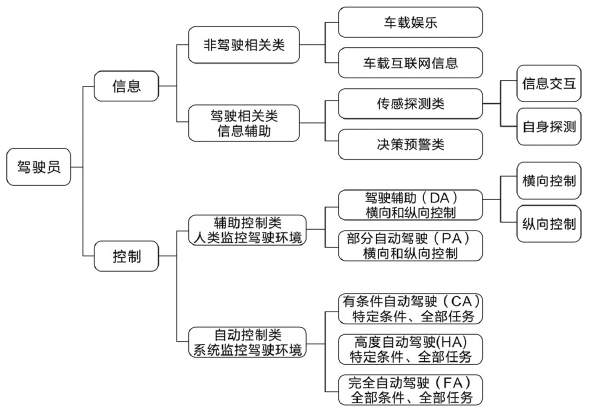
Figure 2 Logic diagram of car assisted driving technology
2.3.1 Autonomous driving
Autonomous driving technology utilizes advanced communication, computer, network, and control technologies to achieve real-time and continuous control of automobiles. The Society of Automotive Engineers (SAE) categorizes autonomous driving into six levels based on its level of intelligence, namely L0-L5. These levels include manual assistance, assisted driving, semi autonomous driving, highly autonomous driving, ultra high altitude autonomous driving, and fully autonomous driving. Manual assistance is at the L0 level, while fully autonomous driving is at the L5 level, which is the form of autonomous driving. At this level, driving can be completed by machines without a driver, adapting to all current working conditions and continuously learning and improving to adapt to new ones. Autonomous driving at the L5 level can achieve unmanned driving.
Autonomous driving technology emerged as early as 2009, initially aimed at assisting drivers in driving. With the continuous improvement of technology, autonomous driving is gradually considered to replace human driving, truly freeing drivers' hands, eliminating fatigue caused by long-term driving, avoiding traffic violations and accidents, and greatly improving vehicle safety. It is an inevitable trend in future driving technology. New energy vehicles, due to their simple internal structure, easy driving control, and similar electronic control system structure, are currently the ideal models for developing autonomous driving. Most of the development of autonomous driving technology is completed on the new energy vehicle platform.
The core of automatic driving technology is the automatic driving chip, which processes various road conditions and transmits signals to the vehicle control system to achieve automatic driving. At present, chip manufacturers such as Intel, Qualcomm, Nvidia, Mobileeye are actively developing automatic driving chips, while Internet companies such as Baidu, Google are also actively developing auto drive system to adapt to more models. In terms of vehicle enterprises, autonomous vehicle from Audi, Tesla, Weilai and other manufacturers have been mass produced and launched, but because the high automatic driving level of the current mass produced cars is L3, they can still only play a role in assisting driving in the actual use process, and occasionally there will be failures and problems. At the same time, at present, autonomous vehicle The proportion is low, but with the continuous progress of technology, It is believed that in the near future, there will be more and more autonomous vehicle, and the level will gradually improve.
2.3.2 Vehicle mounted artificial intelligence
Artificial intelligence is a branch of computer science that aims to understand the essence of intelligence and produce a new type of intelligent machine that can respond in a way similar to human intelligence. Research in this field includes robotics, language recognition, image recognition, natural language processing, and expert systems. The concept of artificial intelligence was first proposed in 1956. As the carrier of artificial intelligence is computers and machines, its fixed form operation and storage speed are much higher than that of the human brain, and it does not produce fatigue. Compared with the natural human brain, it has huge inherent advantages in repetitive mechanical work fields, greatly improving production efficiency and reducing error rates. After more than 60 years of development, it has been widely used in many fields such as computers, robots, equipment manufacturing, and service industry, and has become an auxiliary tool for daily production and life.
Due to the fact that automotive products have always been centered around natural human drivers, this concept has been running through the development of the automotive industry. The application of in car artificial intelligence in the automotive industry started relatively late. Unlike the repetitive mechanical labor of autonomous driving, in car artificial intelligence provides various auxiliary services for drivers inside the vehicle. It requires proficiency in voice language and body language, a deeper understanding and comprehension of the driver's intentions, and even the driver's emotions. It is not simply following the driver's instructions, but can communicate with the driver, have the ability to perceive emotions and cultivate feelings, and truly become the driver's travel partner. The requirements for artificial intelligence are higher and more detailed. Currently, major car companies are actively developing artificial intelligence, including SAIC, Volvo, Tesla Audi and other manufacturers have launched cars with in car artificial intelligence, but they are currently in the early stages of speech recognition. At the end of 2017, NIO launched an in car artificial intelligence system“name”Based on powerful in vehicle computing capabilities and cloud computing platforms, it integrates voice interaction systems and intelligent emotion engines to create a new way of human vehicle interaction, transforming cars from machines into living and emotional companions, truly becoming human travel companions.
3 Conclusion
The technological development trend of the new energy vehicle industry constantly affects its technological development path and ultimately determines the overall development status of the new energy vehicle industry. The current technological development trend is mainly reflected in three aspects:
(1) Power battery technology remains an important core technology development direction for new energy vehicles. The current technological development of power batteries mainly solves the two major problems of battery capacity and power acquisition speed. Among them, all solid state batteries can greatly improve battery capacity and extend the range of new energy vehicles, while wireless charging and battery swapping technology can break the limitations of charging in time and space, greatly improve charging efficiency, and solve the charging problem that new energy vehicles are currently criticized for.
(2) As the direct power device driving vehicles, electric motors are bound to be rapidly improved in the future technological development trend. Motor technologies represented by wheel hub motors and BSG motors significantly improve performance and comfort, making new energy vehicles more widely accepted and rapidly popularized.
(3) Artificial intelligence, as an emerging technology, is closely integrated with many industries, and new energy vehicles are an important implementation platform for it. They greatly expand the scope of use of new energy vehicles in terms of convenience, vehicle safety, and driving pleasure, making them not only a reliable means of transportation, but also an intimate travel companion for humanity in the future.
Science and technology are productive forces, and new energy vehicles are an inevitable trend for the future development of the automotive industry. Whether in the manufacturing or usage process, their technological development trend has always been the development trend of the entire automotive industry. At the same time, new technologies in solid-state batteries, wheel hub motors, driving assistance, and other areas will also affect the development of many related industries such as equipment manufacturing, intelligent robots, and service industries, promoting the common integration and development of industries and ultimately promoting the rapid development of the overall economy.
Last Article: Development direction of domestic new energy vehicles
Next Article: The Development Trends and Prospects of Sensor Technology